by norhan | Jun 13, 2026 | Rock Salt, Salt
Rock salt chemical purity is the single most important metric we discuss with our clients at Sama United before a single ton of material leaves the mine. To the untrained eye, salt might seem like a simple, uniform mineral. However, in the world of heavy industry, gourmet food production, and chemical engineering, “salt is never just salt.” The mineral profile of rock salt varies wildly depending on its geographic origin, the geological age of the deposit, and the extraction methods used.
As experts at Sama United, we understand that our partners aren’t just buying a seasoning; they are buying a chemical reagent. A small shift in magnesium levels or a trace amount of iron can change the entire outcome of a manufacturing process. In this comprehensive guide, we will pull back the curtain on the geological diversity of salt, comparing the mineral content of various global sources and explaining how Sama United ensures you receive the exact chemical profile your business demands.
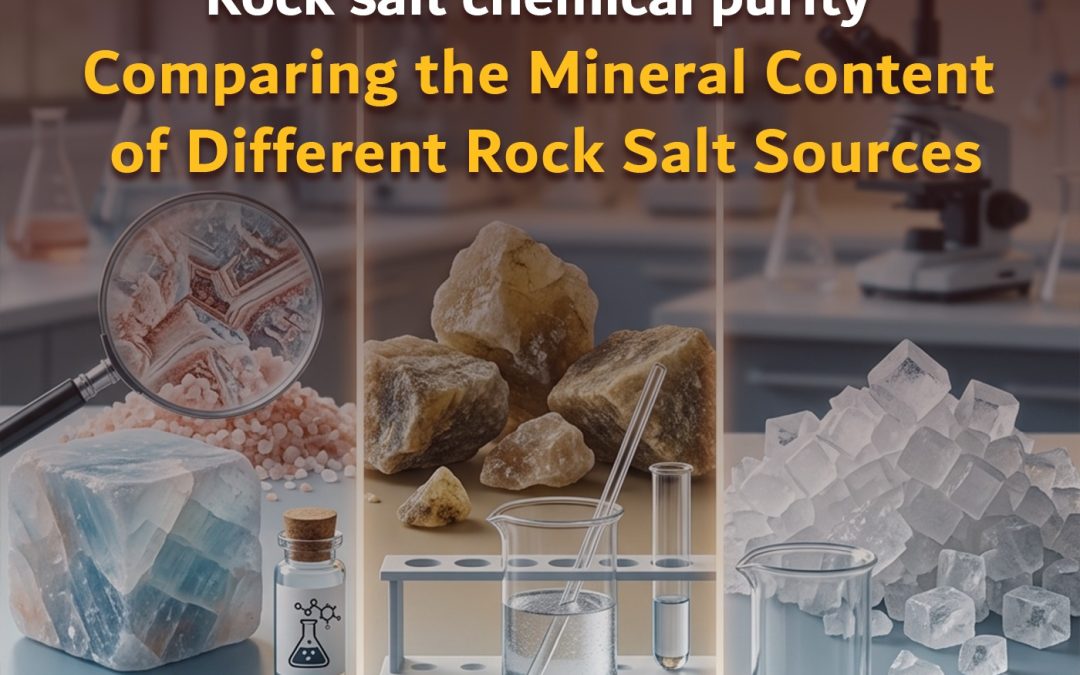
Rock salt chemical purity: Comparing the Mineral Content of Different Rock Salt Sources
1. Beyond Sodium Chloride: What Else Is in Your Salt?
While the primary component of all rock salt is Sodium Chloride (NaCl), it is the remaining “trace minerals” that define its character and industrial utility. Rock salt chemical purity typically refers to the percentage of NaCl, but as we often tell our clients at Sama United, the real story is in the 1% to 3% that isn’t salt.
Common trace elements found in rock salt include:
-
Magnesium and Calcium: The “hardness” minerals that affect solubility and chemical reactivity.
-
Potassium: Often found in ancient sea deposits.
-
Sulfates: Critical for the chlor-alkali industry.
-
Iron and Copper: Elements that can cause discoloration in textiles and plastics.
-
Insoluble Matter: Tiny particles of clay, sand, or gypsum that don’t dissolve in water.
2. The Geographic Factor: How Origins Shape Mineral Profiles
Salt is a record of the earth’s history. At Sama United, we source from several key regions, each offering a distinct mineral “fingerprint.”
The Mediterranean Basin
Salt from the Mediterranean region, often harvested through solar evaporation of ancient brines, is known for its high mineral complexity. While it boasts a high rock salt chemical purity, it often contains healthy levels of magnesium and potassium, making it a favorite for the gourmet food industry and spa sectors.
The Himalayan Foothills
Famous for its pink hue, Himalayan rock salt is rich in iron oxide. While aesthetically pleasing and popular in the wellness industry, its high level of trace minerals makes it less suitable for certain industrial chemical processes where ultra-pure NaCl is required.
Middle Eastern and North African Deposits
These regions often provide some of the highest-purity industrial rock salt in the world. Deposits here are frequently massive and very “clean,” meaning they have low levels of sulfates and heavy metals. Sama United leverages these sources for our heavy industry clients who require maximum chemical stability.
3. Breaking Down the Key Trace Minerals
At Sama United, we believe our clients should understand exactly what they are putting into their production lines. Let’s look at the three most influential trace minerals:
-
Magnesium (Mg): In the textile industry, magnesium is a “poison.” It can interfere with dye bonding. However, in the health and wellness sector, magnesium-rich salt is highly prized.
-
Calcium (Ca): High calcium levels in rock salt can lead to “scaling” in industrial boilers and pipes. Sama United provides refined grades that minimize calcium to protect your infrastructure.
-
Sulfates (
SO4SO4
): For the plastics and chlor-alkali industries, sulfates are a major concern. They can damage the expensive membranes used in electrolysis. Choosing a source with low sulfate content is essential for energy efficiency.
4. The Industrial Impact of Impurities
Why does Sama United spend so much time on mineral analysis? Because the cost of an “impure” source is measured in lost revenue.
In Textile Dyeing, iron impurities can cause dark spots on fabric. In Water Treatment, high levels of insoluble matter (sand/clay) can clog expensive filtration systems. In Chemical Manufacturing, every 0.1% shift in rock salt chemical purity can change the electrical resistance of a brine solution, leading to thousands of dollars in extra electricity costs. We act as your quality gatekeepers, ensuring the mineral content matches your machine’s “ideal” profile.
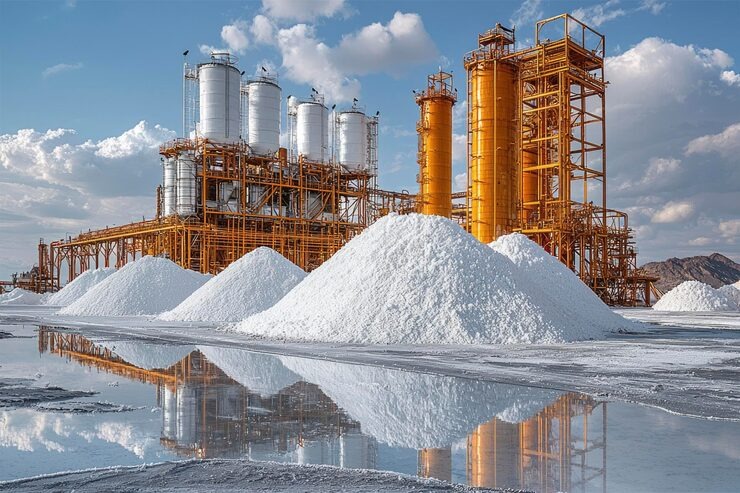
Rock salt chemical purity: Comparing the Mineral Content of Different Rock Salt Sources
5. Rock Salt vs. Solar Sea Salt: A Mineral Comparison
We are often asked about the difference between mined rock salt and solar sea salt.
-
Rock Salt: Generally has a more “stable” mineral profile because it comes from a protected underground seam. It is often denser and dissolves more slowly, which is ideal for de-icing and certain industrial processes.
-
Solar Sea Salt: Can have a slightly higher moisture content and a more diverse range of minerals from the modern ocean.
Sama United offers both, but we guide our clients based on their specific needs. For high-volume infrastructure, rock salt is often the economic winner. For precision chemistry, a highly refined solar salt might be the better choice.
6. The Sama United Standard: Ensuring Purity through Analysis
We don’t just take the mine’s word for it. Every shipment that Sama United handles undergoes a rigorous “Certificate of Analysis” (CoA) process.
We test for:
-
NaCl Percentage: The core of rock salt chemical purity.
-
Moisture Content: To ensure you aren’t paying for water weight.
-
Grain Size (Granulometry): Ensuring the salt dissolves at the correct rate for your equipment.
-
Full Trace Mineral Breakdown: Giving you a complete map of the magnesium, calcium, and sulfate levels.
7. How to Choose the Right Source for Your Specific Needs
Navigating these mineral differences can be overwhelming. That is where the Sama United consultancy comes in.
-
For De-icing: You need high bulk density and specific grain sizes, but ultra-high chemical purity is less critical.
-
For Soap Making: You need salt that is free from heavy metals to ensure a clear, high-quality final product.
-
For PVC and Plastics: Only the highest rock salt chemical purity will do to protect your electrolytic cells.
8. The Economic Value of High Purity
There is a common misconception that buying the “cheapest” salt is a smart move. At Sama United, we show our clients the “Total Cost of Ownership.”
If you buy a lower-purity salt, you will spend more money on:
-
Purification Chemicals: To remove the impurities yourself.
-
Maintenance: To clean clogged pipes and filters.
-
Energy: Because impure brine requires more power to process.
Investing in the right mineral profile from the start is almost always the most profitable decision.
9. Sustainability and Sourcing Responsibility
In 2025, the “story” of the salt matters as much as the salt itself. Sama United is committed to ethical sourcing. We work with mines and solar salt works that prioritize environmental protection and fair labor practices. Whether the salt comes from the Mediterranean or the Middle East, we ensure that the journey from the earth to your factory is transparent and responsible.
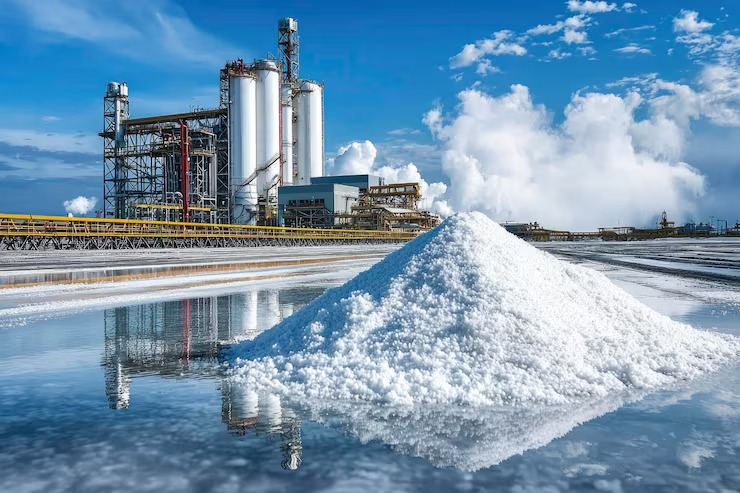
Rock salt chemical purity: Comparing the Mineral Content of Different Rock Salt Sources
10. Final Thoughts: Why Purity is Your Best Investment
In conclusion, rock salt chemical purity is a complex field that requires expert oversight. Salt is the foundation of modern industry, but it is a foundation that must be built on the right minerals. By understanding the differences between global sources, you can optimize your production, protect your machinery, and increase your profit margins.
At Sama United, we are more than just a supplier; we are your technical partner. We handle the geology, the chemistry, and the logistics so that you can focus on creating world-class products. We invite you to experience the difference that professional mineral analysis can make for your business.
Are you unsure which salt source is best for your application? Contact the experts at Sama United today for a detailed mineral consultation and a customized quote for your industrial needs.
by norhan | Jun 11, 2026 | Rock Salt, Salt
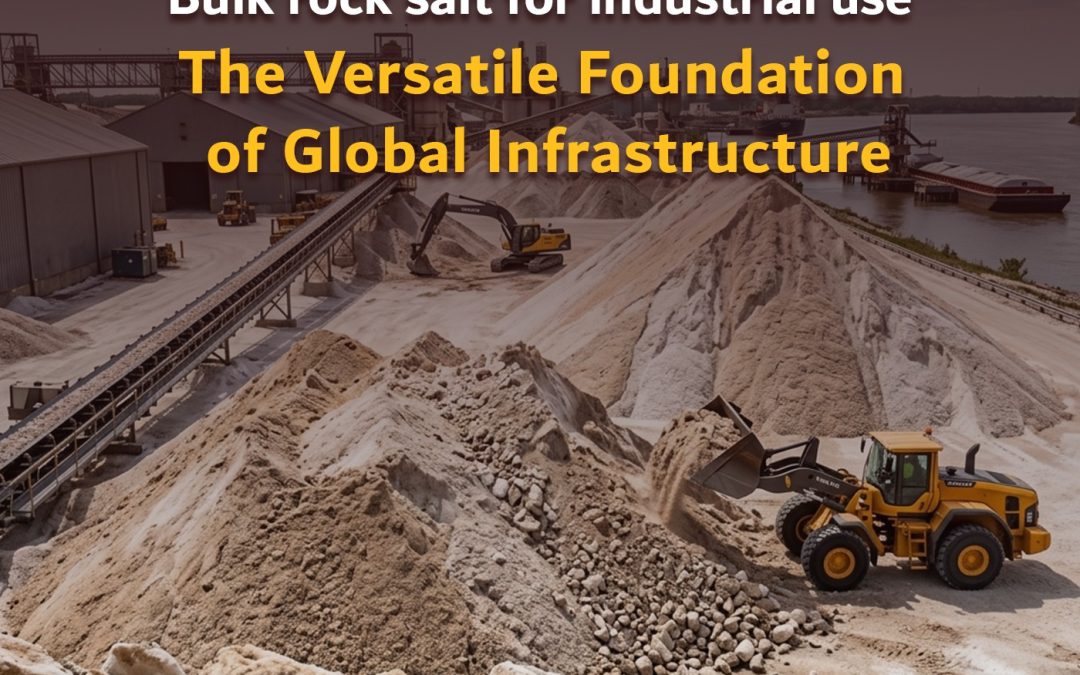
Bulk rock salt for industrial use is often the silent giant of the global economy. While most people associate salt with the dining table, the vast majority of the world’s salt production—specifically rock salt—is funneled into the heavy lifting of infrastructure, construction, and chemical manufacturing. At Sama United, we have seen firsthand how this ancient mineral, harvested from deep within the earth, remains a non-negotiable asset for modern civilization. From the roads we drive on to the pipes that deliver our water, rock salt is the invisible architect.
As experts at Sama United, we understand that in the world of large-scale infrastructure, salt is not just a commodity; it is a functional tool that ensures safety, durability, and chemical efficiency. Whether it is used for winter road maintenance or as a precursor for industrial materials, the quality and supply chain reliability of your salt can make or break a project. In this comprehensive guide, we will explore why bulk rock salt for industrial use is the most versatile mineral in global infrastructure and how Sama United provides the logistical expertise to deliver this “white gold” to projects across the globe.
Bulk rock salt for industrial use: The Versatile Foundation of Global Infrastructure
1. The Lifeblood of Road Safety: Winter Maintenance and De-icing
The most visible and immediate application of bulk rock salt for industrial use is in de-icing. For municipalities and highway authorities, rock salt is the primary line of defense against frozen infrastructure. When a major winter storm hits, the economic cost of closed roads and grounded airports is measured in the billions.
At Sama United, we view road salt as a public safety necessity. Rock salt works through a process of “depressing the freezing point” of water. When spread on a frozen surface, it creates a brine that prevents ice from bonding to the pavement.
-
Safety First: By keeping roads open, rock salt prevents thousands of accidents every year.
-
Economic Flow: Ensuring that trade routes remain open is vital for the “Just-in-Time” supply chains that drive the modern economy.
-
The Sama United Standard: We provide rock salt with specific granulometry (grain size) that ensures it stays on the road surface and melts ice effectively, reducing waste and maximizing safety.
2. Soil Stabilization: Building the Foundations of Tomorrow
Before a single layer of asphalt or a single brick is laid, the ground must be prepared. One of the less-known but vital applications of bulk rock salt for industrial use is soil stabilization in road construction.
In many infrastructure projects, the natural soil is too soft or expansive to support heavy loads. At Sama United, we consult with civil engineers who use salt to:
-
Maintain Moisture Levels: Salt helps regulate the moisture content in clay soils, preventing the swelling and shrinking that causes cracks in roads and foundations.
-
Increase Compaction: Adding salt allows the soil to be compacted to a higher density, providing a rock-solid base for highways and runways.
-
Prevent Frost Heave: By lowering the freezing point of the moisture in the soil, salt prevents the ground from shifting during cold snaps, protecting the integrity of the structures above.
3. The Chemical Precursor: From Salt to Cities
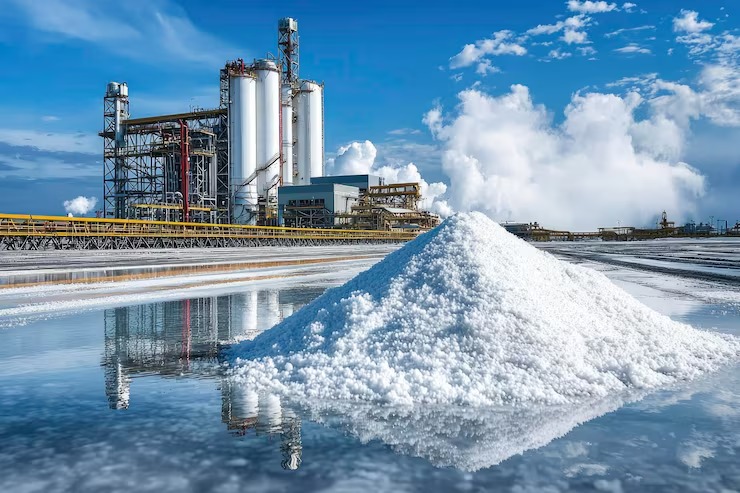
Modern infrastructure is built from the products of the chemical industry, and the chemical industry is built on salt. Bulk rock salt for industrial use is the primary feedstock for the production of chlorine, soda ash, and caustic soda.
At Sama United, we supply the raw materials that eventually become:
-
PVC (Polyvinyl Chloride): Used in the piping that delivers water to our cities and the cable insulation that powers our homes.
-
Glass and Ceramics: Soda ash, derived from salt, is a key ingredient in the manufacturing of the glass facades of our skyscrapers.
-
Aluminum and Steel: Caustic soda is used in the refining of bauxite for aluminum and the descaling of steel, both essential for modern bridges and buildings.
4. Large-Scale Water Treatment and Desalination
Infrastructure is not just about physical structures; it is about the utilities that keep a city functioning. Modern water treatment systems are massive engineering feats that rely on bulk rock salt for industrial use.
Cities use industrial rock salt for:
-
Ion Exchange: Regenerating the resins in industrial-scale water softeners, which protects the entire city’s plumbing from limescale damage.
-
Disinfection: Many water plants use salt and electrolysis to generate chlorine on-site, a safer and more efficient alternative to transporting liquid chlorine gas.
Sama United provides the high-solubility rock salt required to keep these utilities running 24/7, ensuring that clean water reaches every tap.
5. Energy Infrastructure and Thermal Storage
As the world transitions to renewable energy, the role of bulk rock salt for industrial use is expanding into high-tech infrastructure.
-
Concentrated Solar Power (CSP): Some of the world’s largest solar thermal plants use molten salt to store energy. These salts can hold heat for hours, allowing the plant to generate electricity long after the sun has set.
-
Power Plant Cooling: Traditional power plants use massive amounts of water for cooling. Salt is used to treat this water, preventing mineral buildup in cooling towers and heat exchangers.
At Sama United, we are proud to be part of the green energy supply chain, providing the minerals that make energy storage and generation more efficient.
Bulk rock salt for industrial use: The Versatile Foundation of Global Infrastructure
6. Why Purity and Specification Matter in Infrastructure
A common mistake is assuming that any rock salt is suitable for industrial use. At Sama United, we emphasize that the specification determines the success of the application.
-
Insoluble Matter: High levels of sand or grit in the salt can clog the mechanical spreaders on trucks or the pumps in a water treatment plant.
-
Chemical Balance: For soil stabilization, the specific mineral profile of the salt must be consistent to ensure a uniform reaction with the soil.
Every shipment from Sama United comes with a Certificate of Analysis (CoA), ensuring that our clients receive a product that matches their technical requirements exactly.
7. The Challenge of Global Logistics at Scale
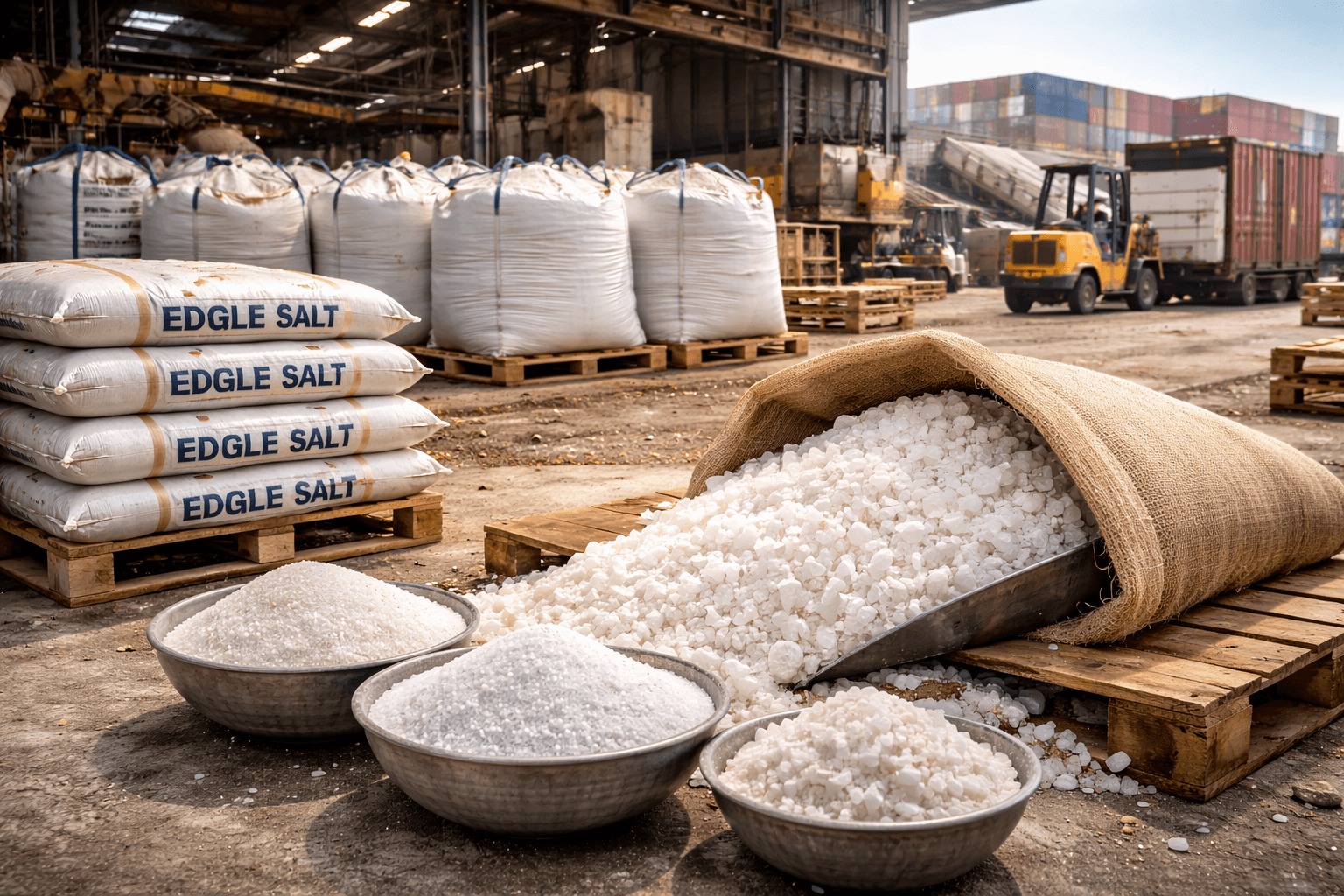
Moving bulk rock salt for industrial use is a massive logistical challenge. Salt is heavy, and moving 50,000 tons of it across the ocean requires more than just a boat; it requires a strategy.
Sama United excels in international logistics:
-
Bulk Sea Freight: We utilize large-scale vessels to move salt efficiently, reducing the carbon footprint and the cost per ton.
-
Strategic Stockpiling: We maintain reserves to ensure that our infrastructure partners have access to salt exactly when they need it, avoiding the delays that can derail a construction project.
-
Packaging Solutions: Whether you need loose bulk in a ship’s hold or 1,000kg Big Bags for a remote construction site, we tailor our delivery to your infrastructure.
8. Sustainability: Sourcing Responsibility for the Future
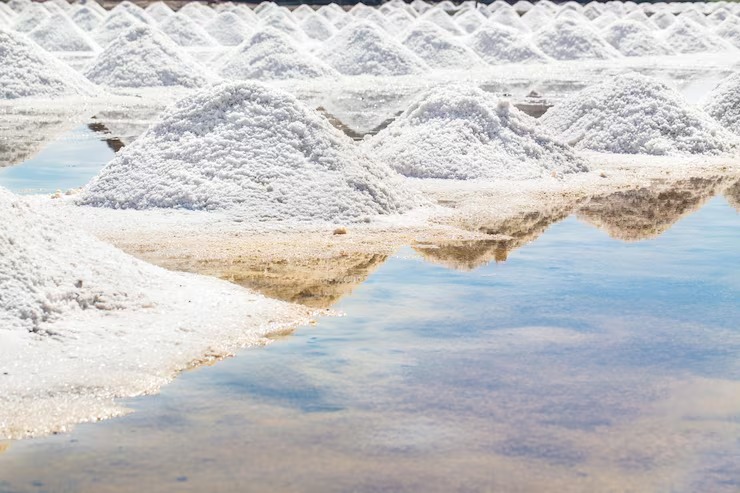
Infrastructure projects today are under intense pressure to be “Green.” At Sama United, we believe that sustainability begins with sourcing. Most of our bulk rock salt for industrial use is harvested using solar evaporation or responsible mining practices that minimize environmental disruption.
By prioritizing “low-carbon” salt, we help our infrastructure partners meet their environmental targets. We provide the transparency that modern procurement departments demand, ensuring that the salt used in your project is as ethical as it is effective.
9. The Economic Resilience of Bulk Purchasing
Infrastructure projects are planned years in advance, and budget stability is crucial. One of the greatest advantages of partnering with Sama United for bulk rock salt for industrial use is price stability.
By securing a long-term supply contract, businesses and municipalities can hedge against the price spikes that often hit the “spot market” during a sudden cold snap or a supply chain disruption. We don’t just sell salt; we sell financial security for your project’s budget.
10. Partnering with Sama United: More Than Just a Supplier
Why do global engineering firms and municipal leaders trust Sama United? It is because we understand the “High Stakes” of infrastructure. If your road salt is poor quality, people get hurt. If your water treatment salt is impure, your city’s plumbing fails.
We offer:
-
Technical Expertise: We help you choose the right grade for your specific machinery or environment.
-
UK-Based Professionalism: As a company registered in the UK (Sama United Ltd), we operate with the highest standards of international trade and transparency.
-
Global Reach: From the Mediterranean to the UK and beyond, we have the network to deliver.
Bulk rock salt for industrial use: The Versatile Foundation of Global Infrastructure
Conclusion Bulk rock salt for industrial use : Salt as the Foundation of Progress
In conclusion, bulk rock salt for industrial use is the quiet, reliable foundation of our modern world. It is the mineral that secures our roads, stabilizes our ground, purifies our water, and builds our skyscrapers. As global infrastructure continues to grow and modernize, the demand for high-quality, reliably sourced rock salt will only increase.
At Sama United Bulk rock salt for industrial use , we are dedicated to providing the salt that makes this progress possible. We understand the chemistry, we have mastered the logistics, and we share your vision of building a stronger, safer future. Don’t leave your infrastructure’s foundation to chance. Partner with the experts who understand the true weight of salt.
Are you planning a large-scale construction, water treatment, or road maintenance project? Contact the industrial experts at Sama United today for a technical consultation and a customized bulk rock salt quote.
by norhan | Jun 9, 2026 | Industrial Salt, Salt
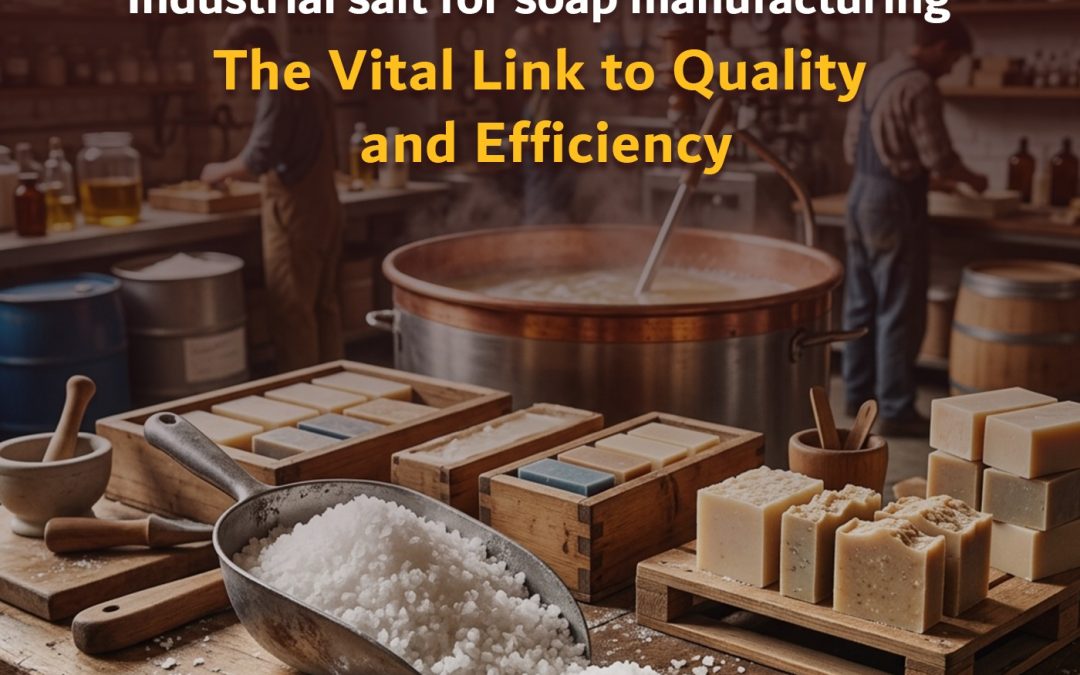
Industrial salt for soap manufacturing is much more than a secondary ingredient; it is a fundamental chemical catalyst that has governed the soap-making process for centuries. At Sama United, we have observed that while the oils and fats get all the credit for a soap’s fragrance and lather, it is the salt that performs the heavy lifting behind the scenes. From the large-scale industrial vats of multinational detergent brands to the boutique artisanal workshops, salt remains the indispensable “separator” and “hardener” of the industry.
As experts at Sama United, we understand that in the chemistry of soap, purity is the difference between a high-yield batch and a wasted production run. The soap industry relies on a specific chemical reaction known as “salting out,” and without high-quality industrial salt, this process would be inefficient, costly, and unpredictable. In this comprehensive guide, we will explore why industrial salt for soap manufacturing is the secret to success in the detergent world and how Sama United ensures that your factory receives only the most reliable minerals to fuel your production.

Industrial salt for soap manufacturing: The Vital Link to Quality and Efficiency
1. The Science of “Salting Out”: How Salt Purifies Your Soap
The most critical role of industrial salt for soap manufacturing occurs during the final stages of the saponification process. After the oils and fats have reacted with an alkali (like caustic soda), the resulting mixture is a thick mass of soap, water, and glycerin. To extract the pure soap, manufacturers use a process called “Salting Out.”
At Sama United, we explain the process simply: when salt is added to this mixture, it increases the ionic strength of the liquid. Soap is insoluble in a high-concentration salt solution, so it precipitates out of the liquid.
-
Separation: The pure soap floats to the top.
-
Glycerin Recovery: The glycerin, which is a valuable byproduct, sinks to the bottom along with the excess water.
-
Efficiency: Using high-purity salt ensures that this separation is clean and complete, allowing manufacturers to recover as much glycerin as possible, which significantly improves the financial return of the batch.
2. Achieving the Perfect Texture: Salt as a Hardening Agent
Every consumer expects a bar of soap to be firm, long-lasting, and resistant to becoming “mushy” in the shower. This physical characteristic is directly influenced by industrial salt for soap manufacturing.
By carefully controlling the amount of salt left in the final product, manufacturers can regulate the hardness of the soap bar.
-
Durability: Salt helps the soap crystals bind more tightly as they dry.
-
Longevity: A bar with the correct salt-to-fat ratio will dissolve more slowly, providing better value to the end-user.
-
Molding: In industrial production, salt ensures that the soap mass is firm enough to be cut and stamped into the iconic shapes consumers recognize.
Sama United provides salt with consistent granulometry, ensuring that it dissolves uniformly in the mix and provides a predictable hardening effect every time.
3. Why Purity is the “Non-Negotiable” Factor
A common mistake in the detergent industry is assuming that “any salt” will do. At Sama United, we have seen the negative impact of using low-grade, unrefined salt in soap production.
If the industrial salt for soap manufacturing contains impurities like magnesium or calcium, these minerals will react with the soap molecules to form “soap scum” or insoluble metallic soaps.
-
Cloudiness: Impure salt can turn a clear soap or liquid detergent cloudy.
-
Reduced Lather: Minerals in poor-quality salt interfere with the soap’s ability to create a rich foam.
-
Equipment Damage: Trace minerals can cause scaling in industrial piping and boilers.
By sourcing through Sama United, you are guaranteed a high sodium chloride (NaCl) content with ultra-low levels of these disruptive minerals, protecting both your product quality and your machinery.
4. The Economic Advantage: Improving Your Factory’s Yield
In the competitive world of soap production, margins are often tight. Industrial salt for soap manufacturing from Sama United provides a direct economic advantage.
Because our salt is highly refined and ultra-pure, you need less of it to achieve the “salting out” effect compared to unrefined rock salt.
-
Lower Chemical Waste: Pure salt means less purification is needed later in the process.
-
Faster Batch Cycles: A cleaner separation happens more quickly, allowing your factory to move through more batches per day.
-
Higher Byproduct Value: Recovering high-purity glycerin is only possible if the salt used in the separation process is clean. This creates an additional revenue stream for your business.
5. Salt in Liquid Detergents and Shampoos
While we often think of solid bars, industrial salt for soap manufacturing is equally vital in the liquid detergent and shampoo sectors. Here, salt acts as a “Viscosity Modifier.”
-
Thickening: By adding small, precise amounts of salt, manufacturers can thicken a liquid detergent, giving it the premium “rich” feel that consumers associate with quality.
-
Stability: Salt helps stabilize the surfactants in the liquid, ensuring that the ingredients don’t separate over time while sitting on a retail shelf.
Sama United specializes in providing the fine-grain salt required for these liquid applications, ensuring rapid and complete solubility without any sediment.

Industrial salt for soap manufacturing: The Vital Link to Quality and Efficiency
6. Logistical Reliability: The Sama United Promise
Soap manufacturers operate on “Just-in-Time” production schedules. A delay in the salt supply can shut down an entire factory. At Sama United, we treat our logistics with the same precision as our chemistry.
-
Bulk Strategic Sourcing: We maintain massive inventories to ensure that our soap-manufacturing partners are never left without raw materials.
-
Global Export Expertise: Whether your factory is in Europe, the UK, or the Middle East, our logistics team handles the complexities of international shipping and customs.
-
Professional Packaging: Our 25kg bags and 1000kg Big Bags are designed to keep the salt dry and free-flowing, even during long-distance sea freight.
7. The Environmental Angle: Sustainable Soap Production
As the world moves toward “Green Chemistry,” the source of your salt matters. Industrial salt for soap manufacturing from Sama United is primarily sourced from solar evaporation—the most environmentally friendly way to produce salt.
By utilizing the sun and the wind for the primary harvest, we provide a product with a significantly lower carbon footprint than traditional salt mining. This allows our clients to claim a more sustainable supply chain, a key selling point for modern eco-conscious consumers.
8. Why Your R&D Team Will Love Sama United
Research and Development (R&D) teams in the soap industry are constantly looking for ways to improve foam stability and skin feel. They need a “constant variable” to work with.
When you use Sama United as your primary supplier, you are providing your R&D team with a standardized, high-performance mineral. Our consistency allows your chemists to innovate without worrying about “batch-to-batch” variability. We provide the Certificates of Analysis (CoA) for every shipment, giving your technical team 100% transparency into the purity levels they are working with.
9. Case Study: Solving the “Soft Soap” Crisis
Recently, a regional soap manufacturer contacted Sama United because their bars were coming out of the mold too soft, causing them to deform during packaging. After analyzing their process, we discovered they were using a low-grade salt with high moisture and high magnesium content.
We switched them to our high-purity industrial salt for soap manufacturing. The result? The “Salting Out” process became 20% more efficient, and the bars achieved the perfect hardness within hours. This change saved the company thousands of pounds in wasted packaging and rejected product.
10. The Future: Scaling Your Soap Brand with Sama United
As your soap business grows, you need a partner who can scale with you. Whether you are moving from producing 5,000 bars a month to 5,000,000, Sama United has the logistical capacity and the mineral reserves to support your journey. We view our clients as long-term partners, and our goal is to see your brand succeed in the global market.

Industrial salt for soap manufacturing: The Vital Link to Quality and Efficiency
Conclusion Industrial salt for soap manufacturing : Quality Begins with the Right Mineral
In conclusion, industrial salt for soap manufacturing is the silent architect of the soap industry. It purifies, it hardens, it thickens, and it stabilizes. Without it, the modern world would be a much less clean place.
At Sama United Industrial salt for soap manufacturing , we are proud to be the foundation of this vital industry. We understand the chemistry, the economics, and the logistics of soap making. When you choose us, you aren’t just buying salt; you are buying the peace of mind that comes with professional-grade sourcing and expert service. Let us provide the purity your soap deserves.
Are you ready to elevate your soap production? Contact the experts at Sama United today for a technical consultation and a customized quote for your bulk industrial salt needs.
by norhan | Jun 7, 2026 | Industrial Salt, Salt
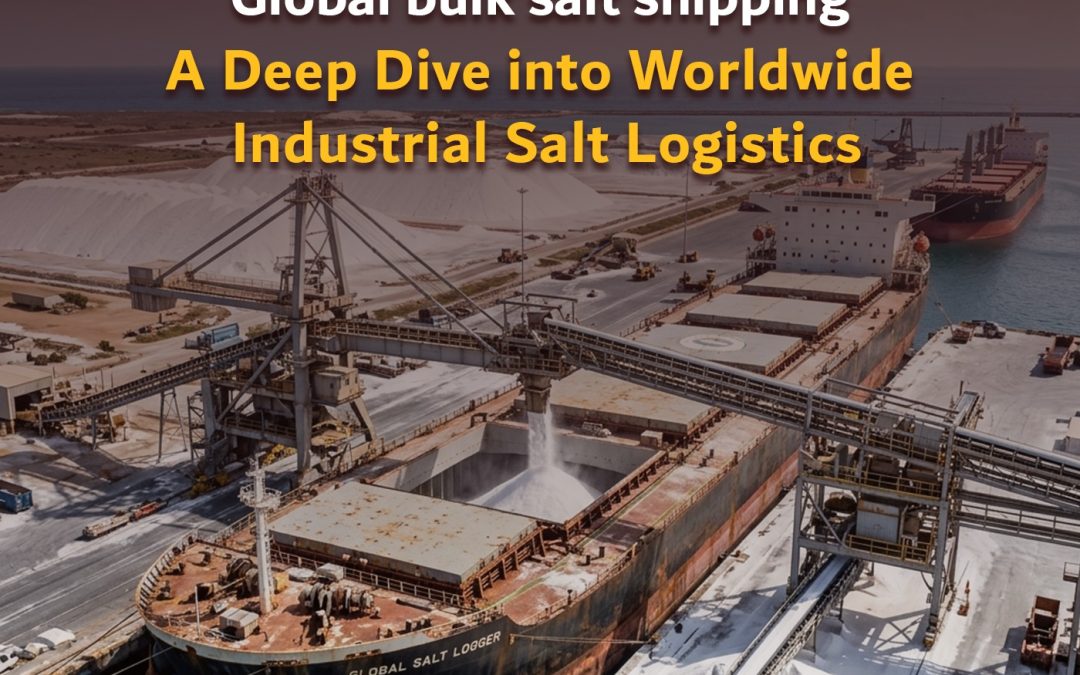
Global bulk salt shipping is a marvel of modern engineering and logistics that ensures the wheels of the world’s heavy industries keep turning. At Sama United, we move mountains of salt every year, and we understand that salt is not just another cargo. It is a heavy, corrosive, and hygroscopic mineral that requires a sophisticated logistics strategy to move across oceans safely and economically. When you are dealing with thousands of tons of sodium chloride, the margin for error is slim. A minor delay or a failure in moisture control can lead to massive financial losses.
As experts at Sama United, we have mastered the complexities of the global supply chain. We know that the journey from the salt pans to a factory gate in Europe, the UK, or Asia involves a series of high-stakes decisions. Whether you are shipping salt for de-icing, chemical production, or textile dyeing, the logistics must be precision-engineered. In this comprehensive guide, we will explore the essential factors involved in global bulk salt shipping and how Sama United ensures that our salt arrives in pristine condition, regardless of the distance.
Global bulk salt shipping: A Deep Dive into Worldwide Industrial Salt Logistics
1. The Weight Factor: Navigating Tonnage and Density
The first challenge in global bulk salt shipping is the sheer density of the product. Salt is heavy. In the shipping world, this means that a container or a vessel will often reach its weight limit long before it reaches its volume limit.
At Sama United, we work closely with shipping lines to optimize “Deadweight Tonnage” (DWT). We advise our clients on the most efficient ways to load:
-
Full Container Loads (FCL): For medium-scale industrial needs, we utilize 20-foot containers, which are better suited for heavy, dense materials than 40-foot containers.
-
Breakbulk Vessels: For our largest industrial partners, we coordinate entire ships (Handysize or Supramax vessels) that can carry 25,000 to 50,000 tons of salt in a single voyage. This is the ultimate expression of scale in global bulk salt shipping.
2. Managing Moisture: The Hygroscopic Challenge
Salt is “hygroscopic,” meaning it has a natural tendency to absorb moisture from the air. In the middle of the ocean, humidity is a constant factor. If salt absorbs too much moisture, it can “cake” or turn into a solid block, making it impossible to unload.
To protect the integrity of our cargo, Sama United employs several moisture-management strategies:
-
Heavy-Duty Liners: Every “Big Bag” or container we ship is fitted with specialized polyethylene liners that act as a vapor barrier.
-
Ventilation Protocols: For bulk carriers, we ensure that the ship’s holds are properly ventilated to prevent the “sweating” that occurs when temperatures fluctuate during the journey.
-
Kiln-Drying: For specific chemical-grade salts, we ensure the moisture content is reduced to below 0.1% before shipping, ensuring it remains free-flowing upon arrival.
3. Corrosion Control: Protecting the Infrastructure
Sodium chloride is notoriously corrosive to steel. This is a major concern in global bulk salt shipping, as it can damage the shipping containers and the internal structures of the bulk carriers.
At Sama United, we take full responsibility for the safety of the transport.
-
Container Maintenance: We inspect every container for structural integrity and ensure that the protective coatings are intact.
-
Cleaning Protocols: After salt is transported, the vessels and containers must be thoroughly washed with fresh water to prevent long-term rust. By managing these small details, we maintain excellent relationships with the world’s leading shipping lines, ensuring our clients always have access to the best freight rates.
4. The Choice of Packaging: Bags vs. Loose Bulk
One of the most important logistical decisions in global bulk salt shipping is how the salt is packaged. This choice depends on the infrastructure at the destination port and the needs of the client’s factory.
-
FIBC (Big Bags): Most of our industrial clients prefer 1,000kg or 1,250kg Flexible Intermediate Bulk Containers. These are easy to handle with forklifts and provide excellent protection against contamination.
-
25kg Sacks: Ideal for smaller factories or those without heavy-duty unloading equipment. We palletize and shrink-wrap these for maximum stability.
-
Loose Bulk: This is the most cost-effective method for massive chemical plants. The salt is loaded directly into the ship’s hold using conveyor belts and unloaded using giant grab-cranes. Sama United coordinates every step of this heavy-duty transfer.
5. Navigating International Trade and Customs
Global bulk salt shipping is as much about paperwork as it is about ships. Every country has different health, origin, and safety regulations. As a UK-registered company (Sama United Ltd), we operate with the highest levels of transparency and compliance.
Our logistics team handles:
-
Certificates of Analysis (CoA): Proving the purity and grade of the salt.
-
Health and Origin Certificates: Essential for clearing customs in the UK, EU, and Middle East.
-
Customs Brokerage: We work with expert brokers to ensure that our salt is classified correctly, preventing expensive delays and ensuring our clients pay the correct duties and taxes.
6. Strategic Sourcing and Port Logistics
Where the salt is shipped from is just as important as where it is going. Sama United utilizes strategic sourcing from the Mediterranean and Middle Eastern regions.
By selecting ports with deep-water capabilities and efficient loading technology, we reduce the “Turnaround Time” for vessels. This efficiency is a core part of how we manage to keep our pricing competitive in the global bulk salt shipping market. We choose ports that are located near major shipping lanes, reducing the number of “deviation days” for the vessels.
Global bulk salt shipping: A Deep Dive into Worldwide Industrial Salt Logistics
7. Real-Time Tracking and Communication
In the modern world, our clients need to know exactly where their thousands of tons of salt are at any given moment. Sama United utilizes advanced tracking systems to provide real-time updates.
Whether your salt is currently being loaded at the port, crossing the Atlantic, or clearing customs, our team provides proactive communication. We understand that your factory’s production schedule depends on our delivery, and we take that responsibility very seriously.
8. Reducing the “Cost per Ton”: Freight Rate Management
The cost of global bulk salt shipping is highly volatile, influenced by fuel prices (Bunker Adjustment Factor), seasonal demand, and geopolitical events.
At Sama United, we leverage our bulk buying power to secure the best possible freight rates. We don’t just accept the first quote; we negotiate with multiple shipping lines and freight forwarders. By offering long-term supply contracts to our clients, we can “lock in” logistics costs, protecting your business from the sudden price spikes that often hit those who buy on the spot market.
9. Sustainability in Salt Logistics
As the world moves toward a greener future, global bulk salt shipping must also adapt. Sama United is committed to reducing the environmental impact of our logistics.
-
Optimizing Shipments: By maximizing container loads, we reduce the total number of shipments needed, lowering the CO2 emissions per ton.
-
Eco-Friendly Packaging: We are increasingly moving toward recyclable polypropylene for our big bags.
-
Solar Salt Priority: By sourcing salt harvested through solar evaporation (which uses the sun and wind), we start with a product that has a much lower carbon footprint than mined rock salt.
10. Why Partner with Sama United for Your Global Logistics?
Shipping thousands of tons of salt across the globe is not a job for amateurs. It requires a partner with deep technical knowledge, a global network of shipping contacts, and a commitment to quality. Sama United provides exactly that.
We offer:
-
UK-Based Professionalism: We operate with the integrity and reliability of a UK-registered company.
-
Customized Solutions: We don’t believe in “one size fits all.” We tailor the packaging, the vessel type, and the shipping route to fit your specific budget and timeline.
-
Expert Oversight: From the moment the salt is harvested until it is offloaded at your facility, our experts are monitoring every detail.
Global bulk salt shipping: A Deep Dive into Worldwide Industrial Salt Logistics
Conclusion Global bulk salt shipping : Seamless Salinity Across the Globe
In conclusion, global bulk salt shipping is the vital link between the world’s salt resources and the industries that depend on them. It is a complex, challenging, but ultimately rewarding process that requires constant vigilance and expertise.
At Sama United, we take pride in being the bridge that connects continents. We handle the heavy lifting, the complex paperwork, and the moisture-laden sea breezes so that you can focus on what you do best: running your business. Let our expertise in global logistics be the foundation of your industrial success.
Are you ready to streamline your international salt supply? Contact the logistics experts at Sama United today for a personalized quote and a shipping plan tailored to your worldwide business needs.
by norhan | Jun 5, 2026 | Industrial Salt, Salt
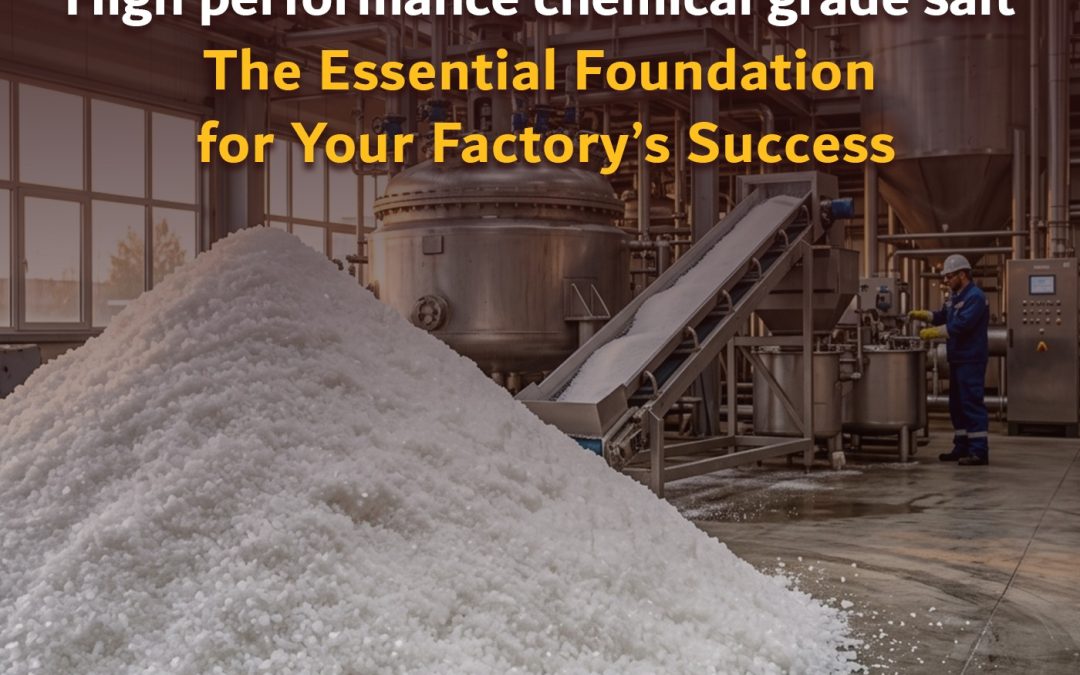
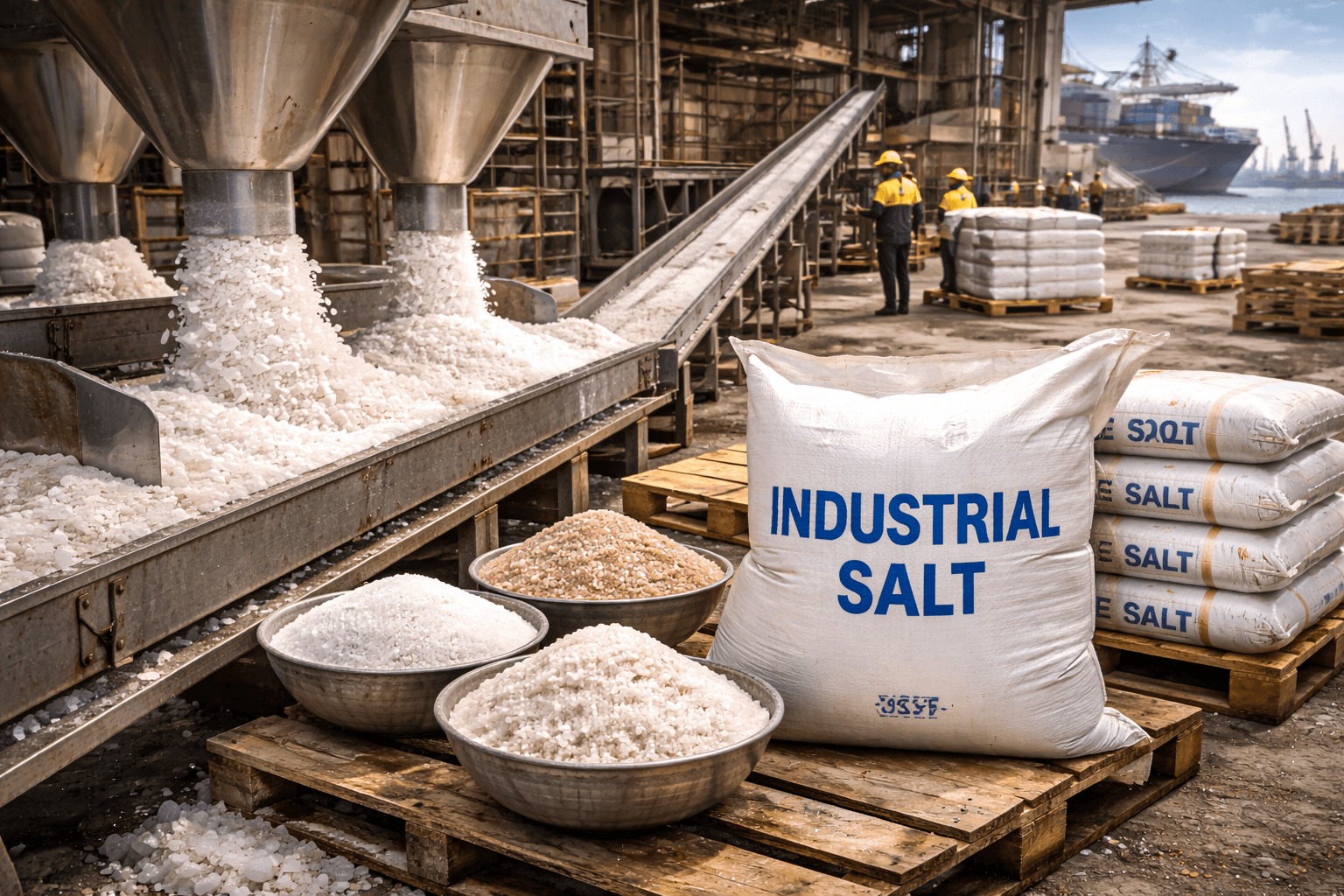
High performance chemical grade salt is much more than a simple mineral additive; it is the silent engine that drives the efficiency, safety, and profitability of modern industrial plants. At Sama United, we have spent years working closely with factory managers, chemical engineers, and procurement officers. We have seen firsthand that while salt might be a small line item in a massive budget, its quality dictates the health of your entire production line. In an era where precision is the baseline for competition, using generic salt in a specialized factory setting is a risk that most market leaders are no longer willing to take.
As experts at Sama United, we often tell our partners that “salt is not just salt.” There is a world of difference between standard industrial salt and the ultra-pure, high performance grades required for sophisticated chemical processes. Whether your factory is involved in textile dyeing, plastic manufacturing, water treatment, or metal processing, the salt you choose is a fundamental chemical reagent. In this guide, we will explore why high performance chemical grade salt from Sama United is the smartest investment your facility can make this year.
High performance chemical grade salt: The Essential Foundation for Your Factory’s Success
1. The Purity Gap: Why “Good Enough” is No Longer Enough
The most critical factor that distinguishes high performance chemical grade salt from its lower-quality counterparts is chemical purity. In a lab or a large-scale chemical reactor, the goal is always a predictable reaction. Standard salt often contains trace amounts of magnesium, calcium, and heavy metals. While these might seem insignificant (often less than 1%), they act as “interlopers” in your chemical equations.
At Sama United, our high performance grades boast a sodium chloride (NaCl) purity that often exceeds 99.5%. By eliminating these impurities, we provide your factory with a “blank canvas.”
-
Predictable Reactions: Your chemists can calculate dosing with 100% accuracy.
-
Reduced Side Reactions: Fewer impurities mean fewer unwanted chemical byproducts, ensuring your final product meets the highest quality standards.
-
Brilliant Results: In industries like glass and ceramics, purity prevents discoloration, ensuring a crystal-clear finish.
2. Protecting Your Industrial Infrastructure: The War Against Scaling
One of the most expensive headaches for any factory manager is equipment downtime. Generic salt is notorious for causing “scaling” and mineral buildup in boilers, pipes, and electrolytic cells. This is primarily due to high levels of calcium and magnesium found in lower-grade salts.
When you switch to high performance chemical grade salt from Sama United, you are essentially buying insurance for your machinery.
-
Extended Equipment Life: Pure salt doesn’t leave behind the hard mineral crust that chokes industrial piping.
-
Lower Maintenance Costs: Fewer “shut-down days” for descaling means more productive hours for your factory.
-
Energy Efficiency: A clean heat exchanger or boiler operates much more efficiently than one coated in mineral scale, directly reducing your factory’s energy bills.
3. Consistency: The Key to Large-Scale Industrial Yield
In large-scale manufacturing, consistency is the holy grail. If your raw materials vary from one batch to the next, your final product will too. This variability is a nightmare for quality control teams.
Sama United prides itself on being a stabilizer in your supply chain. Our high performance chemical grade salt undergoes rigorous granulometry (grain size) testing. Whether you need an ultra-fine powder for rapid dissolution or a specific crystal size for slow-release applications, we provide batch-to-batch uniformity. This ensures that your production parameters remain stable, your “yield” stays high, and your customers receive the same perfect product every single time.
4. The Competitive Edge in Textiles and Dyeing
For our clients in the textile industry, the role of salt is vital. Salt is used to “push” the dye into the fabric. However, if that salt contains trace iron or copper, it can actually alter the shade of the dye. Your “perfect blue” could easily become a “muddy teal.”
By utilizing high performance chemical grade salt, textile factories can achieve deeper, more vibrant colors with less dye. Sama United understands the delicate chemistry of the dye vat. Our salt is “soft” and pure, ensuring that the only thing binding to your fabric is the color you intended. This level of performance is what allows premium clothing brands to maintain their high standards.
5. Chlor-Alkali and Plastics: Driving the Global Economy
The plastics industry, specifically the production of PVC, relies heavily on the electrolysis of salt brine. This process is incredibly sensitive. Modern “Membrane Cell” technology requires salt of the highest chemical grade to prevent fouling the expensive membranes.
At Sama United, we provide the foundation for these massive sectors. Our high performance chemical grade salt is specifically refined to meet the “Electrolysis Grade” standards. By choosing a partner who understands the technical requirements of the chlor-alkali process, factories can maximize their chlorine and caustic soda output while protecting their multi-million-pound investment in electrolytic cells.
High performance chemical grade salt: The Essential Foundation for Your Factory’s Success
6. Solving the Water Treatment Puzzle
Industrial water treatment is a 24/7 operation. Whether it’s for a city’s drinking water or an industrial cooling tower, the salt used for resin regeneration must be pure. Impure salt can “poison” the ion-exchange resins, rendering them useless over time.
Factories that use high performance chemical grade salt from Sama United see a longer lifespan for their water treatment systems. Our salt dissolves cleanly and completely, leaving no sediment at the bottom of your brine tanks and ensuring that your water remains soft and your systems remain scale-free.
7. Logistics and Supply Chain Resilience: The Sama United Way
In the industrial world, the best product in the world is useless if it isn’t there when you need it. Sama United is more than just a supplier; we are a logistics powerhouse. We understand that a factory cannot wait.
We offer:
-
Bulk Strategic Sourcing: Ensuring we have the volume to handle your largest orders.
-
Professional Packaging: Our 25kg and 1000kg Big Bags are designed for the rigors of industrial handling and long-distance export.
-
UK-Based Reliability: Registered in the UK, Sama United Ltd operates with a commitment to transparency, ethical business practices, and international standards.
8. The ROI of Quality: Why Pure Salt is Actually Cheaper
There is a common misconception that high-purity salt is an “extra expense.” At Sama United, we challenge our clients to look at the “Total Cost of Ownership.”
When you buy cheap, low-grade salt, you pay for it in other ways:
-
More Chemical Additives: You have to use more chemicals to purify the brine.
-
More Maintenance: Frequent cleaning of clogged filters and pipes.
-
Higher Waste: Inconsistent batches that have to be discarded.
When you invest in high performance chemical grade salt, you are reducing these hidden costs. In the long run, pure salt is the most cost-effective choice for any modern factory.
9. Sustainability and Environmental Responsibility
As we move toward “Green Manufacturing,” the environmental impact of your raw materials matters. Sama United prioritizes salt harvested through solar evaporation—the most natural and energy-efficient way to produce salt. By choosing our high performance chemical grade salt, you are supporting a supply chain that respects the ocean’s ecosystem and utilizes renewable energy (sun and wind) for the primary harvest.
10. Expert Consultation: Partnering with Sama United
We don’t just ship bags of salt; we provide solutions. Our team at Sama United is available to consult with your technical department to determine the exact specification your factory needs. Do you need a specific moisture level? A certain pH balance? A particular grain size? We have the technical expertise to tailor our supply to your machinery.
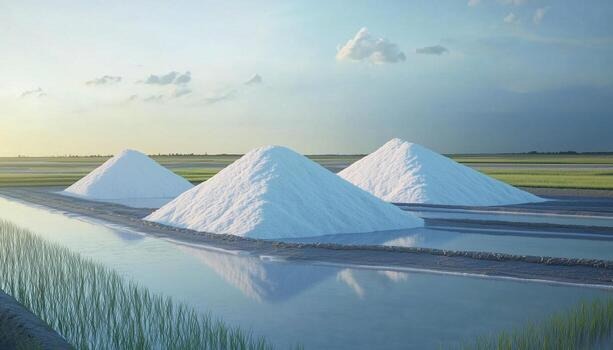
High performance chemical grade salt: The Essential Foundation for Your Factory’s Success
Conclusion High performance chemical grade salt : Elevate Your Production with Sama United
In conclusion, high performance chemical grade salt is the foundation upon which industrial excellence is built. It protects your expensive machinery, ensures the quality of your products, and stabilizes your production costs. In a world where every percentage point of efficiency matters, your choice of salt supplier is a strategic decision.
At Sama United, we are dedicated to providing the purity, consistency, and logistical reliability that the modern factory demands. We invite you to experience the difference that professional-grade sourcing can make. Let us handle the chemistry of your salt, so you can focus on building the future of your industry.
Are you ready to optimize your factory’s output? Contact the experts at Sama United today for a technical consultation and a customized quote for your bulk chemical grade salt needs.
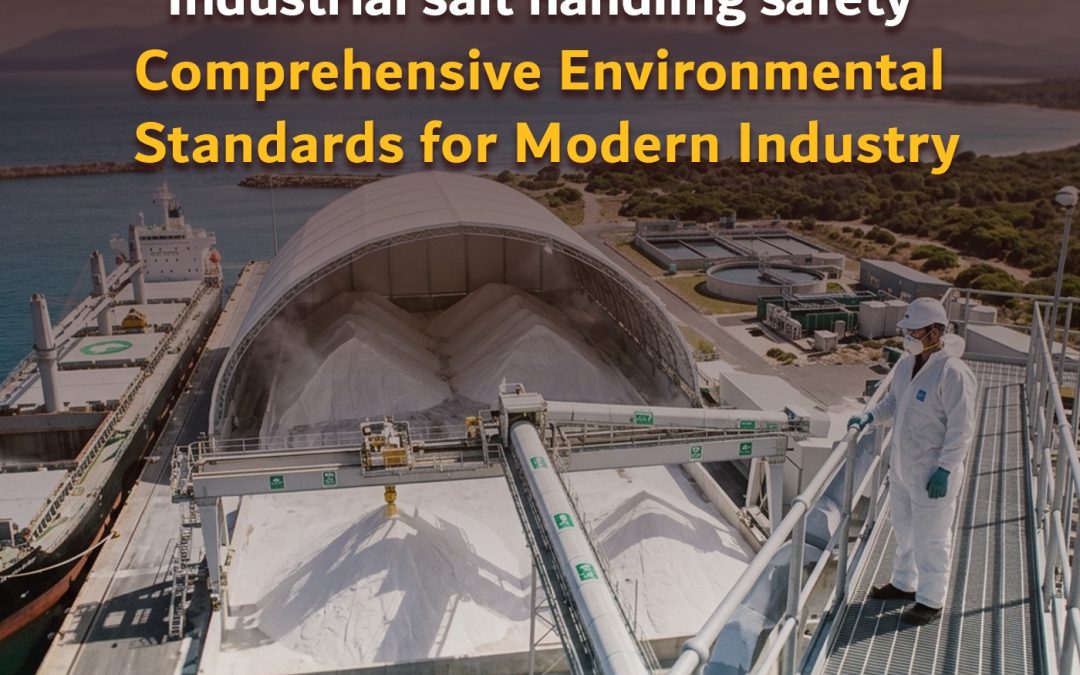
by norhan | Jun 3, 2026 | Industrial Salt, Salt
Industrial salt handling safety is a critical pillar of modern industrial operations that often goes overlooked. At Sama United, we have spent years supplying high-purity salt to the world’s largest chemical, textile, and manufacturing plants. One lesson we’ve learned is that while salt is a natural mineral, handling it on an industrial scale requires a sophisticated understanding of environmental science and safety protocols. When you are moving thousands of tons of sodium chloride, it is no longer just a “simple mineral”—it is a powerful substance that, if mismanaged, can significantly impact the surrounding ecosystem.
As experts at Sama United, we believe that the true value of a supplier lies in their ability to guide clients through the complexities of safe handling. Whether you are using salt for water treatment, de-icing, or as a chemical precursor, maintaining high environmental standards is essential for regulatory compliance, worker safety, and the long-term health of our planet. In this comprehensive guide, we will explore the essential factors of industrial salt handling safety and how Sama United helps its partners achieve zero-impact operations.
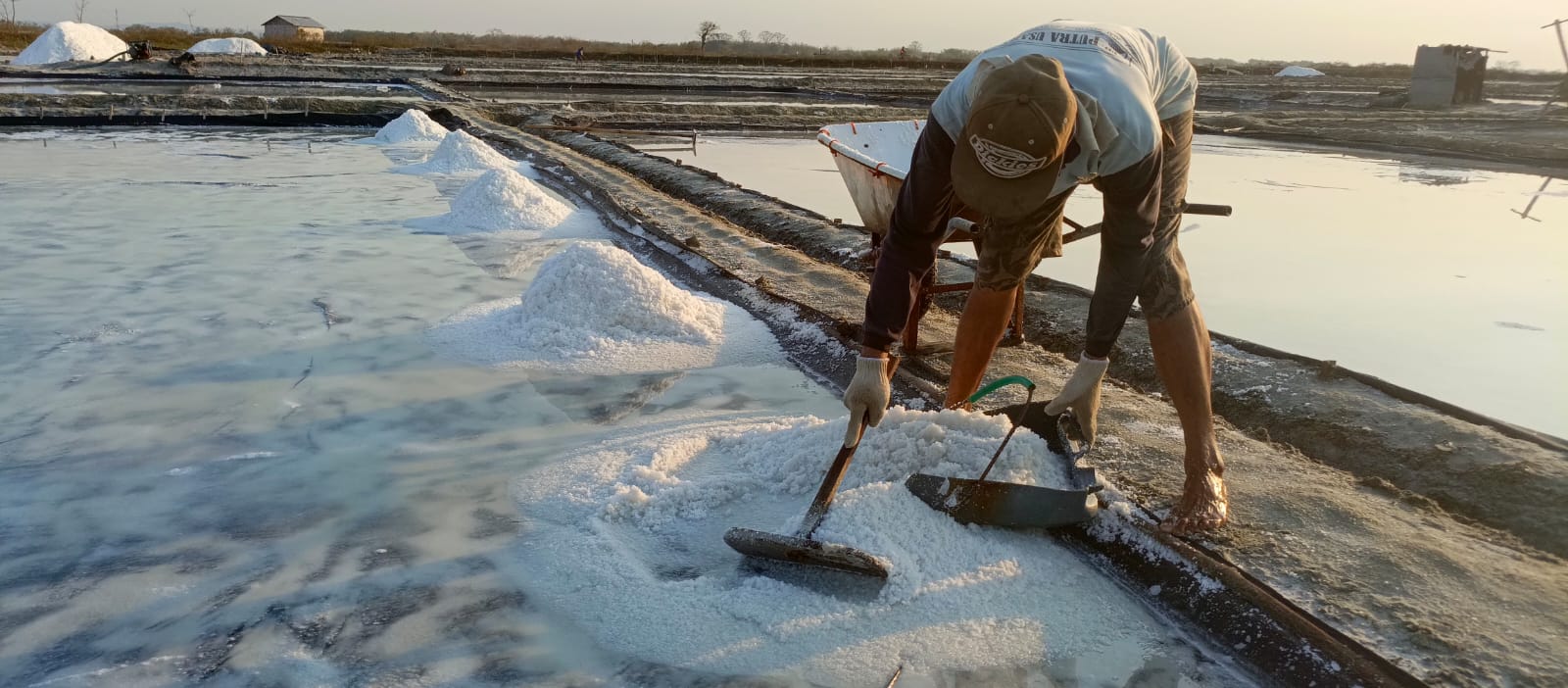
Industrial salt handling safety: Comprehensive Environmental Standards for Modern Industry
1. The Environmental Challenge: Understanding Brine Runoff
The primary environmental concern in industrial salt handling safety is “Brine Runoff.” When large stockpiles of salt are exposed to rain or high humidity, the salt dissolves and creates a highly concentrated saline solution (brine).
If this brine is not contained:
-
Groundwater Contamination: It can seep into the soil and reach underground aquifers, raising salinity levels and making water undrinkable.
-
Vegetation Damage: High salt concentrations in the soil create “physiological drought” for plants, essentially dehydrating and killing nearby flora.
-
Aquatic Life Impact: If runoff reaches local streams or ponds, it can disrupt the osmotic balance of freshwater fish and insects.
At Sama United, we work with our clients to design storage solutions that utilize impermeable floors and drainage systems that capture and treat any accidental runoff before it leaves the facility.
2. Best Practices for Bulk Storage and Containment
Proper storage is the foundation of industrial salt handling safety. At Sama United, we recommend a “Covered Storage” policy for all bulk industrial salt.
-
Impermeable Bases: Salt should always be stored on high-density concrete or asphalt pads. These surfaces prevent the salt from leaching into the ground.
-
Roofing and Enclosures: Storing salt inside a permanent structure or under high-quality, UV-resistant tarps significantly reduces the risk of wind-blown salt dust and rain-induced runoff.
-
Berms and Barriers: Constructing low walls or berms around the loading zones ensures that any spilled salt is contained within a designated area and can be easily cleaned up.
3. Salt Dust Control: Protecting Air Quality and Health
During the loading and unloading process, salt particles can become airborne. Managing this dust is a vital part of industrial salt handling safety.
-
Equipment Maintenance: Using closed conveyor systems and well-maintained pneumatic blowers can reduce dust clouds.
-
Wetting Techniques: In some dry-climate environments, lightly misting the salt with water (carefully regulated to avoid clumping) can help keep dust particles on the ground.
-
Worker Respiratory Safety: While salt dust is not toxic, it is an irritant. At Sama United, we advise all handlers to use appropriate masks and goggles when working in high-dust environments to prevent respiratory and eye irritation.
4. Personal Protective Equipment (PPE) for Handlers
Human safety is the core of industrial salt handling safety. Salt can be surprisingly harsh on the human body over long periods of exposure.
-
Skin Protection: Prolonged contact with salt can cause “salt sores” or extreme skin dryness. Workers should wear moisture-resistant gloves and protective clothing.
-
Eye Safety: Salt crystals can be sharp and abrasive. Safety goggles are mandatory during any bulk transfer operation.
-
Footwear: Salt is highly corrosive to leather and some rubbers. Specialized safety boots that are resistant to chemical corrosion are necessary for workers frequently walking on salt-treated surfaces.
5. Managing Spills: The “Dry Cleanup” Rule
When a spill occurs during transport or loading, the immediate reaction might be to wash it away with water. However, in industrial salt handling safety, this is the worst possible action. Washing salt away creates instant brine that is much harder to contain.
The Sama United protocol for spill management is “Dry Cleanup”:
-
Stop the Source: Immediately stop the loading or transport.
-
Mechanical Recovery: Use brooms, shovels, or industrial vacuums to collect the dry salt.
-
Recycle or Dispose: If the salt is still pure, it can be returned to the stockpile. If contaminated, it should be disposed of in a designated hazardous-safe landfill.
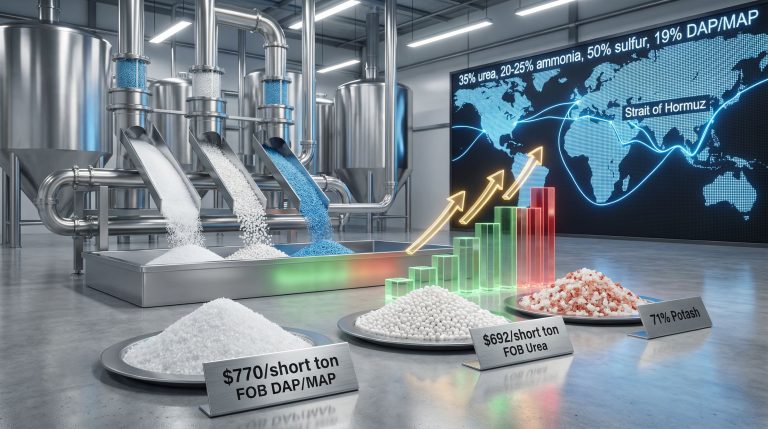
Industrial salt handling safety: Comprehensive Environmental Standards for Modern Industry
6. Corrosion Prevention in Industrial Infrastructure
Salt is a natural corrosive agent. One of the logistical aspects of industrial salt handling safety is protecting the very equipment used to handle the salt.
-
Non-Corrosive Materials: Whenever possible, use fiberglass, plastic, or stainless steel for hoppers and piping.
-
Regular Wash-downs: While we avoid washing salt into the environment, industrial machinery (like trucks and loaders) must be washed regularly in a dedicated wash-bay that captures and recycles the salty water. This prevents the “rusting out” of expensive infrastructure.
7. Regulatory Compliance and the MSDS
Every manager responsible for industrial salt handling safety must be intimately familiar with the Material Safety Data Sheet (MSDS) or the Safety Data Sheet (SDS).
At Sama United, we provide comprehensive SDS documentation for all our products. These sheets detail the chemical properties, hazard levels (which are low for NaCl but still exist), and emergency procedures. Staying compliant with local environmental agencies requires keeping these records updated and ensuring that all staff are trained in their contents.
8. Training and Human Factors
Technology and infrastructure only work if the people involved are trained. A major part of the Sama United mission is education. We offer consultation to our clients’ safety officers to ensure that every forklift operator and warehouse manager understands the environmental stakes. A culture of safety reduces accidents, minimizes environmental fines, and improves the overall efficiency of the plant.
9. Sustainability and Ethical Sourcing
We believe that industrial salt handling safety begins at the source. At Sama United, we prioritize salt harvested through traditional solar evaporation. This process is inherently more sustainable and often results in a product with fewer chemical additives than salt derived through heavy mining. By starting with a cleaner, more natural product, the environmental management at the final destination becomes significantly easier.
10. Why Partner with Sama United for Safety?
Choosing Sama United means choosing a partner who values your reputation and your environmental footprint as much as you do. We don’t just “drop and go.” We ensure our delivery drivers follow strict safety protocols during unloading, and we provide packaging solutions that are durable and leak-proof.
Our UK-based headquarters (Sama United Ltd) ensures that we operate under some of the world’s strictest corporate responsibility standards. We bring this professionalism to every client, whether they are in the UK, Europe, or beyond. We understand that your business’s sustainability goals are ambitious, and our goal is to provide the high-quality salt you need without compromising your environmental integrity.
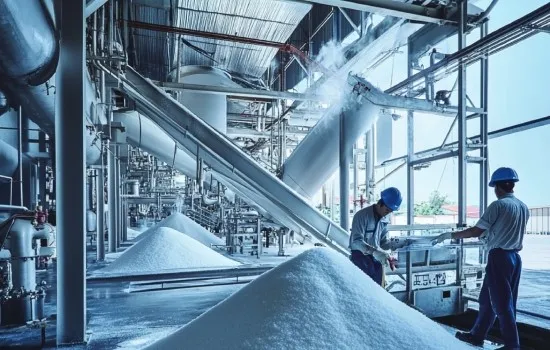
Industrial salt handling safety: Comprehensive Environmental Standards for Modern Industry
Conclusion: Safety as a Competitive Advantage
In conclusion, industrial salt handling safety is not just a list of rules; it is a mindset that protects your employees, your infrastructure, and the natural world. In the modern industrial landscape, being “Green” and “Safe” is a major competitive advantage. Companies that manage their salt supplies with environmental precision are viewed more favorably by regulators and consumers alike.
At Sama United, we are proud to be the foundation of this safety-first approach. Let us help you optimize your salt handling processes, secure your containment systems, and ensure that your use of this essential mineral is as clean and safe as possible. Together, we can build an industrial future that is both productive and planet-friendly.
Are you reviewing your environmental safety protocols? Contact the experts at Sama United today for a safety consultation and a quote for our high-purity, safely-handled industrial salt solutions.