
Industrial salt handling safety is a critical pillar of modern industrial operations that often goes overlooked. At Sama United, we have spent years supplying high-purity salt to the world’s largest chemical, textile, and manufacturing plants. One lesson we’ve learned is that while salt is a natural mineral, handling it on an industrial scale requires a sophisticated understanding of environmental science and safety protocols. When you are moving thousands of tons of sodium chloride, it is no longer just a “simple mineral”—it is a powerful substance that, if mismanaged, can significantly impact the surrounding ecosystem.
As experts at Sama United, we believe that the true value of a supplier lies in their ability to guide clients through the complexities of safe handling. Whether you are using salt for water treatment, de-icing, or as a chemical precursor, maintaining high environmental standards is essential for regulatory compliance, worker safety, and the long-term health of our planet. In this comprehensive guide, we will explore the essential factors of industrial salt handling safety and how Sama United helps its partners achieve zero-impact operations.
Industrial salt handling safety: Comprehensive Environmental Standards for Modern Industry
1. The Environmental Challenge: Understanding Brine Runoff
The primary environmental concern in industrial salt handling safety is “Brine Runoff.” When large stockpiles of salt are exposed to rain or high humidity, the salt dissolves and creates a highly concentrated saline solution (brine).
If this brine is not contained:
-
Groundwater Contamination: It can seep into the soil and reach underground aquifers, raising salinity levels and making water undrinkable.
-
Vegetation Damage: High salt concentrations in the soil create “physiological drought” for plants, essentially dehydrating and killing nearby flora.
-
Aquatic Life Impact: If runoff reaches local streams or ponds, it can disrupt the osmotic balance of freshwater fish and insects.
At Sama United, we work with our clients to design storage solutions that utilize impermeable floors and drainage systems that capture and treat any accidental runoff before it leaves the facility.
2. Best Practices for Bulk Storage and Containment
Proper storage is the foundation of industrial salt handling safety. At Sama United, we recommend a “Covered Storage” policy for all bulk industrial salt.
-
Impermeable Bases: Salt should always be stored on high-density concrete or asphalt pads. These surfaces prevent the salt from leaching into the ground.
-
Roofing and Enclosures: Storing salt inside a permanent structure or under high-quality, UV-resistant tarps significantly reduces the risk of wind-blown salt dust and rain-induced runoff.
-
Berms and Barriers: Constructing low walls or berms around the loading zones ensures that any spilled salt is contained within a designated area and can be easily cleaned up.
3. Salt Dust Control: Protecting Air Quality and Health
During the loading and unloading process, salt particles can become airborne. Managing this dust is a vital part of industrial salt handling safety.
-
Equipment Maintenance: Using closed conveyor systems and well-maintained pneumatic blowers can reduce dust clouds.
-
Wetting Techniques: In some dry-climate environments, lightly misting the salt with water (carefully regulated to avoid clumping) can help keep dust particles on the ground.
-
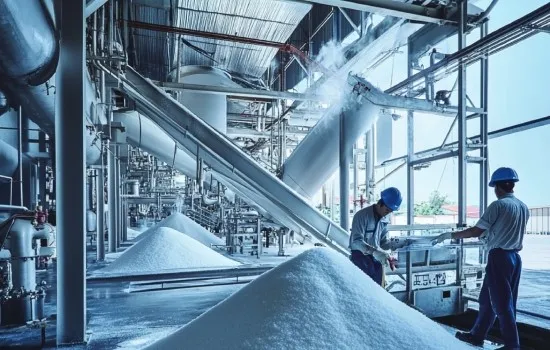
Worker Respiratory Safety: While salt dust is not toxic, it is an irritant. At Sama United, we advise all handlers to use appropriate masks and goggles when working in high-dust environments to prevent respiratory and eye irritation.
4. Personal Protective Equipment (PPE) for Handlers
Human safety is the core of industrial salt handling safety. Salt can be surprisingly harsh on the human body over long periods of exposure.
-
Skin Protection: Prolonged contact with salt can cause “salt sores” or extreme skin dryness. Workers should wear moisture-resistant gloves and protective clothing.
-
Eye Safety: Salt crystals can be sharp and abrasive. Safety goggles are mandatory during any bulk transfer operation.
-
Footwear: Salt is highly corrosive to leather and some rubbers. Specialized safety boots that are resistant to chemical corrosion are necessary for workers frequently walking on salt-treated surfaces.
5. Managing Spills: The “Dry Cleanup” Rule
When a spill occurs during transport or loading, the immediate reaction might be to wash it away with water. However, in industrial salt handling safety, this is the worst possible action. Washing salt away creates instant brine that is much harder to contain.
The Sama United protocol for spill management is “Dry Cleanup”:
-
Stop the Source: Immediately stop the loading or transport.
-
Mechanical Recovery: Use brooms, shovels, or industrial vacuums to collect the dry salt.
-
Recycle or Dispose: If the salt is still pure, it can be returned to the stockpile. If contaminated, it should be disposed of in a designated hazardous-safe landfill.
Industrial salt handling safety: Comprehensive Environmental Standards for Modern Industry
6. Corrosion Prevention in Industrial Infrastructure
Salt is a natural corrosive agent. One of the logistical aspects of industrial salt handling safety is protecting the very equipment used to handle the salt.
-
Non-Corrosive Materials: Whenever possible, use fiberglass, plastic, or stainless steel for hoppers and piping.
-
Regular Wash-downs: While we avoid washing salt into the environment, industrial machinery (like trucks and loaders) must be washed regularly in a dedicated wash-bay that captures and recycles the salty water. This prevents the “rusting out” of expensive infrastructure.
7. Regulatory Compliance and the MSDS
Every manager responsible for industrial salt handling safety must be intimately familiar with the Material Safety Data Sheet (MSDS) or the Safety Data Sheet (SDS).
At Sama United, we provide comprehensive SDS documentation for all our products. These sheets detail the chemical properties, hazard levels (which are low for NaCl but still exist), and emergency procedures. Staying compliant with local environmental agencies requires keeping these records updated and ensuring that all staff are trained in their contents.
8. Training and Human Factors
Technology and infrastructure only work if the people involved are trained. A major part of the Sama United mission is education. We offer consultation to our clients’ safety officers to ensure that every forklift operator and warehouse manager understands the environmental stakes. A culture of safety reduces accidents, minimizes environmental fines, and improves the overall efficiency of the plant.
9. Sustainability and Ethical Sourcing
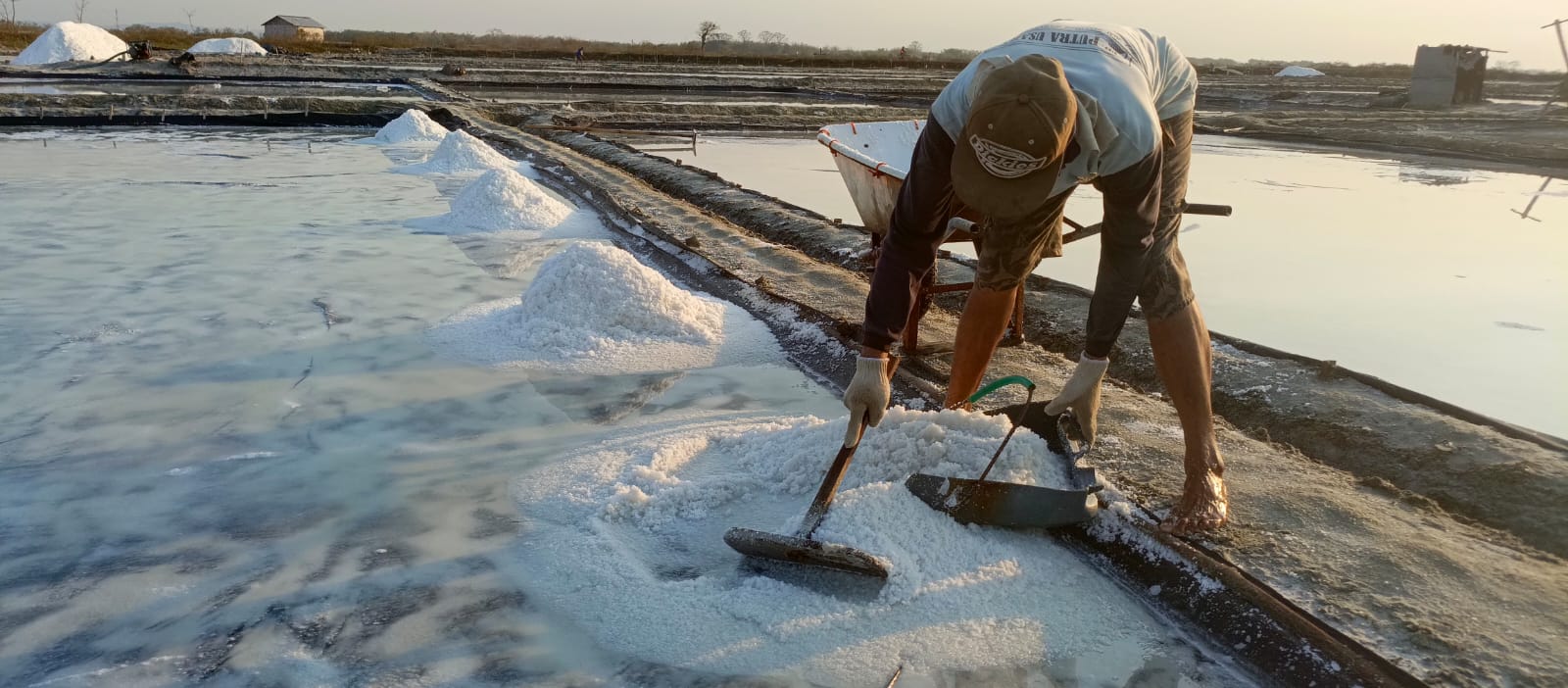
We believe that industrial salt handling safety begins at the source. At Sama United, we prioritize salt harvested through traditional solar evaporation. This process is inherently more sustainable and often results in a product with fewer chemical additives than salt derived through heavy mining. By starting with a cleaner, more natural product, the environmental management at the final destination becomes significantly easier.
10. Why Partner with Sama United for Safety?
Choosing Sama United means choosing a partner who values your reputation and your environmental footprint as much as you do. We don’t just “drop and go.” We ensure our delivery drivers follow strict safety protocols during unloading, and we provide packaging solutions that are durable and leak-proof.
Our UK-based headquarters (Sama United Ltd) ensures that we operate under some of the world’s strictest corporate responsibility standards. We bring this professionalism to every client, whether they are in the UK, Europe, or beyond. We understand that your business’s sustainability goals are ambitious, and our goal is to provide the high-quality salt you need without compromising your environmental integrity.
Industrial salt handling safety: Comprehensive Environmental Standards for Modern Industry
Conclusion: Safety as a Competitive Advantage
In conclusion, industrial salt handling safety is not just a list of rules; it is a mindset that protects your employees, your infrastructure, and the natural world. In the modern industrial landscape, being “Green” and “Safe” is a major competitive advantage. Companies that manage their salt supplies with environmental precision are viewed more favorably by regulators and consumers alike.
At Sama United, we are proud to be the foundation of this safety-first approach. Let us help you optimize your salt handling processes, secure your containment systems, and ensure that your use of this essential mineral is as clean and safe as possible. Together, we can build an industrial future that is both productive and planet-friendly.
Are you reviewing your environmental safety protocols? Contact the experts at Sama United today for a safety consultation and a quote for our high-purity, safely-handled industrial salt solutions.