by norhan | Jun 25, 2026 | Rock Salt, Salt
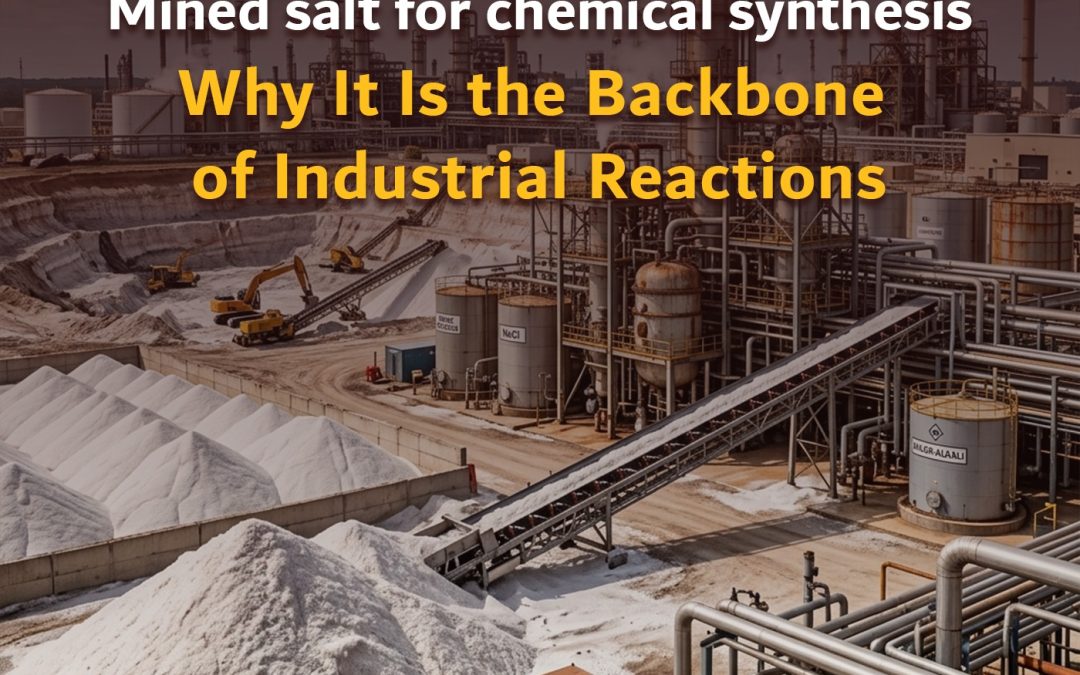
Mined salt for chemical synthesis is far more than a simple raw material; it is the fundamental chemical engine that drives thousands of industrial reactions every single day. At Sama United, we have observed that while the world often focuses on precious metals or rare gases, it is the humble sodium chloride crystal, pulled from deep within the earth, that serves as the molecular bridge for modern life. From the production of life-saving pharmaceuticals to the creation of the advanced polymers used in aerospace, the chemistry begins with salt.
As experts at Sama United, our technical team understands that in a reactor or an electrolytic cell, salt is not just an additive—it is a reactant. The quality, purity, and mineral profile of that salt dictate the speed, efficiency, and safety of the resulting chemical reaction. In this comprehensive exploration, we will dive into the science of why Mined salt for chemical synthesis remains the preferred choice for industrial chemists and how Sama United ensures that your facility receives the high-precision minerals required for world-class manufacturing.

Mined salt for chemical synthesis: Why It Is the Backbone of Industrial Reactions
1. The Molecular Logic: Why Salt is a Chemical Powerhouse
To understand why Mined salt for chemical synthesis is so crucial, we must look at its molecular structure. Sodium Chloride (NaCl) is an ionic compound. When dissolved in water (brine) or melted into a molten state, its ions become mobile, allowing for a wide array of chemical manipulations.
At Sama United, we categorize the chemical utility of salt into two primary pathways:
-
The Chlorine Pathway: Extracting chlorine gas for use in PVC, bleaches, and water treatment.
-
The Sodium Pathway: Extracting sodium for use in caustic soda (sodium hydroxide), sodium carbonate, and metallic sodium.
Mined salt, or rock salt, is particularly prized for these pathways because it comes from protected underground seams that have been shielded from modern environmental pollutants for millions of years. This geological “aging” creates a stable, high-density crystal that behaves predictably in a laboratory or factory setting.
2. Purity and the Avoidance of “Side Reactions”
In the world of chemical synthesis, “purity” is not just a marketing term—it is a functional requirement. One of the primary reasons our clients at Sama United choose Mined salt for chemical synthesis is the reduction of unwanted side reactions.
When salt is impure, containing trace amounts of magnesium, calcium, or heavy metals, these “interlopers” participate in the chemical reaction alongside the sodium and chlorine.
-
Contamination: Trace metals can act as unwanted catalysts, producing “off-notes” in fragrances or cloudiness in clear resins.
-
Reduced Yield: Every molecule of impurity is a molecule that isn’t contributing to your final product, lowering your overall production yield.
-
Waste Management: Impure salt creates more chemical “sludge” that must be neutralized and disposed of, increasing your environmental overhead.
By providing mined salt with a purity level of 99% or higher, Sama United helps you keep your chemical equations clean and your production costs low.
3. The Chlor-Alkali Industry: Salt as a Direct Reactant
The largest consumer of Mined salt for chemical synthesis is undoubtedly the chlor-alkali sector. This industry is the foundation of the modern world, producing the chlorine and caustic soda used in over 50% of all chemical manufacturing.
Our partners at Sama United rely on mined salt for their electrolytic cells because it offers superior “Brine Stability.” In a membrane cell—the most advanced technology in the field—the ion-exchange membranes are incredibly delicate. Even a few parts-per-million of calcium or magnesium in the salt can “plug” the membrane, leading to an immediate drop in voltage efficiency and expensive repairs. Mined salt, which is often easier to purify to ultra-low hardness levels than solar salt, is the gold standard for protecting these multi-million-pound assets.
4. The Solvay Process: Building Modern Materials
Another critical reaction that requires Mined salt for chemical synthesis is the Solvay process, used to produce soda ash (sodium carbonate). Soda ash is essential for the manufacturing of glass, detergents, and even the lithium-ion batteries used in electric vehicles.
In the Solvay process, salt brine reacts with ammonia and carbon dioxide. At Sama United, we emphasize that the physical properties of the salt matter as much as the chemical ones. Mined rock salt provides a consistent dissolution rate, ensuring that the brine saturation remains constant. If the brine concentration fluctuates, the crystallization of the sodium bicarbonate becomes erratic, leading to a lower-quality final product.
5. Why Mined Salt is More Stable for Bulk Storage
Chemical plants often operate on massive scales, requiring thousands of tons of inventory. Mined salt for chemical synthesis offers an economic advantage here: physical stability.
Because rock salt was formed under intense geological pressure, it is denser than solar salt. This high “Bulk Density” means:
-
Lower Storage Footprint: You can store more chemical potential in a smaller warehouse area.
-
Reduced Caking: Mined salt is less prone to “bridging” in silos, ensuring that the salt flows smoothly into your mixing tanks without the need for manual agitation.
-
Lower Moisture: Mined salt generally has lower internal moisture than solar salt, which prevents the “weeping” of brine during long-term storage—a common cause of corrosion in industrial warehouses.
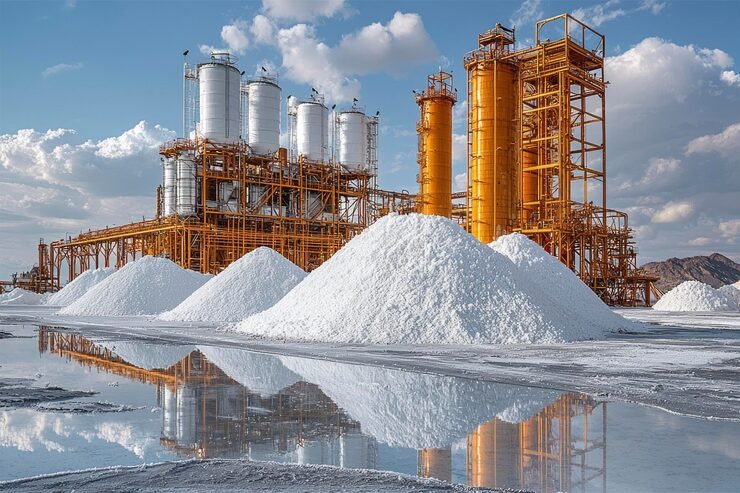
Mined salt for chemical synthesis: Why It Is the Backbone of Industrial Reactions
6. Managing the Logistics of High-Volume Chemistry
At Sama United, we don’t just see ourselves as salt merchants; we are a vital part of your chemical supply chain. Moving Mined salt for chemical synthesis requires a deep understanding of international trade and maritime logistics.
Our UK-based headquarters, Sama United Ltd, coordinates the movement of bulk salt across the globe. We ensure that:
-
Traceability: Every ton of salt can be traced back to its specific mine and batch.
-
Professional Packaging: Whether you need 1,000kg Big Bags with moisture-proof liners or loose bulk delivery, our packaging ensures the salt remains chemically pure during transit.
-
Just-in-Time Delivery: We work with your production schedule to ensure that your reactors never run dry.
7. Environmental Sustainability in Chemical Sourcing
As the chemical industry moves toward “Green Chemistry,” the source of the salt is under the microscope. Many of our clients are looking to reduce their carbon footprint.
Interestingly, Mined salt for chemical synthesis can be a sustainable choice. Because the salt is already in solid form, it requires less energy to “extract” than pumping brine from deep underground wells (solution mining). Furthermore, Sama United prioritizes mines that utilize modern, low-impact extraction technologies and efficient transport routes, helping you meet your ESG (Environmental, Social, and Governance) targets.
8. Technical Documentation: The Sama United Certificate of Analysis
In industrial chemistry, you cannot manage what you do not measure. This is why Sama United provides a comprehensive Certificate of Analysis (CoA) with every shipment. We provide detailed data on:
-
Sodium Chloride (NaCl) Content: The primary reactant.
-
PPM of Insolubles: To protect your pumps and filters.
-
PPM of Sulfates: To protect your electrolytic membranes.
-
Moisture Levels: To ensure accurate weight and flowability.
This transparency allows your plant chemists to calibrate their equipment with 100% confidence, knowing that the “input” is identical every time.
9. Case Study: Solving the “Catalyst Poisoning” Issue
A few years ago, a manufacturer of specialty resins contacted Sama United because their expensive catalysts were failing prematurely. Our technical audit revealed that the salt they were using contained trace levels of iron and silica.
We switched them to our premium Mined salt for chemical synthesis, specifically selected for its low-metal profile. The results were immediate: the catalyst lifespan increased by 40%, and the clarity of their final resin was significantly improved. This is the power of choosing the right mineral partner.
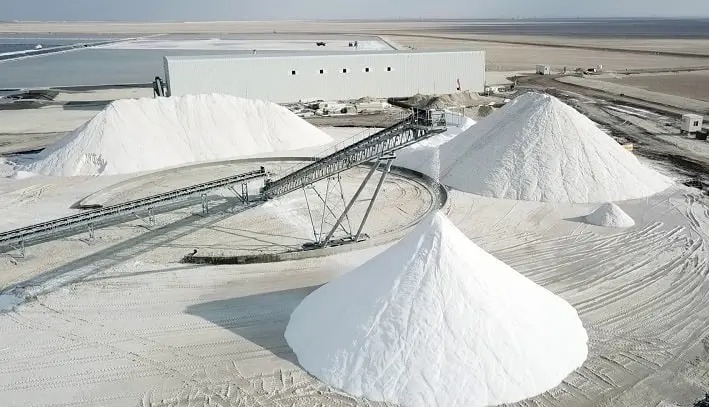
Mined salt for chemical synthesis: Why It Is the Backbone of Industrial Reactions
10. Conclusion Mined salt for chemical synthesis : Salt as the Foundation of Future Innovation
In conclusion, Mined salt for chemical synthesis is the quiet, reliable hero of the industrial world. It is the molecular foundation of the plastics that protect us, the medicines that heal us, and the energy systems of the future. As chemical reactions become more complex and industrial standards more demanding, the need for high-purity, reliably sourced mined salt will only grow.
At Sama United, we are dedicated to providing the high-precision minerals that your business needs to innovate and thrive. We understand the chemistry, we have mastered the logistics, and we share your vision of excellence. Let Sama United be the catalyst for your next chemical success.
Are you ready to optimize your chemical production with high-purity mined salt? Contact the experts at Sama United today for a technical consultation and a customized bulk quote tailored to your synthesis needs.

by norhan | Jun 23, 2026 | Rock Salt, Salt
Natural rock salt supply chain management is a massive, multi-continental operation that keeps the world’s heavy industries moving. At Sama United, we often say that salt is the “silent traveler.” Every day, millions of tons of sodium chloride cross the oceans, moving from ancient underground mines and vast solar evaporation ponds to the world’s industrial hubs. As a leading player in this field, we have spent years mapping these complex global trade routes, ensuring that our clients receive their mineral supplies with the precision and reliability that modern manufacturing demands.
As experts at Sama United, we understand that the salt trade is not just about the mineral itself; it is about the mastery of logistics, geography, and international trade regulations. When a factory in the UK or a chemical plant in Europe needs ten thousand tons of rock salt, the journey that material takes is a feat of modern engineering. In this comprehensive guide, we will explore the intricate world of the natural rock salt supply chain, examining the key global trade routes and explaining how Sama United navigates these waters to deliver excellence to your doorstep.
Natural rock salt supply chain: Navigating the Global Trade Routes of a Vital Mineral
1. The Geographic Giants: Where the Journey Begins
The natural rock salt supply chain begins in specific geographic “pockets” where nature has deposited massive quantities of salt over millions of years. At Sama United, we strategically source our materials from these primary regions to ensure both quality and logistical efficiency.
-
The Mediterranean Basin: A historical powerhouse for salt. Egypt and the surrounding Mediterranean nations provide some of the world’s highest-quality solar and rock salt. Its proximity to European and African ports makes it a cornerstone of our trade routes.
-
The Middle East: With its vast deserts and ideal climate for solar evaporation, this region is a major exporter of industrial-grade salt.
-
South Asia: Home to some of the world’s oldest and largest underground rock salt mines, such as those in the Himalayan foothills.
-
North and South America: Major producers for internal consumption and regional trade, particularly for de-icing and chemical manufacturing.
2. Maritime Logistics: The High-Stakes Game of Sea Freight
Because salt is a heavy, high-volume commodity, the ocean is the primary highway for the natural rock salt supply chain. At Sama United, we utilize two main methods of sea transport:
Containerized Shipping
For smaller industrial needs (25 to 500 tons), we utilize 20-foot shipping containers. This method is ideal for high-purity refined salt or bagged rock salt, as it provides an extra layer of protection against the elements and allows for easier “last-mile” trucking at the destination.
Breakbulk and Bulk Carriers
For our large-scale industrial partners requiring thousands of tons, we move salt in bulk carriers (Handysize or Supramax vessels). This is where the natural rock salt supply chain reaches its maximum efficiency. Loading directly into the ship’s hold allows for massive economies of scale, significantly reducing the “per-ton” cost for our clients.
3. The “Last Mile” Challenge: Inland Infrastructure
A global trade route doesn’t end at the port. At Sama United, we believe the “Last Mile” is the most critical part of the natural rock salt supply chain. Once the salt arrives at a port in the UK, Europe, or the Middle East, it must be offloaded and transported to the final factory or warehouse.
This requires a sophisticated network of:
-
Inland Waterways: Utilizing barges on rivers like the Rhine or the Thames can be more cost-effective and environmentally friendly than trucking.
-
Dedicated Rail Freight: Ideal for moving bulk salt to inland chemical plants.
-
Specialized Trucking: Using tipper trucks or pneumatic blowers to deliver salt directly into a factory’s silos.
4. Navigating Geopolitics and Trade Barriers
One of the most complex aspects of the natural rock salt supply chain is navigating international regulations. Every country has different customs duties, health certifications, and quality standards.
As a UK-registered company, Sama United Ltd acts as a professional bridge. We handle the “Red Tape,” ensuring that all Certificates of Analysis (CoA), Origin Certificates, and Health Permits are in perfect order. This expertise prevents expensive port delays and ensure that our salt clears customs as a “Green Lane” priority, keeping your production schedule on track.
5. Managing the Environmental Variables: Moisture and Corrosion
The natural rock salt supply chain faces two constant environmental enemies: moisture and salt’s natural corrosivity. Crossing the ocean exposes the salt to high humidity and salty air, which can lead to “caking” (hardening) of the product.
At Sama United, we mitigate these risks through:
-
Vapor Barrier Packaging: Using high-density PE liners in our bags to keep the salt dry.
-
Hold Preparation: Ensuring that bulk carrier holds are lime-washed or treated to prevent the salt from corroding the ship’s steel or absorbing metallic impurities.
-
Strategic Stowing: Placing salt in the most temperature-stable parts of the vessel to minimize condensation.

Natural rock salt supply chain: Navigating the Global Trade Routes of a Vital Mineral
6. The Impact of Global Freight Rates on Salt Prices
Because salt is a low-unit-value commodity, the cost of shipping often makes up a large percentage of the final price. The natural rock salt supply chain is highly sensitive to:
-
Bunker Fuel Prices: Rising oil prices directly increase the cost of salt delivery.
-
Container Availability: Global shipping shortages can drive up rates overnight.
At Sama United, we leverage our bulk buying power and long-standing relationships with shipping lines to secure “contract rates.” This allows us to offer price stability to our clients, protecting them from the volatility of the global freight market.
7. Sustainability and the “Green” Trade Route
At Sama United, we are committed to making the natural rock salt supply chain more sustainable. We are constantly exploring ways to reduce the carbon footprint of our trade routes.
-
Route Optimization: Using AI and GPS tracking to find the shortest and most fuel-efficient paths across the ocean.
-
Solar Sourcing: Prioritizing salt produced via solar evaporation, which is the most energy-efficient method of salt production.
-
Eco-Friendly Packaging: Transitioning to recyclable materials for our bulk and 25kg bags.
8. The Middle East to UK Corridor: A Sama United Specialty
As a company with deep roots in both the Middle East and the UK, Sama United has perfected this specific trade route. We connect the high-purity mines and solar flats of the Mediterranean directly with the industrial heartlands of the United Kingdom and Northern Europe. This “Direct Link” eliminates unnecessary middlemen, ensuring that our clients receive premium natural rock salt at the most competitive price points in the market.
9. Technology and Transparency: Real-Time Chain Monitoring
Modern clients demand transparency. In the natural rock salt supply chain, this means knowing exactly where your cargo is. Sama United utilizes digital tracking systems to provide our clients with regular updates. From the moment the salt is loaded at the source until it reaches your facility, we provide the data you need to manage your inventory with confidence. This level of transparency is what builds long-term trust in international trade.
10. Why Partner with Sama United for Your Supply Chain?
Managing a global mineral supply is not a task for the faint of heart. It requires a partner who understands the geology of the mine, the chemistry of the salt, and the physics of the ocean.
Sama United offers:
-
End-to-End Solutions: We handle sourcing, refining, packaging, shipping, and customs.
-
Quality Assurance: Every batch is tested to meet the specific technical requirements of your industry.
-
UK Professionalism: Registered in the UK, we operate with the highest standards of integrity and contract reliability.
-

Natural rock salt supply chain: Navigating the Global Trade Routes of a Vital Mineral
Conclusion: Salt as the Universal Traveler
In conclusion, the natural rock salt supply chain is a testament to human ingenuity and the interconnectedness of our global economy. It is a journey that spans thousands of miles, turning an ancient mineral into the foundation of modern industry.
At Sama United, we take great pride in our role as a primary navigator of these trade routes. We handle the complexity, the risks, and the logistics, allowing you to focus on what you do best: creating world-class products. Whether you are a small-scale manufacturer or a heavy industrial giant, let Sama United be the bridge that connects you with the world’s finest salt resources.
Are you looking to optimize your salt procurement and secure a more reliable trade route? Contact the logistics experts at Sama United today for a personalized supply chain consultation and a customized bulk quote.
by norhan | Jun 21, 2026 | Rock Salt, Salt
Rock salt refinement efficiency is the cornerstone of the global industrial salt market, and at Sama United, we believe it is the most critical factor that distinguishes a successful manufacturing operation from a struggling one. In the world of industrial minerals, there is a common myth that all salt is the same once it reaches the refinery. However, our decades of experience in the international trade of bulk salt have proven the opposite: the chemical and physical purity of the raw rock salt at the mine is the single most important variable in determining how smooth, cost-effective, and successful the refinement process will be.
As experts at Sama United, we don’t just view salt as a commodity; we view it as a precision-engineered chemical foundation. When a refinery takes in raw rock salt, it is essentially performing a “purification ritual.” The goal is to move from a raw mineral (which may contain clay, sand, and secondary minerals) to a high-purity sodium chloride (NaCl) crystal. In this comprehensive guide, we will explore the deep relationship between raw purity and rock salt refinement efficiency, and why sourcing through a technical partner like Sama United is the smartest decision a manufacturing firm can make.

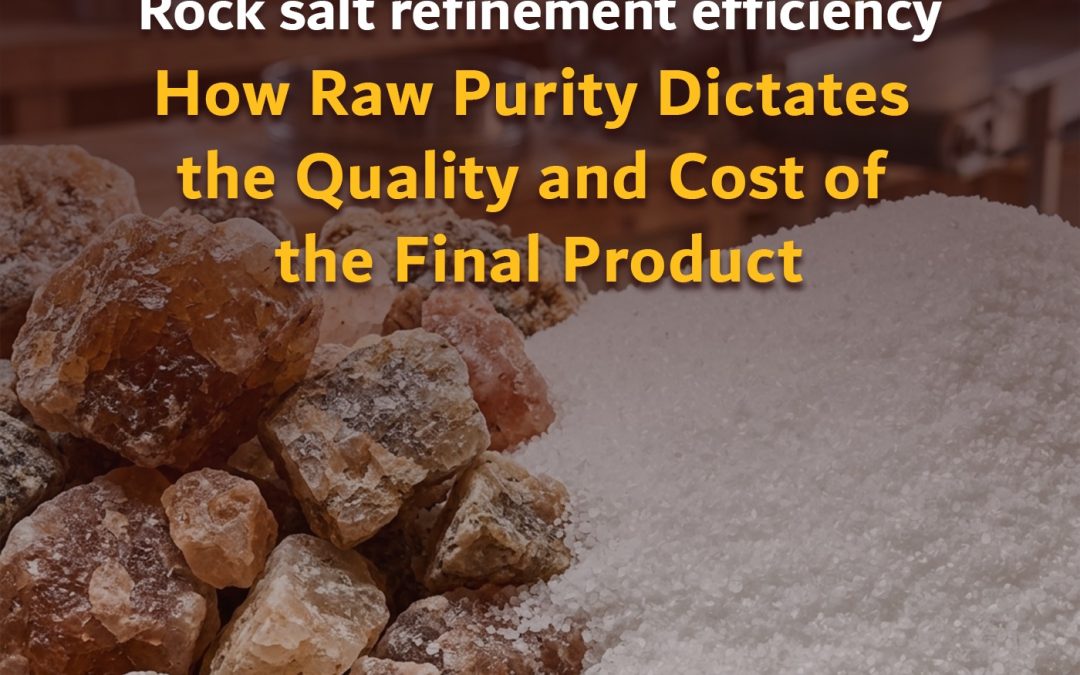
Rock salt refinement efficiency: How Raw Purity Dictates the Quality and Cost of the Final Product
1. The Starting Line: Why Initial NaCl Levels Matter
The most basic metric of raw purity is the Sodium Chloride (NaCl) percentage. In the context of rock salt refinement efficiency, the higher the starting NaCl level, the less work the refinery has to do.
At Sama United, we prioritize sourcing rock salt with a natural purity of 97% to 99%. Why? Because every 1% of impurity in the raw material represents a massive increase in the refining burden. If the raw material is 95% pure, the refinery must expend significant energy and resources to remove that 5% of “non-salt” material. By starting with a higher purity from Sama United, our clients immediately reduce their operational overhead and increase their “Refinement Yield”—the amount of finished product they get for every ton of raw material processed.
2. The Impact of Insoluble Matter on Machinery
“Insoluble matter” refers to everything in the rock salt that doesn’t dissolve in water—typically sand, silt, grit, or ancient organic matter. While these might seem like minor nuisances, they are the primary enemies of rock salt refinement efficiency.
From our observations at Sama United, high levels of insolubles lead to:
-
Mechanical Wear: Grit and sand act like sandpaper on industrial pumps, valves, and centrifuge blades.
-
Sedimentation Issues: Heavy insolubles settle at the bottom of expensive brine tanks, requiring frequent shutdowns for manual cleaning.
-
Filtration Clogging: The more sand in the raw salt, the more often filters must be replaced or cleaned, driving up maintenance costs.
By providing salt with ultra-low insoluble levels, Sama United helps refineries stay online longer, reducing the “Total Cost of Ownership” for every ton refined.
3. Chemical Complexity: The Burden of Magnesium and Calcium
In the journey toward high-purity refined salt, Magnesium (Mg) and Calcium (Ca) are the most troublesome impurities. These minerals are often locked inside the crystal structure of the rock salt.
Rock salt refinement efficiency is directly tied to how much of these minerals must be chemically removed. To extract Mg and Ca, refineries must add expensive chemical reagents like soda ash and caustic soda to the brine.
-
High Impurity = High Cost: If the raw rock salt is “hard” (high in Ca and Mg), the refinery’s chemical budget will skyrocket.
-
Scale Formation: These minerals cause “scaling” in heat exchangers and evaporators, which drastically reduces the thermal efficiency of the plant.
At Sama United, we help our clients select sources that are naturally “soft,” meaning they have lower base levels of these minerals, significantly cutting down on the chemical consumption of the refinery.
4. The “Sludge” Problem: Waste Management and Purity
Every refinery produces waste, often in the form of “brine sludge”—a thick mixture of water, impurities, and the chemicals used for purification. The volume of this sludge is a direct reflection of the raw salt’s purity.
A major part of rock salt refinement efficiency involves managing this waste.
-
Environmental Impact: Disposing of large volumes of sludge is an environmental challenge and a regulatory headache.
-
Product Loss: Some salt is always trapped in the sludge and lost during disposal.
By sourcing the cleanest raw rock salt through Sama United, refineries minimize their waste output. Less sludge means a cleaner operation, lower disposal fees, and a better environmental rating (ESG score) for the manufacturing facility.

Rock salt refinement efficiency: How Raw Purity Dictates the Quality and Cost of the Final Product
5. Energy Consumption and Thermal Stability
Modern salt refinement—specifically “Vacuum Evaporation”—is incredibly energy-intensive. It requires boiling millions of liters of brine to crystallize the salt.
Impurities in the salt can act as “insulators” or “disturbers” during this process. For example, certain trace minerals can lower the boiling point or interfere with the crystal formation. This makes the refinery work harder and consume more natural gas or electricity to achieve the same result. At Sama United, we emphasize that rock salt refinement efficiency is an energy game. Sourcing pure raw materials is the most effective way to lower the carbon footprint and the energy bill of a salt refining plant.
6. Consistency: The Silent Driver of Refinement Success
In a massive industrial refinery, consistency is just as important as purity. If one shipment of rock salt is 99% pure and the next is 96%, the refinery’s automated chemical dosing systems will fail, leading to batches of refined salt that don’t meet food or pharmaceutical grades.
Sama United provides the stability that industrial plants crave. We don’t just source once; we source for the long term. By providing consistent mineral profiles, we allow our clients to “fine-tune” their refinement machinery. This level of rock salt refinement efficiency is only possible when you have a supplier who understands the geological stability of the salt mine.
7. The Role of Granulometry in Dissolution Rates
Before refinement can begin, the rock salt must be dissolved into a “saturated brine.” The size of the raw crystals (granulometry) determines how fast this happens.
-
Too Large: The salt takes too long to dissolve, creating a bottleneck in the production line.
-
Too Small: The salt can “clump” or “bridge” in the silo, causing mechanical stoppages.
At Sama United, we provide the ideal grain size for your specific brine saturators. Optimizing this initial stage is a vital, yet often overlooked, part of rock salt refinement efficiency.
8. Why “Cheap” Salt is Often the Most Expensive
A common mistake for procurement managers is to chase the lowest “per ton” price on raw rock salt. However, at Sama United, we have performed the math for dozens of clients: a “cheap” salt with 3% more impurities than our premium grade can end up costing the refinery 15-20% more in chemicals, energy, and maintenance.
We help our partners understand the “Value-in-Use.” By investing in high-purity raw materials from Sama United, you aren’t just buying salt; you are buying lower energy bills, lower chemical costs, and higher production uptime.
9. The Sama United Standard: Technical Sourcing
How do we ensure this level of rock salt refinement efficiency? It begins with our UK-based technical team. We analyze the “Certificate of Analysis” (CoA) of every mine we work with. We look beyond the NaCl level; we look at the specific PPM (parts per million) of sulfates, iron, copper, and silicates.
As Sama United Ltd, we leverage our global network to find the “Hidden Gems” of the salt world—mines that offer naturally superior purity levels that are perfect for industrial refinement. We handle the complex maritime logistics and customs to ensure this high-purity material arrives at your refinery exactly when you need it.

Rock salt refinement efficiency: How Raw Purity Dictates the Quality and Cost of the Final Product
10. Conclusion: Partnering for Industrial Excellence
In conclusion Rock salt refinement efficiency , rock salt refinement efficiency is a journey that begins thousands of feet underground. The quality of the raw material dictates every aspect of the refinery’s performance, from the energy it consumes to the waste it produces and the quality of the final crystal.
At Sama United, we are dedicated to providing the high-purity raw materials that modern heavy industry demands. We understand that your refinery is a sophisticated machine that deserves the best possible fuel. By choosing Sama United, you are choosing a partner who understands the chemistry, the geology, and the economics of salt. Let us provide the purity that drives your success.
Are you looking to optimize your refinery’s performance and lower your operational costs? Contact the technical experts at Sama United today for a technical consultation and a customized bulk rock salt quote.
by norhan | Jun 19, 2026 | Rock Salt, Salt
Bulk rock salt inventory management is a specialized discipline that lies at the heart of any successful industrial operation. At Sama United, we have observed that while many companies treat salt as a “set and forget” commodity, the reality of industrial warehousing tells a different story. Salt is heavy, corrosive, and hygroscopic—meaning it constantly interacts with its environment. Managing thousands of tons of it requires more than just floor space; it requires a strategic understanding of chemical behavior, structural engineering, and logistical flow.
As experts at Sama United, we believe that your inventory is only as valuable as your ability to preserve its quality and ensure its availability. In a world where supply chains are increasingly volatile, having a robust system for bulk rock salt inventory management is the difference between a production line that runs smoothly and one that grinds to a halt due to caked salt or stock-outs. In this comprehensive guide, we will share the industrial secrets we’ve learned at Sama United to help you optimize your warehousing and turn your salt inventory into a competitive advantage.

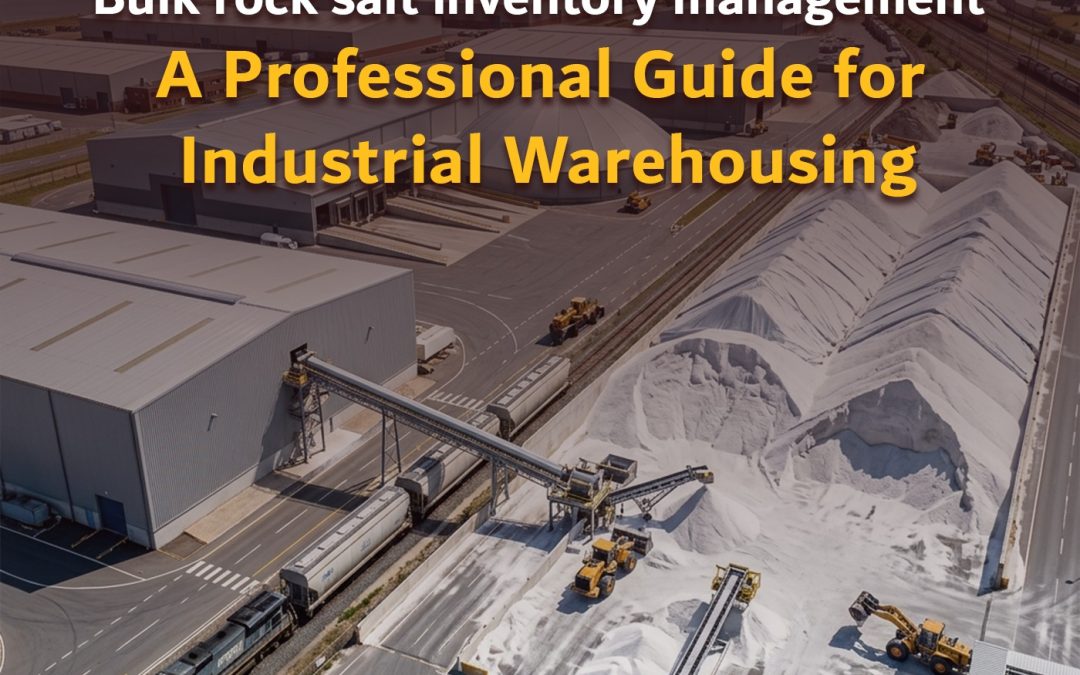
Bulk rock salt inventory management: A Professional Guide for Industrial Warehousing
1. Understanding the Physical Nature of Salt in Storage
To master bulk rock salt inventory management, one must first respect the mineral itself. Salt is not an inert substance like sand or gravel. At Sama United, we emphasize three physical characteristics that every warehouse manager must understand:
-
Hygroscopicity: Salt naturally attracts moisture from the air. If the humidity in your warehouse exceeds 75%, the salt will begin to absorb water, leading to “caking” or the formation of hard, unusable crusts.
-
Corrosivity: Salt is highly corrosive to carbon steel and even some concrete structures. Your storage environment must be designed to withstand this constant chemical pressure.
-
Weight and Density: Salt is incredibly dense. A relatively small pile can exert massive pressure on warehouse floors and retaining walls.
2. Environmental Controls: Combating the Moisture Menace
The greatest enemy of bulk rock salt inventory management is moisture. When salt absorbs moisture and then dries, it forms a solid block. This makes it impossible to dose accurately in automated industrial systems.
At Sama United, we recommend a “Triple-Layer Protection” strategy:
-
Climate-Controlled Ventilation: Ensure that your warehouse has adequate airflow but is sealed against external fog or heavy rain.
-
Vapor Barriers: Whether you are storing salt in 1000kg Big Bags or loose bulk, using high-quality polyethylene liners (provided by Sama United) is non-negotiable. These liners act as a shield against the humidity.
-
Elevated Storage: Never store salt directly on a concrete floor that might “sweat.” Using plastic pallets or raised platforms ensures that ground moisture doesn’t seep into the bottom layers of your inventory.
3. Space Optimization and the “Angle of Repose”
Efficiently using warehouse space is critical for profitability. For loose bulk rock salt inventory management, you must understand the “Angle of Repose”—the steepest angle at which the salt can be piled without sliding.
Typically, for industrial rock salt, this angle is around 32 degrees. At Sama United, we help our clients design storage bins and bays that maximize vertical space while respecting this physical limit.
-
Bunker Silos: These are ideal for massive quantities, as they allow for high-density storage while keeping the footprint small.
-
Aisle Management: Ensure that your forklifts and loaders have enough “swing space” to move salt without damaging the bags or creating dust clouds that settle on other machinery.
4. Strategic Stockpiling and Lead Time Management
In the modern industrial landscape, “Just-in-Time” is often “Too Late.” Successful bulk rock salt inventory management requires a “Strategic Buffer.”
At Sama United, we work with our clients to calculate their “Safety Stock” levels.
-
Seasonal Fluctuations: If your business relies on de-icing, your inventory must be at 100% capacity before the first frost.
-
Lead Time Awareness: Since we source salt globally, we advise our clients to factor in a 4-to-6 week lead time for international shipping. By maintaining a 2-month reserve, you ensure that even if a global shipping delay occurs, your factory continues to operate.
5. The Role of Technology: Digitalizing Salt Inventory
The days of estimating a salt pile’s weight by sight are over. Modern bulk rock salt inventory management relies on data.
-
Inventory Software (WMS): Use a Warehouse Management System to track “First-In, First-Out” (FIFO) rotations. Salt doesn’t expire, but older salt is more likely to have absorbed moisture over time.
-
Acoustic Sensors: For silos, acoustic or ultrasonic sensors can provide real-time data on the exact volume of salt remaining. Sama United can integrate with your procurement team to receive automated alerts when stock levels reach a “Critical Re-order” point.
Bulk rock salt inventory management: A Professional Guide for Industrial Warehousing
6. Safety Protocols for Large-Scale Storage
Safety is the most important part of bulk rock salt inventory management. Large salt piles can behave like quicksand, and salt dust can be a respiratory irritant.
-
Anti-Collapse Piling: Ensure piles are not too vertical to prevent sudden collapses.
-
Dust Suppression: Use misting systems or dust-proof bagging to protect your workers’ health.
-
Corrosion Inspection: Regularly check the structural integrity of your warehouse beams and electrical panels. Salt dust can eat through wiring and support structures if not managed correctly.
7. Quality Preservation: Preventing “Mechanical Caking”
Even in a dry warehouse, the sheer weight of a salt pile can cause “Mechanical Caking”—where the pressure fuses the bottom crystals together.
At Sama United, we suggest:
-
Turning the Stock: If salt is stored in loose bulk, occasionally moving or “agitating” the pile prevents the pressure from creating a solid base.
-
Stacking Height Limits: For bagged salt, we provide specific guidelines on how many pallets high you can safely stack without damaging the salt’s grain structure.
8. Loss Prevention and Shrinkage Control
Every ton of salt lost to moisture gain, dust, or spills is a ton of lost profit. Part of professional bulk rock salt inventory management is “Shrinkage Control.”
-
Spill Management: Use specialized loaders and hoppers to minimize the salt lost during transfer.
-
Moisture Tracking: Weigh your inventory upon arrival and during dispatch. If the salt is gaining weight, it’s absorbing water—and you’re losing quality. Sama United provides ultra-dry salt (0.1% moisture) to give you the longest possible shelf life.
9. The Sama United Advantage: Sourcing for Continuity
Why do industrial leaders choose Sama United as their inventory partner? It’s because we understand the “Long Game.” We don’t just ship a container; we ensure that the salt inside is processed to withstand the rigors of industrial warehousing.
-
Customized Granulometry: We provide the grain size that best fits your storage equipment, preventing bridging and clogging in your silos.
-
UK-Based Professionalism: As Sama United Ltd, we operate under strict international standards, ensuring that our documentation (CoA, SDS) makes your administrative inventory tracking seamless.
10. Sustainability in Salt Warehousing
Modern bulk rock salt inventory management is also moving toward “Green” practices.
-
Solar-Powered Hubs: We encourage the use of solar-powered lighting and ventilation in warehouses.
-
Reusable Packaging: We are increasingly utilizing high-durability FIBC bags that can be cleaned and reused, reducing the plastic waste of your inventory cycle. By choosing Sama United, you are choosing a supply chain that respects both your budget and the planet.
Bulk rock salt inventory management: A Professional Guide for Industrial Warehousing
Conclusion: Salt as a Strategic Asset
In conclusion, bulk rock salt inventory management is a vital skill that transforms a simple mineral into a reliable industrial asset. By controlling moisture, optimizing space, utilizing technology, and partnering with a trusted supplier like Sama United, you can eliminate the hidden costs of storage and ensure your production line never misses a beat.
At Sama United, we are dedicated to your success. We handle the complexities of sourcing and logistics so that you can master the art of inventory. Let us provide the mineral foundation that allows your business to grow, scale, and succeed in the global market.
Are you ready to optimize your industrial warehouse and secure your salt supply? Contact the experts at Sama United today for a professional inventory audit and a bulk rock salt quote tailored to your needs.
by norhan | Jun 17, 2026 | Rock Salt, Salt
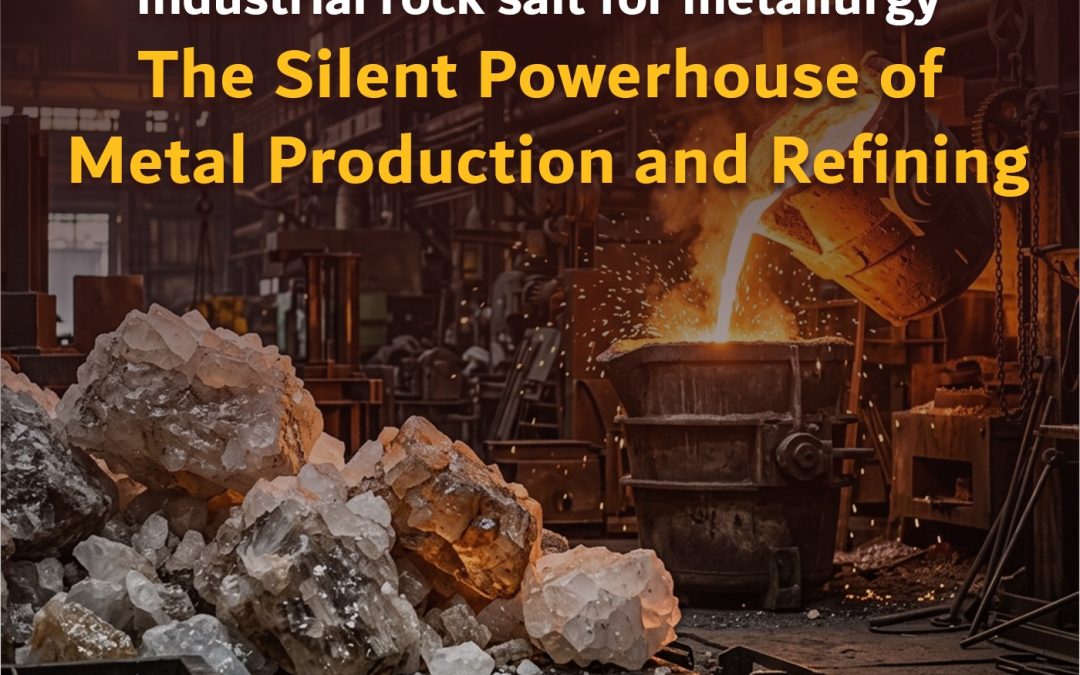
Industrial rock salt for metallurgy is often regarded as the “invisible hand” within the massive machinery of the global metal industry. While the general public associates salt primarily with culinary uses or winter road safety, the metallurgical sector relies on high-purity sodium chloride to perform some of its most critical chemical and physical transformations. At Sama United, we have spent years supplying the world’s leading smelters and foundries, witnessing firsthand how this humble mineral serves as a catalyst for the production of everything from the aluminum in your smartphone to the high-grade steel used in skyscrapers.
As experts at Sama United, we understand that in the world of heavy metal processing, the quality of your raw materials dictates the purity of your final product. Metallurgy is a game of precision, where even a slight variation in mineral content can lead to batch failures or equipment damage. This is why our focus remains on providing industrial-grade rock salt that meets the exacting standards of modern smelting and refining. In this guide, we will explore the multifaceted roles of industrial rock salt for metallurgy and explain why Sama United has become a trusted partner for metal producers worldwide.
Industrial rock salt for metallurgy: The Silent Powerhouse of Metal Production and Refining
1. The Role of Salt as a Flux in Smelting
The most prominent application of industrial rock salt for metallurgy is its use as a “flux.” In the smelting process, the goal is to separate pure metal from its ore. However, ores often contain “gangue”—unwanted minerals like silica and alumina that have high melting points.
At Sama United, we provide salt that acts as a powerful fluxing agent. When added to a furnace, salt performs several vital functions:
-
Lowering the Melting Point: Salt reduces the temperature required to melt the slag (the waste material), which significantly lowers the energy consumption of the smelter.
-
Preventing Oxidation: Salt forms a protective “cover” over the molten metal, preventing it from reacting with oxygen in the air. This ensures that the metal remains pure and high-quality.
-
Separation of Impurities: By making the slag more fluid, salt helps impurities float to the surface, where they can be easily skimmed off, leaving behind the pure, molten metal.
2. Aluminum Production: The “Salt Flux” Standard
The aluminum industry is perhaps the largest consumer of industrial rock salt for metallurgy. Specifically, in secondary aluminum smelting (recycling), salt is used to create what is known as a “Salt Cake.”
Our team at Sama United works closely with aluminum recyclers who use a mixture of sodium chloride (NaCl) and potassium chloride (KCl). This salt mixture is added to the rotary furnaces to capture oxides and other contaminants from the aluminum scrap.
-
Dross Treatment: Salt helps extract the maximum amount of usable aluminum from the dross (the waste product of smelting).
-
Thermal Stability: Our high-performance rock salt provides the thermal stability needed to withstand the intense heat of aluminum furnaces without decomposing too quickly.
Without high-purity industrial salt, the global aluminum recycling industry would be significantly less efficient and far more expensive.
3. Steel Manufacturing: Descaling and Surface Treatment
In the steel industry, industrial rock salt for metallurgy plays a crucial role in the finishing stages of production. When steel is hot-rolled, an oxide scale forms on the surface. This scale must be removed to ensure the steel can be coated, painted, or welded.
At Sama United, we provide the salt used in the “Descaling” process.
-
The Salt Bath: Steel components are often dipped into a molten salt bath. The salt reacts with the oxide scale, making it brittle and easy to remove through mechanical means or acid pickling.
-
Heat Treatment: Salt baths are also used for the controlled heating and cooling (quenching) of steel. This ensures that the steel reaches the desired hardness and tensile strength without the risk of surface decarburization.
4. Metal Casting and Foundries: Hardening the Mold
Foundries that produce complex metal parts also rely on industrial rock salt for metallurgy. In certain casting processes, salt is used as a binder or a hardening agent for the molds and cores.
-
Soluble Cores: One of the most innovative uses of salt is the creation of “Salt Cores.” These are solid salt shapes placed inside a mold to create hollow areas in a metal casting. After the metal solidifies, the salt core is simply dissolved away with water.
-
Precision and Complexity: This allows foundries to create incredibly complex internal geometries that would be impossible with traditional sand cores. At Sama United, we provide the specific grain sizes required to ensure these salt cores have the necessary structural integrity.
5. Secondary Metal Recovery: The Path to Sustainability
As the world moves toward a circular economy, the recovery of precious and base metals from industrial waste is becoming more important. Industrial rock salt for metallurgy is a key component in this recovery process.
By using salt-based leaching or smelting, recyclers can extract metals like copper, lead, and zinc from “e-waste” and industrial slag. At Sama United, we are proud to support the “Green Metallurgy” movement. Our salt facilitates the efficient recovery of these metals, reducing the need for destructive mining and helping our clients meet their environmental targets.
Industrial rock salt for metallurgy: The Silent Powerhouse of Metal Production and Refining
6. Why Purity and NaCl Content are Non-Negotiable
In metallurgy, “salt is not just salt.” The purity of the sodium chloride (NaCl) is the most critical specification. At Sama United, we focus on providing salt with a purity level of 98% to 99% or higher.
Why does this matter?
-
Avoiding Contamination: Impurities like magnesium or calcium in the salt can react with the molten metal, introducing unwanted characteristics into the final alloy.
-
Energy Efficiency: Pure salt has a predictable melting point. Impure salt can behave erratically in the furnace, leading to temperature fluctuations and wasted energy.
-
Equipment Longevity: High levels of moisture or insoluble matter (like sand or grit) can damage the lining of expensive furnaces and clog filtration systems.
7. Logistics Industrial rock salt for metallurgy : Moving Mountains for the Metal Industry
The metallurgical industry operates on a massive scale. A single smelter may require thousands of tons of salt every month. This is where Sama United excels.
We don’t just sell salt; we provide a logistical solution.
-
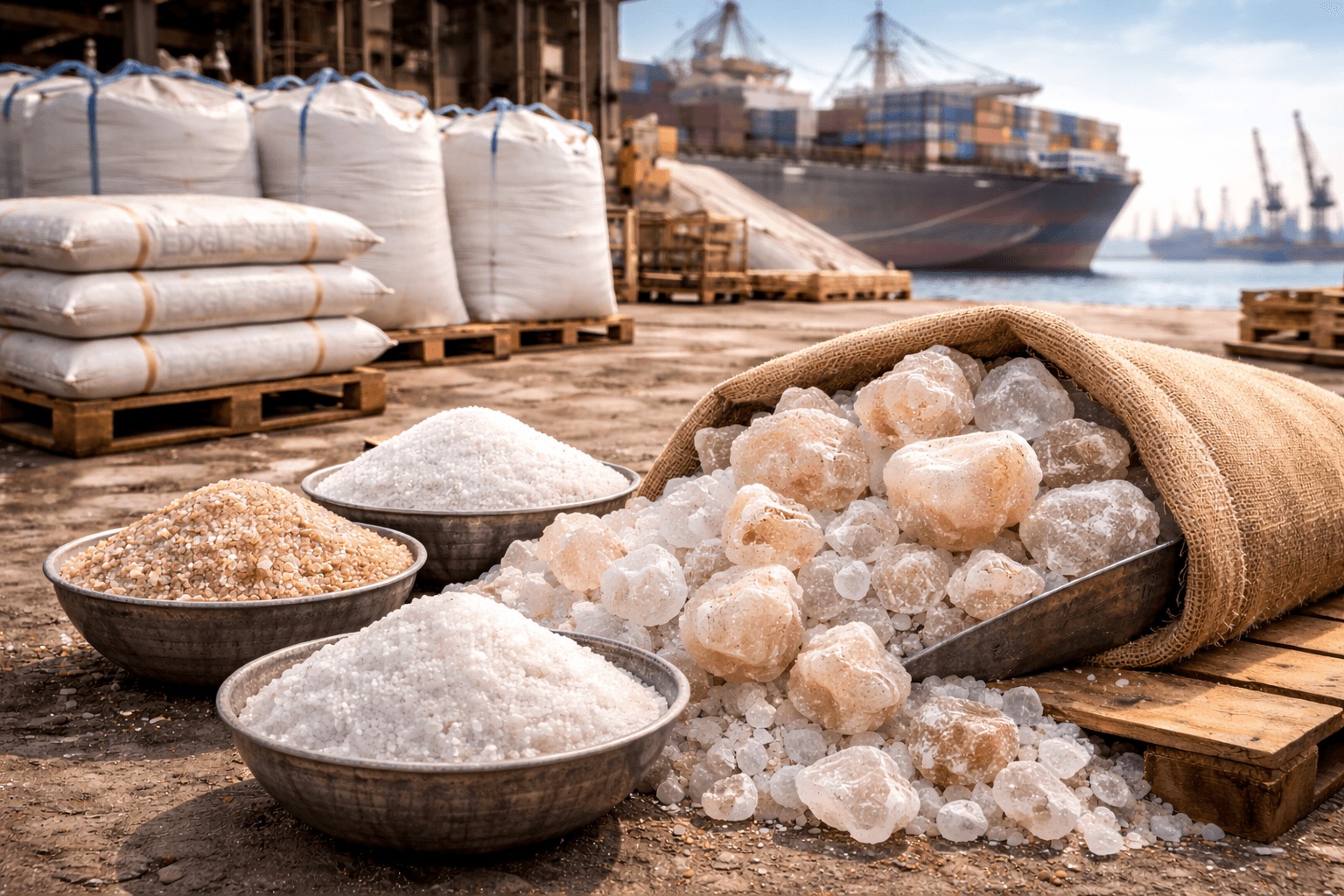
Bulk Sea Freight: We utilize large-vessel logistics to ensure that our metallurgical clients receive their salt in the most cost-effective manner.
-
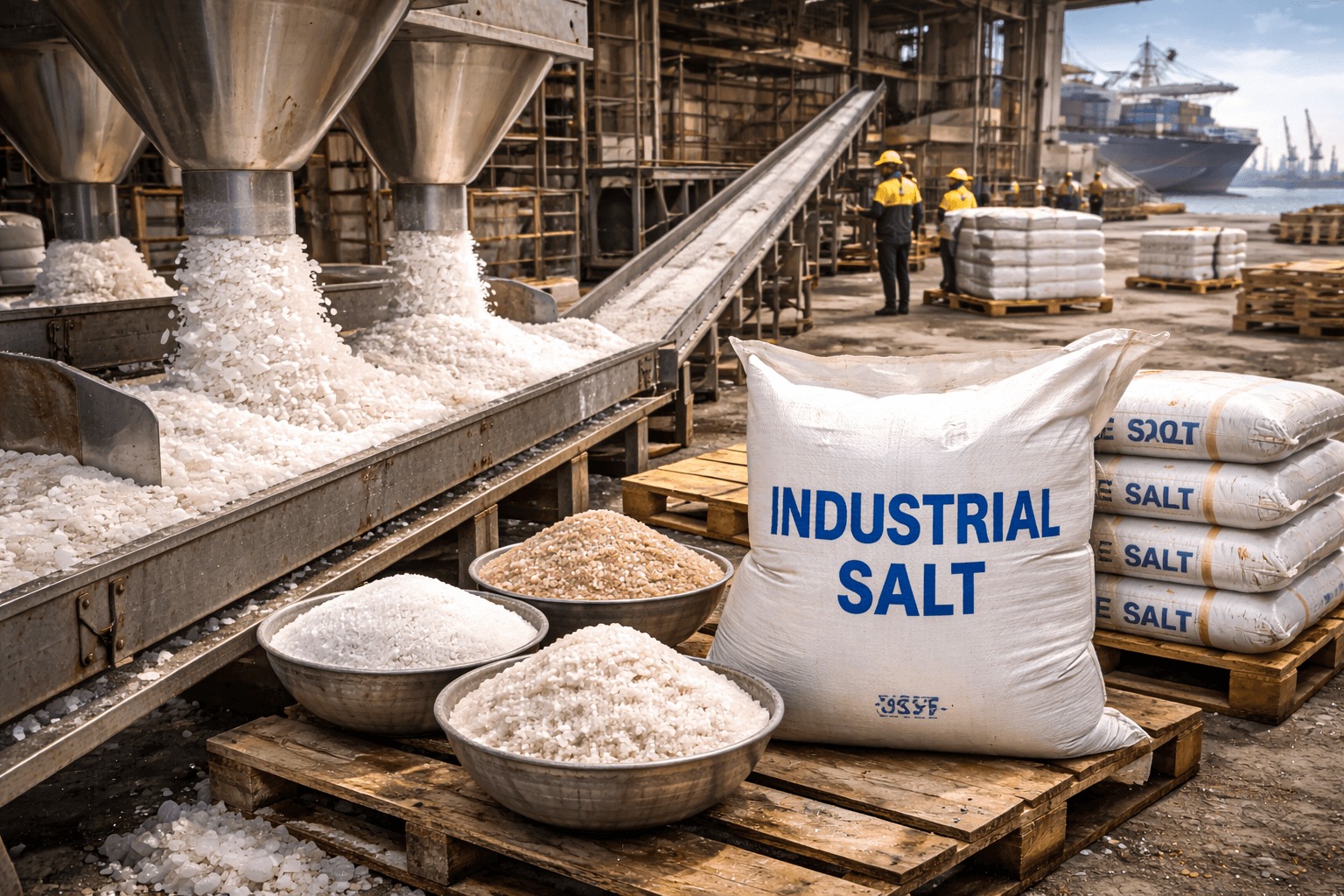
Moisture-Controlled Shipping: Salt for furnaces must be kept dry. We use heavy-duty liners and moisture-proof packaging to ensure our salt arrives ready for the furnace.
-
Strategic Warehousing: With our UK-based headquarters and global sourcing network, we ensure that a steady supply of industrial rock salt for metallurgy is always available, even during market fluctuations.
8. The Economic Advantage of Direct Sourcing with Sama United
Procurement managers in the metal industry are under constant pressure to lower their “Cost per Ton.” By partnering directly with Sama United, you eliminate the middleman and access “factory-gate” pricing.
Furthermore, we provide the technical documentation required for modern industrial compliance. Every shipment comes with a Certificate of Analysis (CoA), allowing your plant engineers to have 100% confidence in the chemical profile of the salt they are adding to their melt. This transparency reduces waste and improves the overall yield of your metallurgical facility.
9. Safety and Environmental Standards
Handling molten salt and high-temperature furnaces requires a high level of safety. At Sama United, we ensure our salt is free from hazardous volatile organic compounds (VOCs) and heavy metal contaminants that could create toxic fumes in the foundry. We prioritize “Clean Mineral” sourcing to ensure that your workers are safe and that your facility remains compliant with international environmental regulations.
Industrial rock salt for metallurgy: The Silent Powerhouse of Metal Production and Refining
10. Conclusion Industrial rock salt for metallurgy : Building the Future with Sama United
In conclusion, industrial rock salt for metallurgy is the silent architect of our modern world. It is the mineral that allows us to refine aluminum, harden steel, and recycle the metals of the future. Without it, the structural foundations of our cities and the technology in our pockets would be impossible to produce at scale.
At Sama United Industrial rock salt for metallurgy , we take immense pride in our role as a foundation-level supplier to the metallurgical industry. We understand the high stakes of smelting and refining. We know that your furnace doesn’t just need salt—it needs the right salt, delivered at the right time, with the right purity. Let Sama United be the catalyst for your success in the metal processing world.
Are you looking to optimize your smelter’s efficiency or improve your casting quality? Contact the metallurgical experts at Sama United today for a technical consultation and a customized bulk rock salt quote.
by norhan | Jun 15, 2026 | Rock Salt, Salt
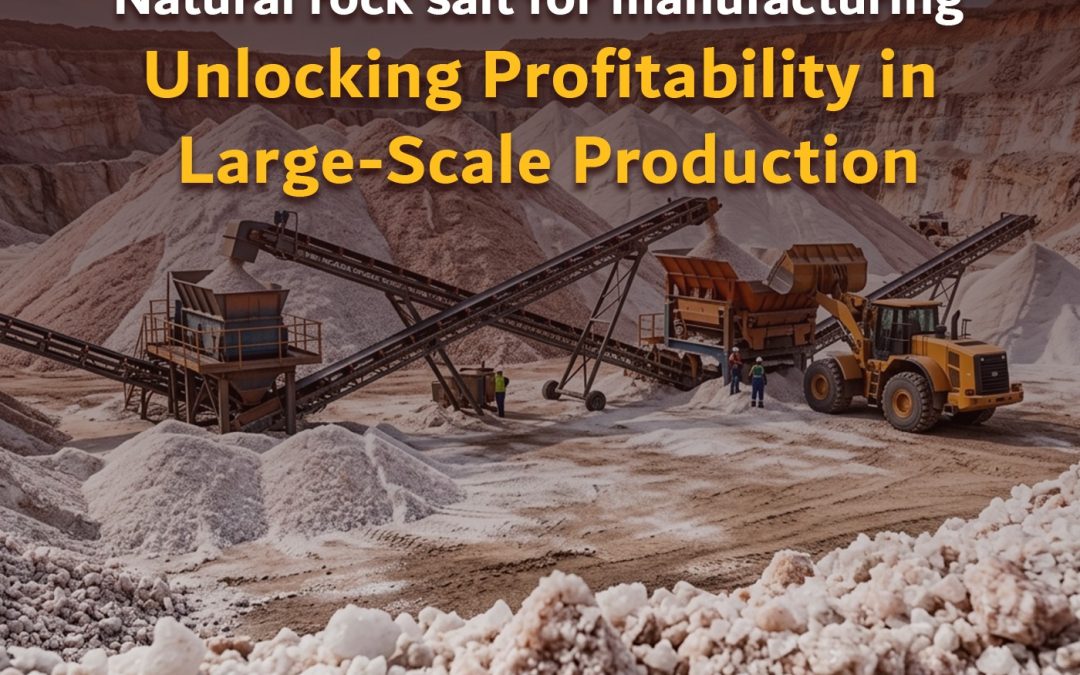
Natural rock salt for manufacturing is the backbone of the global heavy industry, serving as a silent but essential partner in everything from chemical synthesis to textile dyeing. At Sama United, we have spent decades observing the intricate dance of supply chains, and one truth remains constant: the choice of raw materials defines the financial health of a factory. For large-scale industrial players, the move toward natural, unprocessed rock salt is not just a trend—it is a strategic economic decision designed to maximize margins without compromising on output quality.
As experts at Sama United, we understand that in a high-volume manufacturing environment, even a marginal saving per ton can translate into hundreds of thousands of pounds in annual profit. However, the cost-effectiveness of natural rock salt goes far beyond its initial purchase price. It involves energy efficiency, logistical flexibility, and the reduction of complex chemical additives. In this guide, we will explore why natural rock salt for manufacturing has become the gold standard for savvy industrial procurement and how Sama United facilitates this transition for businesses worldwide.
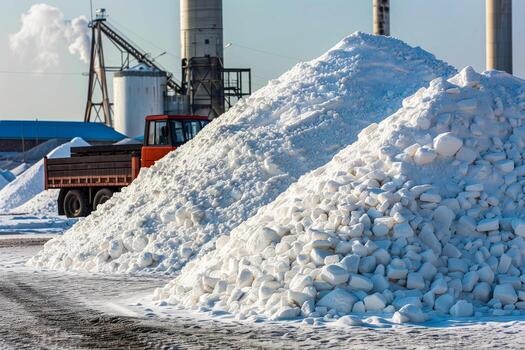
Natural rock salt for manufacturing: Unlocking Profitability in Large-Scale Production
1. Lower Production Energy Costs
The primary reason why natural rock salt for manufacturing is so cost-effective compared to refined vacuum salt lies in the energy required to produce it. Refined salt requires “Vacuum Evaporation,” a process that involves boiling brine in massive industrial evaporators. This consumes enormous amounts of electricity and natural gas.
In contrast, natural rock salt is either mined directly from ancient underground deposits or harvested through solar evaporation. At Sama United, we prioritize these natural methods because they rely on the earth’s own geological and solar energy. When you purchase natural salt, you are not paying for the massive energy bills of a high-tech refinery. This lower “energy overhead” is passed directly to you in the form of more competitive bulk pricing.
2. Versatility in Bulk Logistics
Large-scale manufacturing requires a supply chain that can breathe with the rhythm of production. One of the greatest advantages of using natural rock salt for manufacturing is its physical durability. Unlike highly refined salts, which can be prone to “clumping” or “caking” if the moisture control isn’t perfect, natural rock salt is typically more resilient.
Sama United optimizes these logistics by offering:
-
Flexible Packaging: From 25kg bags for manual batching to 1,000kg Big Bags (FIBC) for automated silos.
-
Bulk Sea Freight: We utilize large vessels to move thousands of tons at once, significantly reducing the “cost-per-mile” of your raw materials.
-
Strategic Stockpiling: Because natural rock salt stores well, manufacturers can buy in massive quantities when market prices are low, effectively hedging against future inflation.
3. Eliminating the “Middleman Tax” through Direct Sourcing
When a factory buys salt from a local wholesaler, they are paying for the wholesaler’s warehouse, their staff, and their profit margin. Sama United changes this equation by offering a direct link to high-quality salt sources.
By utilizing natural rock salt for manufacturing directly from a global supplier like Sama United, you eliminate these secondary costs. We handle the complexities of international trade, customs, and maritime logistics, ensuring that you receive “factory-gate” pricing. In the world of large-scale manufacturing, being “close to the source” is the ultimate competitive advantage.
4. Chemical Synergy: When “Natural” is Actually Better
There is a common misconception that manufacturing always requires 99.9% pure refined salt. In reality, many industrial processes actually benefit from the trace minerals found in natural rock salt.
-
In Leather Tanning: The natural mineral profile helps in the preservation and texture-building of the hide.
-
In Textile Dyeing: Certain trace elements can assist as natural electrolytes, helping the dye bond to the fiber more effectively than pure sodium chloride alone.
-
In Water Treatment: For large-scale industrial softeners, natural rock salt provides a consistent dissolution rate that protects the resin beads from “shocks.”
At Sama United, we provide a detailed Certificate of Analysis (CoA) so your chemists can see exactly how the natural mineral profile of our salt will enhance your specific production process.
5. Reduced Chemical Additive Requirements
Refined salt often requires “anti-caking agents” like sodium ferrocyanide to remain free-flowing. In many chemical manufacturing processes, these additives are considered “contaminants” that must be removed later, adding another expensive step to your production line.
Natural rock salt for manufacturing from Sama United is often available in its pure, raw state. Because it hasn’t been subjected to intensive chemical bleaching or refining, it is free from these modern additives. For a factory, this means fewer chemicals to buy, fewer side reactions to manage, and a cleaner final product.
Natural rock salt for manufacturing: Unlocking Profitability in Large-Scale Production
6. Sustainability and the “Green” Bottom Line
In 2025, sustainability is no longer just an ethical choice; it is a financial one. Governments are increasingly imposing “carbon taxes” on energy-intensive raw materials. Because the production of natural rock salt has a significantly lower carbon footprint than refined salt, it is often exempt from these rising costs.
By partnering with Sama United, your business can claim a “Greener” supply chain. Using natural rock salt for manufacturing helps you meet your ESG (Environmental, Social, and Governance) targets, which can lead to better financing rates, government incentives, and a stronger brand reputation among eco-conscious industrial partners.
7. Consistency in Large-Scale Yields
One of the biggest hidden costs in manufacturing is “Batch Variability.” If your salt quality changes from one delivery to the next, your production team must stop and recalibrate the machinery. This downtime is incredibly expensive.
Sama United solves this by ensuring consistency at scale. We source from massive, stable geological deposits where the mineral profile remains constant for decades. When you order natural rock salt for manufacturing from us, you know that the salt you receive today will behave exactly like the salt you received six months ago. This reliability allows for “continuous manufacturing” models, which are much more profitable than “batch-by-batch” systems.
8. Longevity of Industrial Equipment
It may seem counterintuitive, but the right grade of natural rock salt can actually be “softer” on your machinery. Refined salts can sometimes be more corrosive due to the chemicals used in the refining process. Natural salt, particularly when sourced and screened correctly by Sama United, provides a predictable dissolution rate that prevents “brine spikes” in your system, protecting your pumps, valves, and piping from premature wear and tear.
9. Why Sama United is the Expert Choice for Bulk Procurement
Scaling a business requires more than just a supplier; it requires a partner who understands the weight of your goals. At Sama United, we are registered in the UK and operate with a global mindset. We don’t just ship salt; we provide a comprehensive sourcing strategy.
We offer:
-
Technical Consultation: Helping you find the exact grain size and purity for your specific machines.
-
Risk Management: We monitor global shipping and harvest trends to ensure your supply is never interrupted.
-
Transparency: We provide clear, honest communication about lead times, pricing, and mineral specifications.
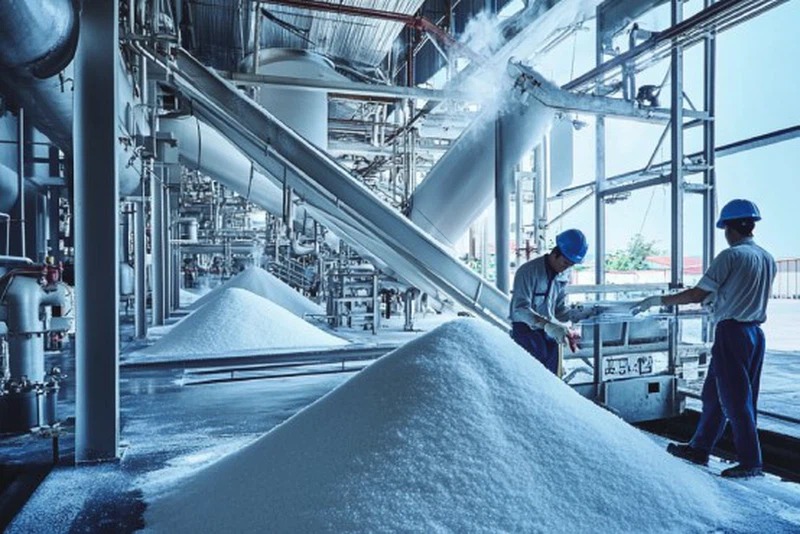
Natural rock salt for manufacturing: Unlocking Profitability in Large-Scale Production
10. Conclusion Natural rock salt for manufacturing : The Strategic Value of Natural Salt
In conclusion, natural rock salt for manufacturing is the most cost-effective solution for any business looking to dominate its sector in the coming years. By reducing energy overhead, simplifying logistics, and providing a cleaner, more consistent chemical profile, natural salt allows you to produce more for less.
At Sama United Natural rock salt for manufacturing , we are proud to be the bridge between the earth’s natural resources and your factory’s success. We invite you to look beyond the “commodity” price and see the strategic value that high-quality, naturally sourced salt can bring to your business. Let’s build a more profitable and sustainable industrial future together.
Are you ready to optimize your raw material costs? Contact the industrial experts at Sama United today for a technical consultation and a customized bulk rock salt quote.