by norhan | Jul 19, 2026 | De-Icing Salt, Salt
Coarse bulk DeIcing salt is the definitive weapon in the arsenal of modern winter maintenance, especially when dealing with heavy, sustained snowfall. At Sama United, we have spent years observing the physics of winter storms across the globe, and we have learned a fundamental truth: not all salt is created equal. While fine salt has its place in light frost conditions, the heavy-duty challenges of a true blizzard require a mineral with a specific structural integrity. In the world of public safety and infrastructure maintenance, using the wrong grain size isn’t just an inefficiency—it’s a risk to the community.
As experts at Sama United, we believe that professional road maintenance is a science of “Boring and Melting.” We don’t just view ourselves as a supplier; we are consultants to the municipalities and industrial complexes that keep the world moving during the harshest months. Understanding why coarse bulk DeIcing salt outperforms finer alternatives in deep snow is essential for any facility manager or public works director looking to optimize their budget and maximize road safety. In this guide, we will explore the mechanical and chemical advantages of coarse salt and how Sama United delivers the high-performance minerals that stand up to the most severe winter conditions.

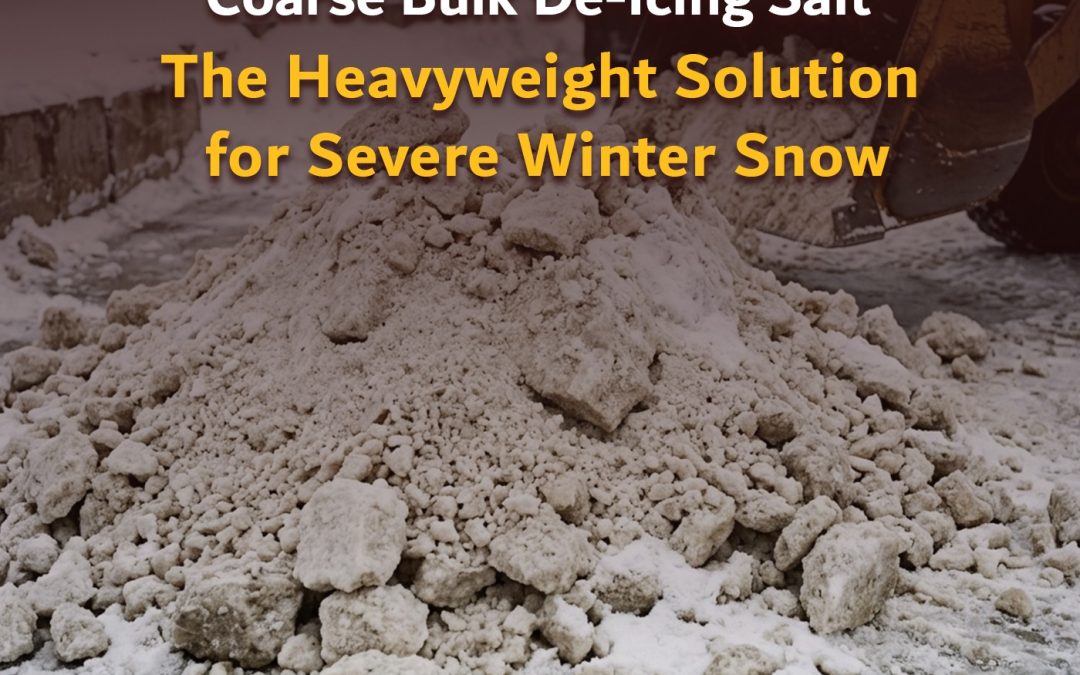
Coarse Bulk DeIcing Salt: The Heavyweight Solution for Severe Winter Snow
1. The “Boring” Effect: Cutting Through the Snow Pack
The primary reason coarse bulk DeIcing salt is superior for heavy snow lies in its physical weight and crystal size. When a road is covered in several inches of snow, fine salt crystals often get “trapped” in the upper layers. They melt the top few millimeters, create a slushy mess, and then become diluted and ineffective.
At Sama United, we explain the “Boring” effect to our clients as follows:
-
Weight Matters: A large, coarse crystal has the gravitational weight to bore through the snow pack like a drill.
-
Pavement Contact: Instead of melting the top, coarse salt reaches the actual pavement.
-
The Brine Layer: Once it reaches the road surface, it begins to melt outward, breaking the bond between the ice and the asphalt from the bottom up. This makes mechanical plowing significantly easier and more effective.
2. Longevity: The “Slow-Release” Advantage
In a heavy snowstorm, the greatest challenge is the constant replenishment of snow. Fine salt dissolves almost instantly. While this provides a quick initial “burn,” it disappears within minutes as the snow continues to fall.
Coarse bulk DeIcing salt from Sama United acts as a long-term residual agent.
-
Lower Surface Area: Because large crystals have less surface area relative to their volume than fine grains, they dissolve much more slowly.
-
Sustained Protection: A single application of coarse salt can continue to melt snow and prevent ice formation for hours, reducing the number of trips the gritting trucks need to make. This “slow-release” functionality is the key to managing a 12-hour storm without exhausting your salt supply.
3. Mechanical Traction: Immediate Grip for Vehicles
When the snow is deep and the ice is thick, chemical melting isn’t the only thing drivers need—they need physical grip. Fine salt provides zero traction.
One of the surprising benefits of coarse bulk DeIcing salt is its dual-purpose role as a grit-like material.
-
Traction on Contact: Before the salt even begins to melt the snow, the large, rugged crystals provide immediate mechanical friction for vehicle tires.
-
Preventing Skidding: For heavy industrial vehicles and public buses, this immediate “bite” into the frozen surface can be the difference between a safe turn and a dangerous skid. At Sama United, we ensure our coarse salt is graded to provide this essential physical benefit.
4. Reducing “Bounce and Scatter” Waste
Efficiency is at the heart of Sama United’s philosophy. When a gritting truck spreads salt at 40 miles per hour, fine salt acts like dust—it catches the wind and bounces off the crown of the road and into the gutters.
By utilizing coarse bulk DeIcing salt, municipalities can significantly reduce this waste:
-
Staying Power: Large crystals are aerodynamic and heavy. They hit the road and stay there.
-
Center-Line Retention: Research shows that coarse salt stays on the “crown” of the road (the center) much better than fine salt. As traffic passes, it naturally pushes the dissolving brine toward the edges, covering the entire road surface with zero wasted minerals.
5. Environmental Best Practices: Less is More
It may seem counterintuitive, but using a “heavy” coarse bulk DeIcing salt is actually better for the environment. Because coarse salt lasts longer and stays on the road better, you actually need to apply less of it over the course of a winter season.
At Sama United, we help our partners optimize their application rates.
-
Lower Saline Load: By reducing the total number of applications, you reduce the amount of sodium chloride that enters the local groundwater and soil.
-
Sediment Reduction: High-purity coarse salt from Sama United contains fewer “insolubles” (sand and clay) than standard rock salt, meaning there is less mud and silt to clean out of storm drains in the spring.
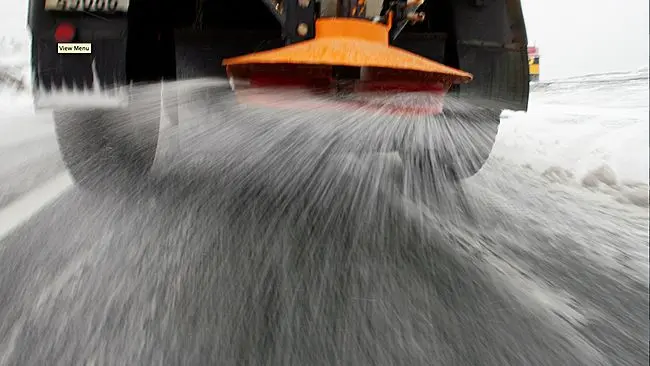
Coarse Bulk DeIcing Salt: The Heavyweight Solution for Severe Winter Snow
6. Strategic Economic Stability: The Bulk Advantage
Buying coarse bulk DeIcing salt is a strategic financial move for any large organization. Winter weather is unpredictable, and “spot-market” prices for salt during a blizzard can be astronomical.
Sama United offers our clients:
-
Supply Security: We leverage our global network to ensure our bulk partners are never left without stock during a crisis.
-
Cost-Per-Mile Efficiency: When calculated over an entire winter, the cost-per-mile of using a high-quality coarse salt is significantly lower than using cheap, fine salt that requires triple the application.
-
UK-Based Professionalism: As Sama United Ltd, we provide the contractual reliability and transparent logistics that municipal procurement departments demand.
7. Quality Control: The Sama United “Grading” Process
We don’t just ship salt; we ship “Performance Graded Minerals.” At Sama United, we understand that if your coarse salt has too many “fines” (dust), it will cake in your warehouse. If it’s too large, it can damage windshields.
Our grading process includes:
-
Multi-Stage Screening: We isolate the specific crystal sizes that offer the best balance of boring power and solubility.
-
Moisture Management: We keep our bulk salt dry to ensure it remains “free-flowing” in your automated gritting machinery.
-
Certificate of Analysis (CoA): Every shipment comes with a full chemical and physical breakdown, so your engineers know exactly how it will perform at different temperatures.
8. Managing Storage: Keeping Your Asset Ready
Because coarse bulk DeIcing salt is a valuable industrial asset, it must be stored with care. Even the best salt will fail if it turns into a solid block in the barn.
At Sama United, we provide storage consultation:
-
Moisture Barriers: Salt should always be stored on an impermeable pad (concrete or asphalt).
-
Covered Bays: Keeping salt under a permanent roof prevents the rain from leaching away the chemical power of the mineral.
-
Palletized Options: For smaller depots, we offer 1000kg Big Bags that act as individual storage units, keeping the salt pristine and ready for the loader.
9. The Human Factor: Safer Roads for Communities
At the end of the day, coarse bulk DeIcing salt is about people. It’s about the nurse getting to the hospital, the delivery driver reaching their destination, and families getting home safely.
At Sama United, we take this responsibility personally. We know that the quality of our salt has a direct impact on the safety of your community. That is why we never compromise on our purity or our grading. When you choose Sama United, you are choosing a partner who values safety as much as you do.

Coarse Bulk DeIcing Salt: The Heavyweight Solution for Severe Winter Snow
10. Conclusion coarse bulk DeIcing salt : Elevate Your Winter Response
In conclusion, coarse bulk DeIcing salt is the elite choice for managing heavy snow and severe winter conditions. Its ability to bore through snow, its long-lasting residual effect, and its mechanical traction make it far superior to any fine salt alternative.
At Sama United, we invite you to experience the difference that professional-grade minerals and expert logistics can make. Don’t leave your winter safety to chance. Partner with the experts who understand the physics of the storm and the needs of the industrial supply chain.
Are you ready to secure your winter supply with the most effective salt on the market? Contact the experts at Sama United today for a technical consultation and a customized bulk quote tailored to your facility’s needs.

by norhan | Jul 17, 2026 | De-Icing Salt, Salt
Sustainable DeIcing salt application is no longer just a technical recommendation for winter maintenance; it has become a fundamental pillar of responsible environmental stewardship. At Sama United, we have spent decades observing the delicate balance between keeping roads safe and protecting our natural ecosystems. While salt remains the most effective and economical tool for preventing winter accidents, its mismanagement can lead to the salinization of freshwater, damage to roadside vegetation, and the corrosion of vital infrastructure.
As experts at Sama United, we believe that the solution is not to stop using salt, but to use it smarter. We view salinity as a precision chemical that must be managed with care and scientific accuracy. Through the adoption of sustainable DeIcing salt application techniques, municipalities and private contractors can maintain the highest safety standards while significantly reducing their ecological footprint. In this guide, we will explore the best practices for environmentally friendly winter maintenance and explain how Sama United provides the high-purity minerals that make this balance possible.

Sustainable DeIcing Salt Application: Environmental Best Practices for Modern Infrastructure
1. The Shift from Reactive to Proactive: Anti-Icing
The foundation of sustainable DeIcing salt application is “Anti-Icing.” Traditional DeIcing —applying salt after snow has already accumulated—is a reactive and often wasteful process. It requires massive amounts of salt to break an existing bond between ice and pavement.
At Sama United, we advocate for proactive anti-icing. This involves applying a liquid brine solution to the road surface before a storm hits.
-
Why it works: The brine creates a barrier that prevents ice from ever bonding to the road.
-
The Environmental Gain: Because it prevents the bond, anti-icing uses up to 75% less salt than traditional DeIcing methods.
By utilizing high-solubility salt from Sama United, infrastructure managers can create clean, sediment-free brines that protect the environment and their budgets.
2. The Power of Pre-Wetting: Reducing “Bounce and Scatter”
One of the greatest sources of environmental waste is “bounce and scatter.” When dry salt is spread on a hard road, much of it bounces off the asphalt and into the roadside soil or drainage ditches, where it serves no safety purpose but harms local vegetation.
A key best practice in sustainable DeIcing salt application is pre-wetting. This involves treating dry salt with a liquid brine as it leaves the spreader truck.
-
Adhesion: Pre-wetted salt sticks to the road like wet sand, ensuring it stays exactly where it is needed.
-
Activation: It starts melting ice immediately, whereas dry salt must first wait to absorb moisture from the air.
Sama United provides specific grain sizes that are ideal for pre-wetting, helping our clients reduce salt waste by up to 30%.
3. Precision Calibration and Data-Driven Spreading
You cannot achieve sustainable DeIcing salt application without knowing exactly how much salt you are using. Over-application is the primary cause of environmental damage.
Modern gritting trucks should be equipped with:
-
Electronic Controllers: These adjust the salt application rate based on the vehicle’s speed.
-
Infrared Thermometers: These measure the actual temperature of the road surface, which is often different from the air temperature.
At Sama United, we provide the technical data sheets for our salt, allowing operators to calibrate their machines with 100% accuracy. Knowing the “Eutectic Point” of the salt allows for precision dosing, ensuring that not a single grain is wasted.
4. Why High-Purity Salt is an Environmental Choice
It might seem counterintuitive, but the purity of the salt you buy directly impacts the environment. Low-grade rock salt contains high levels of “insolubles”—sand, clay, and gypsum. While these don’t melt ice, they do:
-
Clog Storm Drains: Requiring expensive spring clean-up operations.
-
Increase Siltation: Harming aquatic habitats in local streams.
-
Require More Salt: If your salt is only 90% pure, you have to spread 10% more material to get the same melting effect.
At Sama United, we prioritize high-purity Mediterranean and rock salt (98% NaCl or higher). By providing a cleaner mineral, we enable sustainable DeIcing salt application with fewer residues and higher efficiency.
5. Strategic Storage: Preventing Brine Runoff
Environmental safety starts in the warehouse. If bulk salt is stored in the open, rain will dissolve it, creating a highly concentrated brine that leaches into the groundwater.
For effective sustainable DeIcing salt application, Sama United recommends:
-
Impermeable Pads: Salt should be stored on asphalt or concrete, never on bare soil.
-
Permanent Enclosures: Salt barns or high-quality UV-resistant covers prevent “leaching.”
-
Collection Systems: Modern depots should have a drainage system that captures any runoff and recycles it for use in brine-making.
Proper storage ensures that the asset you buy from Sama United remains ready for use rather than becoming an environmental hazard.
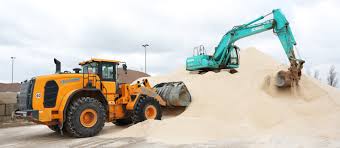
Sustainable DeIcing Salt Application: Environmental Best Practices for Modern Infrastructure
6. Protecting “Salt-Sensitive” Zones
Not every road needs the same amount of salt. Part of sustainable DeIcing salt application is identifying “Vulnerable Zones,” such as areas near wetlands, freshwater lakes, or specialized agricultural land.
Municipalities should:
-
Establish No-Salt Zones: Use mechanical clearing or alternative abrasives in these areas.
-
Lower Application Rates: Use high-tech precision spreaders to apply the minimum amount of salt necessary in these sensitive corridors.
Sama United works with environmental consultants to provide salt solutions that meet the specific regulatory requirements of these sensitive regions.
7. Mechanical Clearing: The Partner of Salinity
Salt should never be used to “melt your way through” a storm. The most successful sustainable DeIcing salt application strategy always includes mechanical clearing.
By plowing early and often, municipalities can remove the bulk of the snow physically, leaving only a thin layer for the salt to handle. This synergy between “The Plow and The Salt” is the most effective way to maintain safety while minimizing chemical use.
8. Training and the “Human Factor”
Technology and salt purity are only half of the equation. The drivers and operators are the ultimate guardians of the environment.
At Sama United, we believe in the importance of operator education. When a driver understands that “More salt is not always better,” they are more likely to follow sustainable DeIcing salt application protocols. We provide technical insights that can be integrated into winter training programs, ensuring that the staff understands the science behind the mineral they are spreading.
9. Supply Chain Transparency with Sama United
As a UK-registered company (Sama United Ltd), we take our ethical responsibilities seriously. Our sustainable DeIcing salt application strategy includes a “Transparent Supply Chain.”
-
Sourcing: We prioritize salt harvested through traditional solar evaporation, which has a much lower carbon footprint than heavy industrial mining.
-
Logistics: We optimize our shipping routes to reduce the CO2 emissions associated with the global salt trade.
Choosing Sama United means choosing a partner who values the planet as much as the product.

Sustainable DeIcing Salt Application: Environmental Best Practices for Modern Infrastructure
10. Conclusion: Securing a Greener Winter
In conclusion, sustainable DeIcing salt application is a commitment to the future. It is about using our resources with precision, respecting the chemical properties of salt, and protecting the ecosystems that sustain us. Winter safety and environmental health are not mutually exclusive; they are two sides of the same coin.
At Sama United, we are proud to be at the center of this transition. We provide the high-purity, perfectly graded salt that allows our partners to innovate. We handle the complexities of global logistics and quality control, so that you can focus on what truly matters: safe roads, clean water, and a sustainable future for all.
Are you looking to modernize your winter maintenance strategy and reduce your environmental impact? Contact the experts at Sama United today for a technical consultation and a customized bulk quote tailored to your sustainable DeIcing salt needs.

by norhan | Jul 15, 2026 | De-Icing Salt, Salt
Municipal road salt optimization is no longer a matter of convenience; it is a critical mandate for public safety, fiscal responsibility, and environmental preservation. At Sama United, we have witnessed the evolution of winter maintenance from a reactive “brute force” approach to a precision-driven chemical science. In today’s climate, city managers and public works directors face a difficult balancing act: they must ensure roads are safe for commuters while simultaneously managing shrinking budgets and increasing pressure to reduce the environmental footprint of salinity.
As experts at Sama United, we believe that the solution doesn’t lie in using less salt at the expense of safety, but in using the right salt, at the right time, with the right technology. We don’t just view ourselves as a salt supplier; we are strategic partners to the municipalities that keep our nations moving. In this comprehensive guide, we will explore the essential strategies for municipal road salt optimization and how Sama United facilitates a more efficient, cost-effective winter response for cities across the globe.
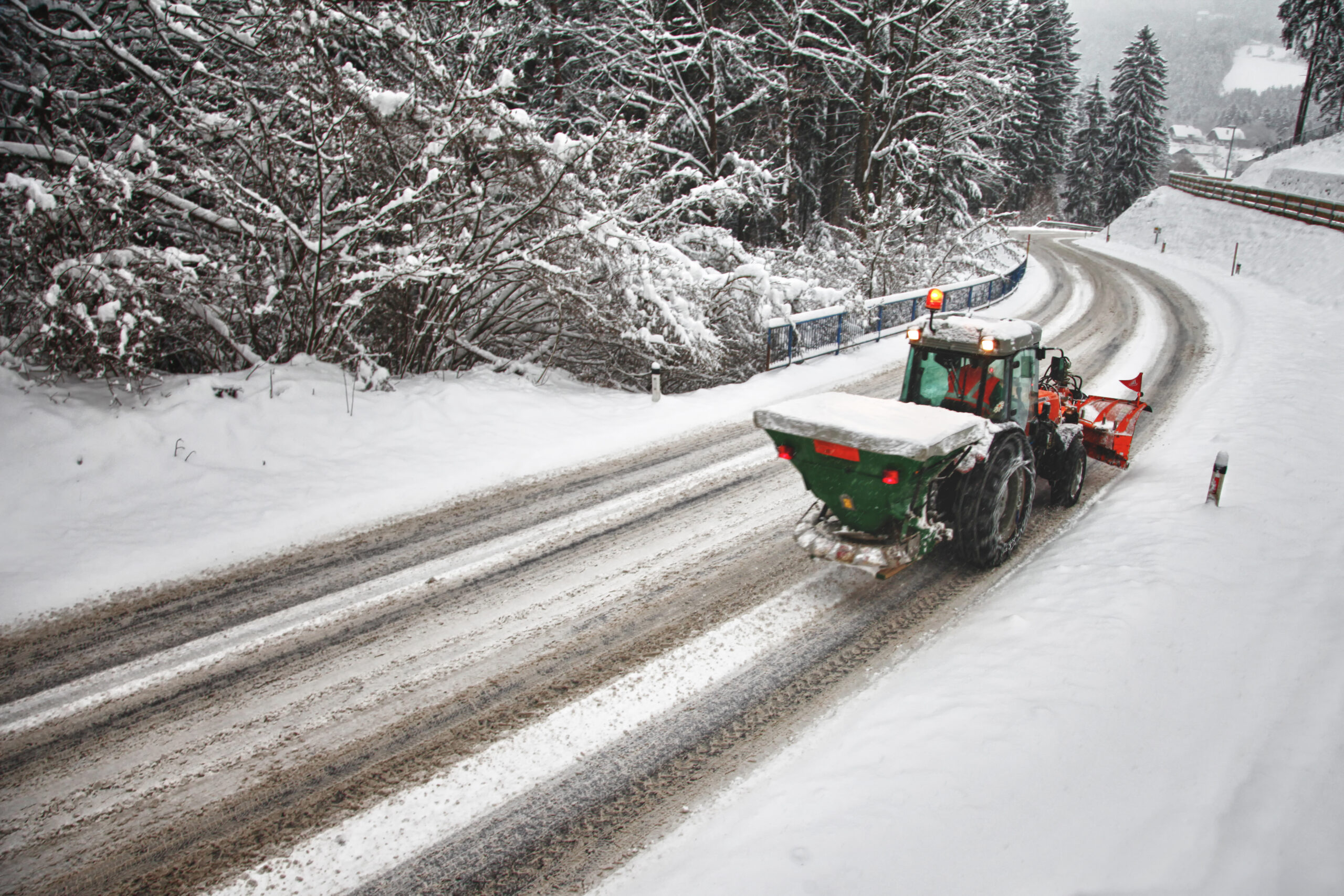
Municipal road salt optimization: The Strategic Blueprint for Smarter Winter Maintenance
1. Shifting from De-Icing to Anti-Icing: A Proactive Approach
The traditional method of winter maintenance is “De-Icing”—waiting for the snow to fall and then spreading salt to melt it. However, the first step in municipal road salt optimization is the transition to “Anti-Icing.”
This involves applying a liquid brine solution (often made from high-purity Sama United rock salt) to the road surface before a storm begins.
-
The Science: Anti-icing prevents the bond between the ice and the pavement from ever forming.
-
The Benefit: It requires significantly less salt (up to 40-50% less) to prevent a bond than it does to break one that has already formed.
By utilizing high-solubility salt from Sama United, municipalities can create clear, sediment-free brines that don’t clog sprayer nozzles, allowing for a seamless proactive defense.
2. Precision Granulometry: Why Grain Size Dictates Cost
A major hidden waste in municipal gritting is poor grain size distribution. If salt is too fine, it blows away before it hits the road. If it is too large, it bounces off the pavement and into the gutters.
At Sama United, we focus on municipal road salt optimization through “Graded Salinity.” We provide salt with a balanced mixture of:
-
Fine Grains: To initiate an immediate brine for light frost.
-
Coarse Grains: To bore through heavy snow and provide a long-lasting residual effect.
By using a calibrated grain size from Sama United, municipalities can reduce “bounce and scatter” by up to 30%, ensuring that the salt stays exactly where it belongs—on the road.
3. The Impact of Chemical Purity on Maintenance Budgets
Not all rock salt is created equal. Low-grade salt often contains high levels of insolubles like clay, sand, and gypsum. While this might seem cheaper at the “per ton” price, it is a disaster for municipal road salt optimization.
-
Cleanup Costs: Impure salt leaves behind a dusty, muddy residue that clogs storm drains and requires intensive spring cleaning.
-
Equipment Wear: Sand and grit act as abrasives that wear down the internal components of gritting trucks and brine-making machines.
At Sama United, we prioritize high-purity Mediterranean and rock salt (98% NaCl or higher). Using cleaner salt means fewer repairs, faster melting, and a lower “Total Cost of Ownership” for the municipality.
4. Strategic Stockpiling and Supply Chain Resilience
A city’s ability to respond to a storm is only as good as its salt reserve. Municipal road salt optimization requires a sophisticated inventory strategy. The “Just-in-Time” procurement model is dangerous in winter maintenance, where a single shipping delay can leave a city paralyzed.
Sama United helps municipalities optimize their supply chain through:
-
Early-Season Filling: We encourage our partners to fill their salt barns in the late summer or autumn when logistics are smoother and prices are lower.
-
Bulk Strategic Reserves: As a UK-based headquarters (Sama United Ltd), we leverage our global network to ensure a steady supply, even during national “salt shortages.”
Having a reliable partner like Sama United ensures that you aren’t forced to pay “spot-market” premium prices during the peak of a blizzard.
5. Pre-Wetting: The Key to Instant Performance
One of the most effective tools for municipal road salt optimization is “Pre-Wetting.” This is the process of coating dry salt with a liquid brine as it leaves the gritting truck.
At Sama United, we have seen that pre-wetted salt:
-
Activates Faster: The salt doesn’t have to wait to absorb moisture from the air to start melting ice.
-
Sticks Better: Pre-wetted salt stays on the crown of the road and doesn’t get kicked off by traffic.
-
Works at Lower Temps: It extends the effective working temperature of the salt, keeping roads safe even during extreme cold snaps.

Municipal road salt optimization: The Strategic Blueprint for Smarter Winter Maintenance
6. Technology and Calibration: Data-Driven Distribution
You cannot manage what you do not measure. A critical component of municipal road salt optimization is the calibration of spreading equipment.
Municipalities should utilize:
-
Electronic Spreaders: These machines adjust the application rate based on the vehicle’s speed, ensuring that a truck stopped at a red light isn’t dumping a pile of salt.
-
Route Optimization Software: Using GPS and weather data to ensure the most dangerous routes (bridges, hospital access, hills) are salted first.
Sama United works with public works departments to provide the salt data (density, moisture content, solubility) needed to calibrate these high-tech systems for maximum efficiency.
7. Environmental Stewardship: Reducing the Saline Load
Over-salting is not just a waste of money; it’s an environmental hazard. Municipal road salt optimization is fundamentally tied to ecology. Excess salt can damage roadside vegetation, corrode concrete infrastructure, and enter freshwater systems.
By using high-quality salt from Sama United and applying it with precision, municipalities can maintain safety while dramatically reducing the “saline load” on the local environment. This responsible management is becoming a key metric for sustainable “Smart Cities.”
8. Proper Storage: Protecting the Asset
Salt is an asset, and it must be protected. If salt is stored in the open, it will “cake” (turn into a solid block) and its chemical concentration will leach into the ground.
For effective municipal road salt optimization, we at Sama United recommend:
-
Impermeable Pads: Storing salt on asphalt or concrete to prevent ground contamination.
-
Permanent Enclosures: Keeping salt under a permanent roof or high-quality UV-resistant covers to prevent moisture ingress.
Proper storage ensures that the salt you buy from Sama United remains free-flowing and ready for the gritter, no matter how long it sits in the barn.
9. Training and Human Capital
Even the best salt and the best trucks won’t work if the staff isn’t trained. Optimization requires a culture of “Precision over Quantity.”
At Sama United, we provide our partners with technical data sheets and expert advice that can be used to educate operators. When a driver understands the science of how Sama United salt interacts with ice, they are more likely to use it responsibly and effectively.
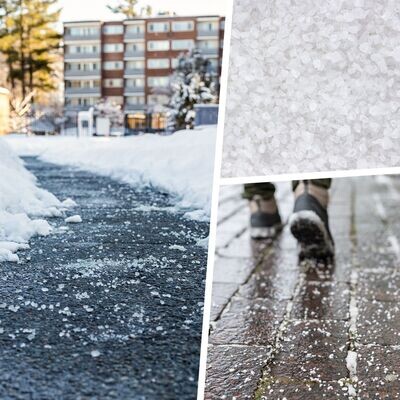
Municipal road salt optimization: The Strategic Blueprint for Smarter Winter Maintenance
10. Conclusion: Securing the Winter with Sama United
In conclusion, municipal road salt optimization is the intersection of chemistry, logistics, and technology. It is a commitment to keeping citizens safe while being a responsible steward of public funds and the environment. Salt is a powerful tool, but like any tool, its effectiveness depends on the quality of the source and the skill of the user.
At Sama United, we are dedicated to providing the high-purity, perfectly-graded minerals that make this optimization possible. We understand the high stakes of winter maintenance. We handle the mountains of mineral data and the complexities of global logistics, so that you can focus on what matters most: clear roads and safe communities.
Is your municipality ready for the challenges of next winter? Contact the experts at Sama United today for a professional consultation and a customized bulk quote tailored to your city’s specific infrastructure needs.
by norhan | Jul 13, 2026 | De-Icing Salt, Salt
Professional deicing salt grades are the primary defense mechanism against the paralysis of public infrastructure during winter. At Sama United, we have spent years supplying municipal authorities, highway agencies, and large-scale industrial complexes with the mineral foundations they need to keep society moving. When a blizzard strikes, the safety of millions of commuters depends on the technical specifications of the salt stored in gritting depots. Choosing the wrong grade is not merely a logistical error; it can lead to increased road accidents, damaged concrete structures, and millions of pounds in wasted budget.
As experts at Sama United, we understand that public infrastructure requires a nuanced approach to salinity. Salt is not a “one size fits all” commodity. From the high-purity white salts harvested from the Mediterranean to the rugged, mineral-rich brown rock salts from deep underground mines, each variety offers unique benefits and challenges. In this guide, we will compare the different professionaldeicing salt grades available in the global market, explaining how their chemical profiles, physical properties, and environmental impacts dictate their use on our roads, bridges, and walkways.

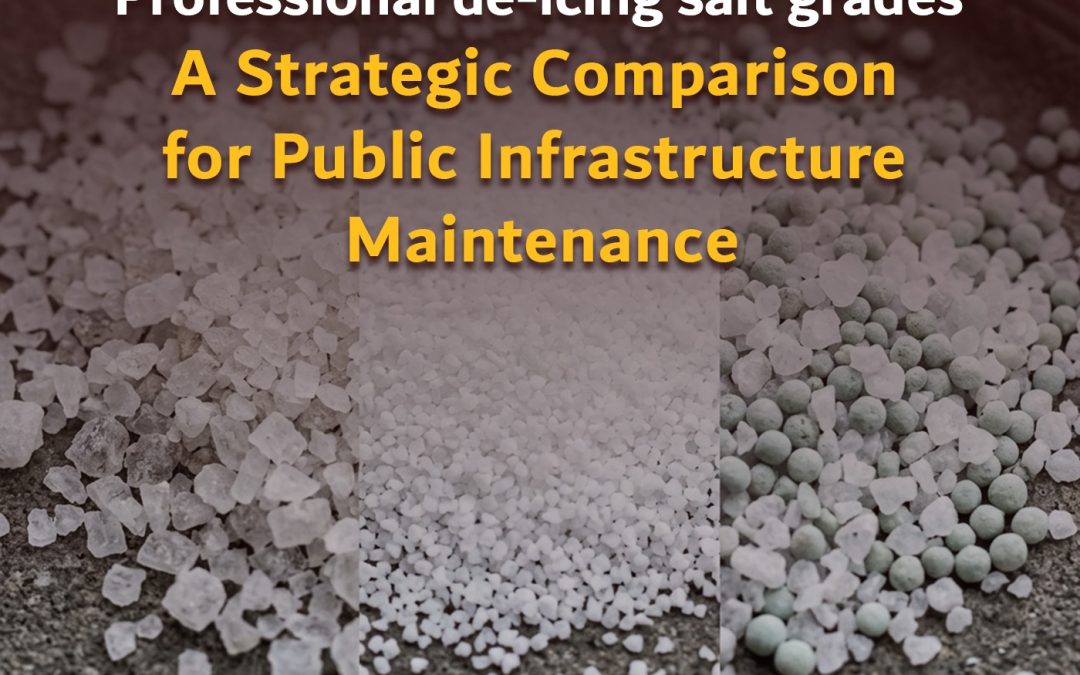
Professional deicing salt grades: A Strategic Comparison for Public Infrastructure Maintenance
1. White Salt vs. Brown Salt: The Most Visible Distinction
The most common comparison in the industry involves color. While both are primarily Sodium Chloride (NaCl), their origins and secondary mineral contents differ significantly.
White deicing Salt (Marine or High-Purity Rock Salt)
White salt is typically harvested from solar evaporation ponds or highly refined rock salt mines.
-
Purity: It usually boasts an NaCl content of 98% to 99%.
-
Cleanliness: At Sama United, we often recommend white salt for high-traffic urban areas, shopping centers, and footpaths. Because it is so pure, it dissolves completely, leaving behind no messy “sludge” or residue. This prevents the tracking of mud into public buildings and keeps the aesthetic of city centers clean.
-
Melting Speed: Its high purity allows it to form a brine more rapidly than lower-grade alternatives.
Brown deicing Salt (Natural Rock Salt)
Brown salt is mined from ancient underground deposits. Its color comes from trace amounts of earthy minerals, such as clay and iron oxide.
-
The Grip Factor: One of the main reasons highway authorities reach out to Sama United for brown salt is the “grit” factor. The insoluble minerals provide a small amount of physical traction for vehicle tires immediately upon application.
-
Cost-Effectiveness: Brown salt is generally more affordable for massive-scale infrastructure projects, such as national motorway networks, where hundreds of thousands of tons are required.
2. The Chemical Grade: Why 98% Purity is the “Golden Rule”
When evaluating professional deicing salt grades, the chemical analysis—specifically the Sodium Chloride (NaCl) percentage—is the most critical metric. At Sama United, we emphasize that purity directly correlates with the “Freezing Point Depression” efficiency.
If a salt grade has only 90% purity, the remaining 10% is “filler” (sand, clay, or gypsum) that does not melt ice. This means:
-
Increased Application Rates: You have to spread more salt to get the same melting effect.
-
Environmental Load: You are dumping unnecessary silt into the drainage systems.
-
Logistical Waste: You are paying to ship and store material that has no deicing value.
Sama United ensures that our professional grades meet or exceed international standards, providing the maximum melting power for every kilogram applied.
3. Granulometry: How Grain Size Impacts Performance
In the world of professional infrastructure, the size of the salt crystal is a functional specification. At Sama United, we categorize salt by its “Grading” or “Granulometry.”
-
Fine Grains: These dissolve almost instantly, providing an immediate brine for light frost.
-
Medium Grains: The standard for most gritting machines, offering a balance between immediate action and long-lasting melting.
-
Coarse Grains: These are essential for heavy snow and thick ice. Large crystals act like “drills,” boring through the ice to reach the pavement and breaking the bond between the ice and the road from the bottom up.
Sama United’s Strategy: We provide a “balanced grading” mix. This ensures that the infrastructure is safe immediately after the gritter passes (fine grains) and stays safe for hours afterward (coarse grains).
4. Moisture Content and the “Mechanical Caking” Challenge
A salt grade can be chemically perfect, but if it is physically unusable, it is a failure. Salt is hygroscopic, meaning it absorbs moisture from the air. High moisture content in professional deicing salt grades leads to “caking” or the formation of solid blocks in the storage bay.
If salt cakes:
-
It jams the automated spreading machinery on the gritting trucks.
-
It requires manual labor to break up, slowing down emergency response times.
-
It results in uneven spreading, leaving dangerous “black ice” patches on the road.
At Sama United, we kiln-dry our salt and use specialized storage techniques to keep moisture levels below 2.0%, ensuring a free-flowing product that is ready for immediate deployment.
5. Anti-Caking Agents: The Secret Ingredient
To maintain the flowability of salt during long-term storage in municipal depots, a small amount of anti-caking agent (typically Sodium Ferrocyanide) is added.
While this is standard for all professional deicing salt grades, the quality of the additive and the uniformity of the application are vital. At Sama United, we ensure that our anti-caking treatment is applied evenly across every ton, preventing the “clumping” that often plagues lower-quality salt supplies during humid winter months.

Professional deicing salt grades: A Strategic Comparison for Public Infrastructure Maintenance
6. Environmental Considerations: Salt and Sustainability
Public infrastructure projects are under increasing pressure to be environmentally responsible. Over-salting can lead to the salinization of local waterways and the degradation of roadside soil.
Sama United helps infrastructure managers become more sustainable by:
-
Offering Higher Purity: Meaning less salt is needed to achieve safety targets.
-
Pre-Wetted Salt Solutions: We provide high-solubility salt that is perfect for “pre-wetting” (mixing salt with a liquid brine before spreading). This helps the salt stick to the road, reducing “bounce and scatter” into the gutters by up to 30%.
-
Sustainable Sourcing: Prioritizing solar salt that is harvested using the natural power of the sun and wind.
7. Logistics: Scaling Supply for National Demand
Managing the supply chain for professional deicing salt grades is a massive undertaking. National infrastructure cannot wait for a delayed ship.
Sama United leverages its UK-based headquarters and global sourcing network to provide:
-
Strategic Stockpiling: We maintain reserves so that we can fulfill emergency orders when a sudden cold snap hits.
-
Bulk Shipping Expertise: We utilize 20-foot and 40-foot containers, as well as bulk carriers, to move mountains of salt efficiently and cost-effectively.
-
Transparent Documentation: Every shipment from Sama United comes with a full Certificate of Analysis (CoA), so infrastructure managers know exactly what grade of protection they are putting on their roads.
8. Economic Impact: The “Total Cost of Ownership”
Municipalities often fall into the trap of buying the cheapest salt available. However, a low-grade salt with high impurities and poor granulometry actually costs more in the long run.
-
Cheap Salt = More Maintenance: The silt left behind by poor-grade rock salt clogs storm drains and filters, requiring expensive spring cleanups.
-
Cheap Salt = Infrastructure Damage: Higher levels of corrosive impurities can accelerate the rusting of rebar in bridges and parking garages.
-
The Sama United Value: By providing higher-quality salt grades, we help our clients reduce the total volume used, protect their assets, and lower their overall winter maintenance budget.
9. Case Study Professional deicing salt grades : Solving the “City Center Residue” Issue
A major metropolitan council approached Sama United because they were spending too much on cleaning the floors of their public transit stations after winter. They were using a low-grade brown rock salt.
We transitioned them to our Professional White Sea Salt Grade. The result? The melting speed increased by 15%, and the station cleaning costs dropped by 40% because there was no earthy residue being tracked in by commuters. This is the power of selecting the correct grade.

professional deicing salt grades
10. Conclusion Professional deicing salt grades : Partnering with Sama United for Public Safety
In conclusion, professional deicing salt grades are the foundation of a resilient winter maintenance strategy. Whether you choose the rugged reliability of natural rock salt or the pristine efficiency of white marine salt, your choice will dictate the safety and cleanliness of your infrastructure.
At Sama United Professional deicing salt grades , we are more than just a supplier; we are your strategic partner in public safety. We understand the chemistry, the physics, and the economics of winter salt. Let us help you navigate the complexities of mineral grades to find the perfect solution for your city, your roads, and your budget.
Are you ready to secure your winter supply with the highest standards of quality? Contact the experts at Sama United today for a technical consultation and a customized quote for your bulk deicing salt needs.

by norhan | Jul 11, 2026 | De-Icing Salt, Salt
Deicing salt for snow melting is a critical component of modern infrastructure maintenance, yet the complex chemical reactions that allow this mineral to clear our roads are often misunderstood. At Sama United, we specialize in the global distribution of high-purity rock salt, and we have spent years studying how different temperatures and environmental conditions affect the performance of salinity. When a winter storm hits, a city’s safety depends entirely on the chemical integrity of its salt supply.
As experts at Sama United Deicing salt for snow melting , we believe that professional road maintenance begins with scientific understanding. Salt is not just “thrown” on a road; it is applied as a precision tool to manipulate the physics of water. In this guide, we will dive deep into the science of freezing point depression, the limitations of salt at extreme temperatures, and how Sama United ensures that our clients receive the most effective mineral grades for maximum public safety.
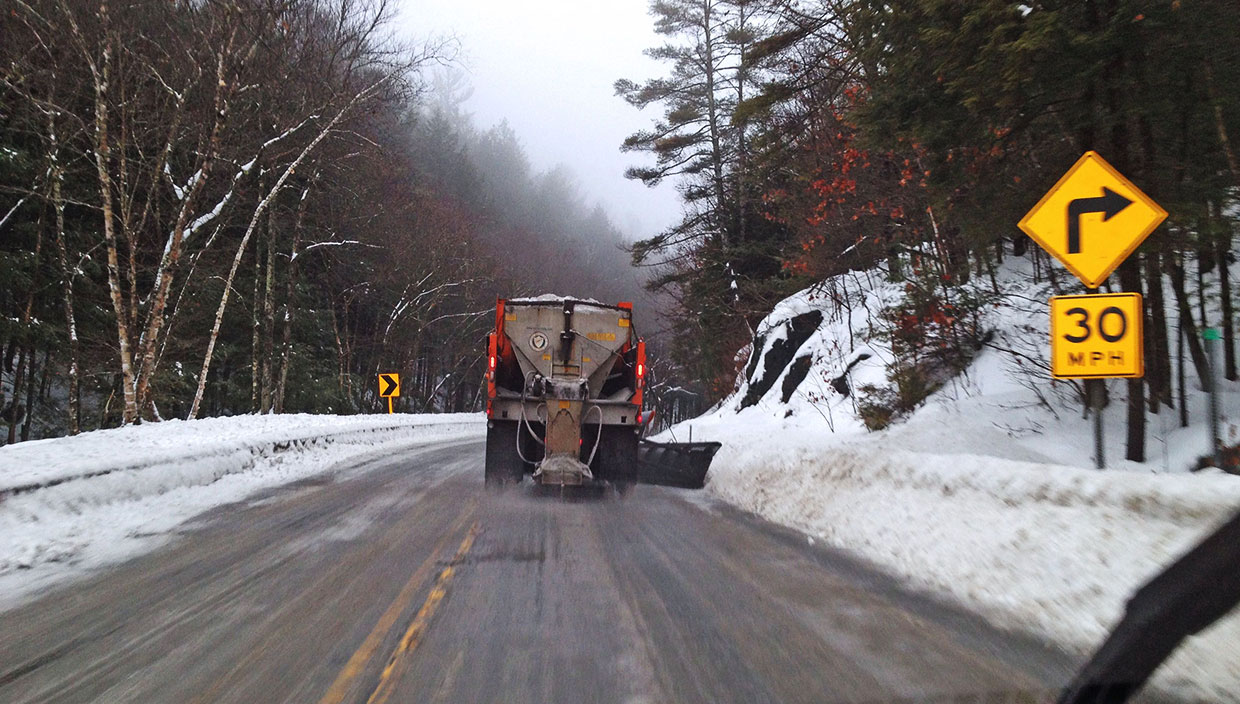
Deicing salt for snow melting: The Science Behind Winter Road Safety
1. The Fundamental Principle: Freezing Point Depression
To understand how Deicing salt for snow melting works, we must first look at the freezing point of water. Under normal conditions, water turns into ice at 0°C (32°F). At this temperature, water molecules slow down and form a rigid, crystalline structure.
When salt (Sodium Chloride) is introduced, it dissolves into its component ions: sodium and chloride. These ions get in the way of the water molecules, physically preventing them from bonding into a solid ice lattice. This process is known as Freezing Point Depression. By lowering the temperature at which water can freeze, the salt turns solid ice back into a liquid “brine,” even when the air temperature is well below zero.
2. The Crucial Role of the Brine Layer
A common misconception is that salt “melts” ice directly. In reality, salt crystals cannot interact with solid ice. For the process to begin, there must be a microscopic layer of moisture on the surface of the ice.
At Sama United, we explain the process in three stages:
-
Dissolution: The salt crystal absorbs moisture from the air or the melting ice and begins to dissolve.
-
Brine Formation: This creates a concentrated salt-water solution called brine.
-
Expansion: The brine has a much lower freezing point than pure water. It spreads across the ice, breaking the bond between the ice and the pavement, allowing the ice to be easily cleared by snowplows.
3. The “Eutectic Temperature”: Why Salt Has a Limit
One of the most important aspects of deicing salt for snow melting is understanding its limits. Every chemical solution has a “Eutectic Point”—the lowest possible temperature at which a solution can remain liquid.
For a pure sodium chloride brine, the theoretical eutectic temperature is roughly -21°C (-6°F). However, in real-world conditions, salt begins to lose its effectiveness much sooner. At Sama United, we advise our clients that standard rock salt is most efficient down to about -7°C to -9°C (15°F to 20°F). Below these temperatures, the rate of melting slows down significantly, and additional chemical enhancers may be required.
4. The Importance of Chemical Purity (NaCl Content)
Not all salt is created equal. The speed and efficiency of deicing salt for snow melting are directly tied to its chemical purity. Standard “white” or “brown” rock salt contains varying levels of impurities like clay, gypsum, and magnesium.
At Sama United, we prioritize high-purity Mediterranean and rock salts with an NaCl content of 98% or higher.
-
Faster Brining: Higher purity salt dissolves more predictably and creates a stronger brine faster.
-
Lower Residual Waste: Impure salts leave behind a “sludge” of sand and clay that can clog storm drains and damage the environment. By providing cleaner salt, Sama United helps municipalities reduce their post-winter cleanup costs.
5. Granulometry: Why Grain Size Dictates Performance
In winter maintenance, the size of the salt crystal is a functional specification. At Sama United, we offer specific “graded” salt to ensure optimal performance on the road.
-
Fine Grains: These dissolve almost instantly, providing an immediate “deicing” effect. However, they don’t last long.
-
Coarse Grains: These act as “slow-release” pellets. They can bore through thick layers of ice to reach the pavement, creating a brine layer from the bottom up.
-
The Sourcing Advantage: We provide a balanced mixture of grain sizes. This ensures that the road is safe immediately after application and remains clear for several hours, reducing the number of trips the gritting trucks need to make.
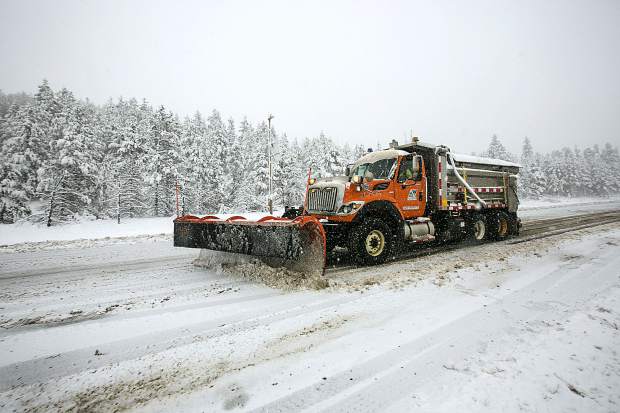
Deicing salt for snow melting: The Science Behind Winter Road Safety
6. Preventing the Bond: Anti-Icing vs. Deicing salt for snow melting
Professional road authorities are shifting from reactive “deicing” to proactive “anti-icing.” This involves applying a brine solution (often made from Sama United high-purity salt) to the road before the storm begins.
This strategic use of deicing salt for snow melting prevents the ice from ever bonding to the road surface. It is significantly more efficient, uses up to 40% less salt, and makes the eventual snowplowing much easier. At Sama United, we provide the bulk salt necessary for these large-scale brine-making facilities, ensuring that the brine is free from sediment that could clog sprayer nozzles.
7. Environmental Responsibility and Salt Management
At Sama United, we are committed to sustainable winter maintenance. While salt is essential for safety, over-application can harm local vegetation and waterways.
We work with our partners to optimize their salt usage through:
-
Accurate Dosing: Providing consistent salt grades that allow for precise mechanical spreading.
-
Pre-Wetting: We encourage the use of pre-wetted salt (salt treated with a liquid brine), which sticks to the road better and reduces “bounce and scatter” into the gutters by up to 30%.
-
Responsible Sourcing: Our salt is harvested with minimal environmental disruption, ensuring a “Green” supply chain for our eco-conscious clients.
8. Why Strategic Stockpiling with Sama United Matters
The global market for deicing salt for snow melting is highly seasonal and volatile. When a major cold snap hits, demand spikes, and prices can skyrocket.
At Sama United, we act as a strategic reserve for our clients. By utilizing our global logistics network and UK-based headquarters, we help municipalities and private contractors secure their winter stock in the late summer or autumn.
-
Supply Security: Never worry about a “salt shortage” during the peak of winter.
-
Cost Stability: Buying in bulk before the season ensures you aren’t at the mercy of spot-market price hikes.
-
Quality Assurance: Every ton of salt we ship is tested and certified to meet international deicing standards.
9. Storage Best Practices: Keeping Your Salt Ready
The science of salt is only effective if the salt is stored correctly. Salt is hygroscopic; it absorbs moisture from the air. If stored in the open, it will “cake” and turn into a solid block.
Sama United provides guidance on storage:
-
Covered Bays: Always store bulk salt under a permanent roof or high-quality UV-resistant tarps.
-
Drainage: Ensure the storage area has a sloped, impermeable floor to prevent brine runoff from entering the soil.
-
Moisture-Proof Packaging: For our bagged salt (25kg or 1000kg), we use heavy-duty liners that ensure the salt remains free-flowing from the day it arrives until the day it is spread.

Deicing salt for snow melting: The Science Behind Winter Road Safety
10. Conclusion: Partnering with Sama United for a Safer Winter
In conclusion, deicing salt for snow melting is a masterpiece of chemistry and logistics. It is the mineral that keeps our economies moving and our families safe during the most treacherous months of the year. But to be effective, it requires the right purity, the right grain size, and the right strategic partner.
At Sama United, we are more than just a supplier; we are your winter safety consultants. We understand the science of freezing point depression and the complexities of global supply chains. When you choose Sama United, you are choosing a partner dedicated to excellence, transparency, and public safety.
Is your city or business ready for the next winter season? Contact the experts at Sama United today for a technical consultation and a customized bulk quote for your Deicing salt for snow melting needs.

by norhan | Jul 9, 2026 | Rock Salt, Salt
Global rock salt market trends are currently undergoing a fundamental transformation, moving far beyond the traditional boundaries of a simple mineral trade. At Sama United, we have observed that the industry is no longer just about moving tonnage from mines to factories; it is now about sustainability, digital precision, and geopolitical resilience. As a UK-registered company with deep roots in global mineral logistics, we see ourselves as a strategic bridge between ancient natural resources and the high-tech industrial needs of tomorrow.
The next decade will be defined by how the salt industry adapts to a rapidly changing world. From the increasing demand for high-purity feedstock in the chemical sector to the pressure for decarbonized supply chains, the landscape is shifting. As experts at Sama United, we believe that understanding these global rock salt market trends is essential for any business looking to secure its raw material future. In this comprehensive outlook, we will explore the major forces shaping the industry and explain why our approach at Sama United is designed to keep our partners ahead of the curve.
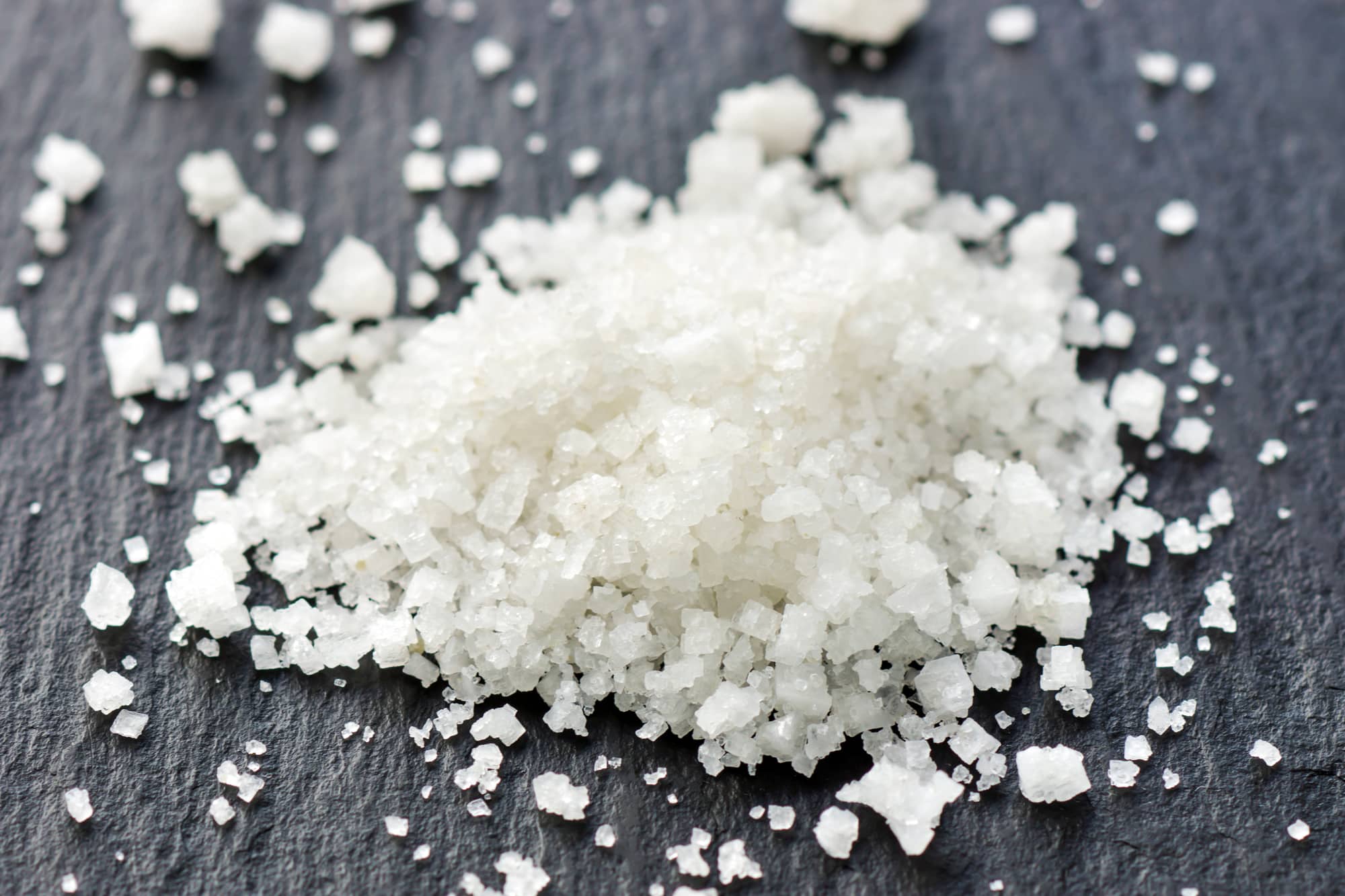
Global rock salt market trends: Navigating the Future of Industrial Salinity
1. The Decarbonization of Salinity: The Rise of “Green Salt”
One of the most powerful global rock salt market trends is the aggressive push for sustainability. Modern industrial giants are no longer satisfied with salt that is merely pure; they want salt that is produced and transported with a low carbon footprint.
At Sama United, we are witnessing a growing preference for solar-evaporated rock salt over traditional energy-intensive mining. Solar salt utilizes the natural power of the sun and wind, making it one of the most eco-friendly industrial minerals on earth. Furthermore, our clients are increasingly requesting “Life Cycle Assessments” (LCA) for their salt supplies. We are responding by optimizing our logistics to reduce “food miles” (or rather, “industrial miles”) and exploring recyclable bulk packaging. Sustainability is no longer a corporate social responsibility checkbox—it is a core economic driver for the 2025-2030 period.
2. Geopolitical Diversification: Shifting Supply Chains
The recent disruptions in global trade have taught the industrial world a hard lesson: over-reliance on a single geographic source is a major risk. A key trend in the global rock salt market trends of the coming years is the “Derisking” of supply chains.
We at Sama United have seen a surge in interest from European and UK-based manufacturers looking to diversify their sources away from traditional hubs and toward stable, high-quality Mediterranean and Middle Eastern deposits. By maintaining a diverse sourcing network, Sama United ensures that our partners are protected from localized strikes, weather events, or geopolitical tensions. The future of salt procurement is not just about the lowest price—it is about the most reliable route.
3. The “Purity Push” in High-Tech Manufacturing
While salt has always been a primary feedstock for the chlor-alkali and plastics industries, the precision required by modern machinery is reaching new heights. Global rock salt market trends show that “standard grade” is becoming obsolete in many sectors, replaced by a demand for “Ultra-Pure” sodium chloride.
As technology in chemical synthesis and water electrolysis advances, even trace amounts of magnesium or calcium (measured in parts per million) can lead to expensive membrane failures. Sama United is meeting this trend by investing in better refining partnerships and more rigorous lab testing. We understand that our salt is often the first step in a complex high-tech manufacturing process, and our quality standards reflect the weight of that responsibility.
4. Digital Logistics and the Transparent Supply Chain
The industrial mineral sector was traditionally slow to adopt technology, but that is changing rapidly. A significant part of the global rock salt market trends involves the digitalization of the supply chain.
At Sama United, we are integrating digital tracking and transparent documentation into our workflow. Our partners expect to see their Certificates of Analysis (CoA) and shipping updates in real-time. By utilizing smart logistics, we can optimize container space, reduce port delays, and provide our clients with the data they need to manage their inventory levels with surgical precision. Transparency is the new currency of trust in the global salt trade.
5. Climate Change and the De-icing Volatility
The de-icing sector remains a massive consumer of bulk rock salt, but climate change is making this market highly volatile. Global rock salt market trends indicate that “Just-in-Time” procurement for road salt is failing. Instead, we are seeing a move toward “Strategic Stockpiling.”
Municipalities and highway authorities are now looking for multi-year contracts that guarantee supply during extreme, unpredictable weather events. At Sama United, we work with our partners to build these strategic reserves. Our ability to scale logistics quickly in response to weather shifts is becoming one of our most valued services. The future of winter safety is built on long-term mineral security, not short-term spot purchases.
Global rock salt market trends: Navigating the Future of Industrial Salinity
6. The Expansion of Salt in the Energy Sector
Beyond traditional chemistry, rock salt is finding new roles in the transition to renewable energy. One of the most exciting global rock salt market trends is the use of salt in thermal energy storage and potentially in next-generation battery technology.
Concentrated Solar Power (CSP) plants are using molten salts to store heat, and researchers are looking at sodium-ion batteries as a cheaper, more abundant alternative to lithium-ion. As these technologies scale, Sama United is positioning itself to provide the specific chemical-grade minerals required for the energy infrastructure of the future. We don’t just sell an ancient mineral; we provide the raw material for the green energy revolution.
7. The Impact of Emerging Markets in Asia and Africa
While Europe and North America remain stable consumers, the growth of the global rock salt market trends is heavily influenced by the industrialization of Asia and parts of Africa. The massive expansion of the textile, leather, and detergent industries in these regions is driving a global hunt for high-quality bulk salt.
Sama United leverages its UK headquarters to facilitate trade between these emerging industrial hubs and the world’s finest salt sources. We understand the specific logistical and regulatory challenges of these regions, ensuring that our salt reaches even the most complex and growing markets on time and within budget.
8. Reducing Waste: The Circular Economy of Brine
A rising trend in industrial salt use is the “Circular Economy” mindset. Manufacturers are looking for ways to recover and recycle the salt they use in their processes. Global rock salt market trends show an increased interest in salts that are easier to recycle and have fewer chemical additives (like anti-caking agents) that might interfere with brine recovery systems.
At Sama United, we provide high-purity natural rock salt that is free from excessive chemical treatment. This makes our salt the ideal choice for modern plants that are investing in salt-recovery technology to lower their operational costs and environmental impact.
9. Why Sama United is the Expert Partner for the Future
In an era of rapid change, you need a partner who understands both the heritage of the mineral and the future of the market. Sama United is not just a supplier; we are market analysts and logistics architects.
We offer our clients:
-
Predictive Procurement: Helping you buy when the market is stable, not when it is spiking.
-
UK-Based Professionalism: Transparency, contract reliability, and international trade expertise.
-
Global Reach: A sourcing and logistics network that spans the Mediterranean, Middle East, and Europe.
-
Technical Consulting: Matching the exact salt grade to your specific machinery and chemical needs.
Global rock salt market trends: Navigating the Future of Industrial Salinity
10. Conclusion Global rock salt market trends : Securing Your Competitive Edge
In conclusion, the global rock salt market trends for 2025 and beyond point toward a world that values reliability, purity, and sustainability above all else. Salt is a fundamental mineral, but its procurement has become a high-stakes strategic decision.
At Sama United, we are dedicated to helping our partners navigate these complexities. Whether you are in the chemical, textile, or infrastructure sector, the choices you make about your salt supply today will determine your operational efficiency tomorrow. Let Sama United be the foundation of your success. We handle the mountains of mineral data and the complexities of global freight so that you can focus on building your brand and your business.
Are you ready to align your procurement strategy with the future of the market? Contact the experts at Sama United today for a technical consultation and a customized bulk quote for your long-term needs.