by norhan | May 20, 2026 | Industrial Salt, Salt
Bulk industrial salt procurement is often the silent engine behind the successful scaling of heavy industry operations. At Sama United, we have worked with global manufacturers across the chemical, textile, and energy sectors, and we have observed a consistent pattern: businesses that treat salt as a strategic asset rather than a simple commodity are the ones that dominate their markets. When your production lines consume thousands of tons of sodium chloride annually, the way you source that material becomes just as important as the quality of the material itself.
As experts at Sama United, we understand that moving from small-scale purchasing to large-scale industrial procurement is a major milestone for any business. It requires a shift in mindset—from focusing on the price per bag to focusing on supply chain resilience, purity consistency, and logistical efficiency. In this comprehensive guide, we will explore the strategic advantages of bulk industrial salt procurement and how Sama United acts as the bridge that allows heavy industry players to scale their operations with confidence and profitability.
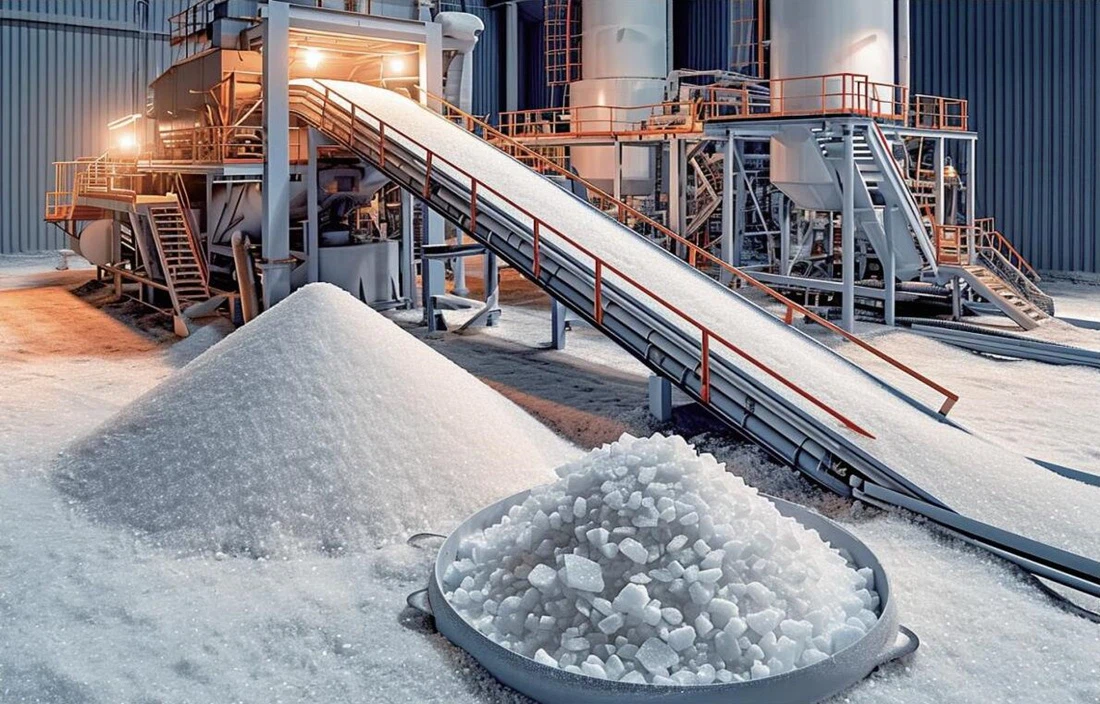
Bulk industrial salt procurement: Scaling Your Business for Heavy Industry Success
1. The Economics of Scale: Why Bulk is a Competitive Necessity
In heavy industry, margins are often thin, and the cost of raw materials can be volatile. Bulk industrial salt procurement is the most effective way to protect your bottom line. At Sama United, we explain the “Scale Advantage” through three key economic factors:
-
Reduced Unit Costs: Buying in bulk—whether in 1,000kg Big Bags or loose bulk containers—drastically reduces the packaging and handling costs that small-scale buyers must pay.
-
Price Hedging: In a world of fluctuating energy and shipping costs, securing a large-volume contract with Sama United allows you to “lock in” your raw material costs for months or even years.
-
Minimized Operational Downtime: There is nothing more expensive than an idle factory. Bulk procurement ensures you have a strategic reserve of salt, preventing production stops caused by minor supply chain delays.
2. Identifying the Right Grade for Your Industrial Application
When you are scaling up, “salt is not just salt.” Different heavy industries have vastly different technical requirements. At Sama United, our technical team consults with procurement managers to ensure they are choosing the right salt for their specific machinery:
-
Chlor-Alkali and Plastics: Requires ultra-high purity “Electrolysis Grade” salt to protect delicate membranes.
-
Textile Dyeing: Requires high-purity salt with low calcium and magnesium to ensure level dyeing and prevent machine scaling.
-
Oil and Gas: Uses specific grain sizes for drilling muds and well completion fluids.
-
De-icing and Road Safety: Requires high-volume, cost-effective rock salt with specific granulometry for spreadability.
Sama United provides a diverse portfolio, ensuring that your bulk industrial salt procurement is perfectly aligned with your technical needs.
3. Logistical Excellence: The Backbone of Heavy Industry
The biggest challenge in bulk industrial salt procurement is not the salt itself, but moving it. A single 20-ton shipment is easy; managing a 5,000-ton-per-month supply chain is a feat of engineering.
At Sama United, our logistics department is specialized in:
-
Container Optimization: We use advanced loading patterns to ensure every container is utilized to its maximum safe weight limit, reducing your shipping cost per ton.
-
Intermodal Transport: We combine sea freight, rail, and trucking to create the most efficient “Last Mile” delivery to your factory gates.
-
Vapor-Barrier Packaging: For industrial plants in high-humidity regions, we provide specialized moisture-proof liners to ensure the salt remains free-flowing even after weeks on the ocean.
4. Quality Assurance at Scale: The Risk of Impurities
When scaling your business, the stakes for quality control are higher. If you buy a few bags of salt and one is “dirty,” it’s a minor nuisance. If you receive a 500-ton shipment of salt with high magnesium levels, it can ruin your entire production batch and damage your industrial boilers or electrolytic cells.
Sama United eliminates this risk through rigorous testing. Every shipment involved in our bulk industrial salt procurement services comes with a detailed Certificate of Analysis (CoA). We monitor for:
-
Insoluble Matter: Sand or grit that can clog industrial pumps.
-
Chemical Purity: Ensuring NaCl levels meet your specific PPM (parts per million) requirements.
-
Consistency: Ensuring that the grain size in the first bag is the same as the grain size in the thousandth bag.
5. Sustainability in Bulk Procurement: Doing More with Less
Modern heavy industry is increasingly focused on reducing its carbon footprint. Interestingly, bulk industrial salt procurement is a much “greener” way to operate.
-
Packaging Waste: Moving salt in 1000kg Big Bags instead of forty 25kg bags drastically reduces plastic waste.
-
Transport Efficiency: Fewer, larger shipments mean less fuel consumed and lower CO2 emissions per ton of delivered product.
-
Sourcing Responsibility: At Sama United, we prioritize salt harvested through traditional solar evaporation, which uses 100% renewable energy (sun and wind), making your entire supply chain more sustainable.
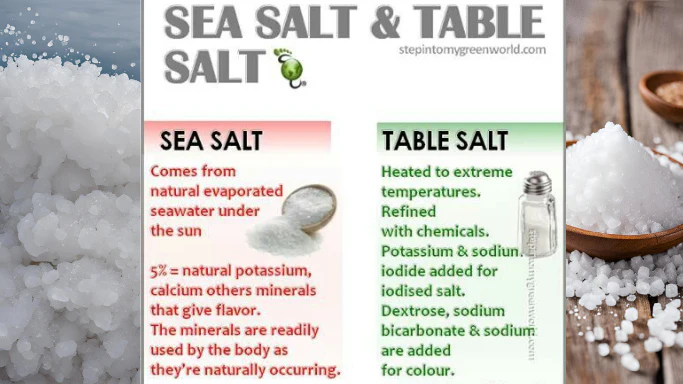
Bulk industrial salt procurement: Scaling Your Business for Heavy Industry Success
6. Building a Strategic Partnership with Sama United
Many companies treat their salt supplier as a simple vendor. However, the most successful heavy industry players treat Sama United as a strategic partner.
As your business scales, your needs change. Our role at Sama United is to adapt alongside you. We offer:
-
Customized Lead Times: We help you forecast your needs based on your production schedule.
-
Global Market Insights: We keep you informed about global salt harvest trends and shipping fluctuations so you can make informed procurement decisions.
-
Technical Troubleshooting: If your production line is facing issues with brine concentration or sediment, our experts are here to help you solve it.
7. Navigating the “Hidden Costs” of Procurement
In our years at Sama United, we’ve seen businesses struggle with the hidden costs of international trade—customs duties, port storage fees, and documentation errors. Part of our bulk industrial salt procurement service is handling the “invisible work.” We ensure all health and origin certificates are perfectly in order, preventing the “Red Tape” that can slow down your business scaling. When you work with us, you aren’t just buying salt; you are buying a streamlined, professional process.
8. The Future: Digital Procurement and Automation
As heavy industry enters the “Industry 4.0” era, Sama United is looking toward the future. We are exploring ways to integrate our supply chain with our clients’ inventory management systems. Imagine a future where your salt silo “talks” to our warehouse, automatically triggering a bulk industrial salt procurement order when your stock reaches a certain level. This level of automation is what allows a business to scale without increasing its administrative overhead.
9. Common Myths: Is Buying Bulk Riskier?
Some managers worry that buying in bulk increases the risk of loss due to clumping or contamination. At Sama United, we prove the opposite. By utilizing high-quality liners, UV-protected bags, and professional palletization, we ensure that bulk-stored salt remains in better condition than salt stored in small, flimsy bags. With the right partner, bulk is not a risk; it is a security measure.
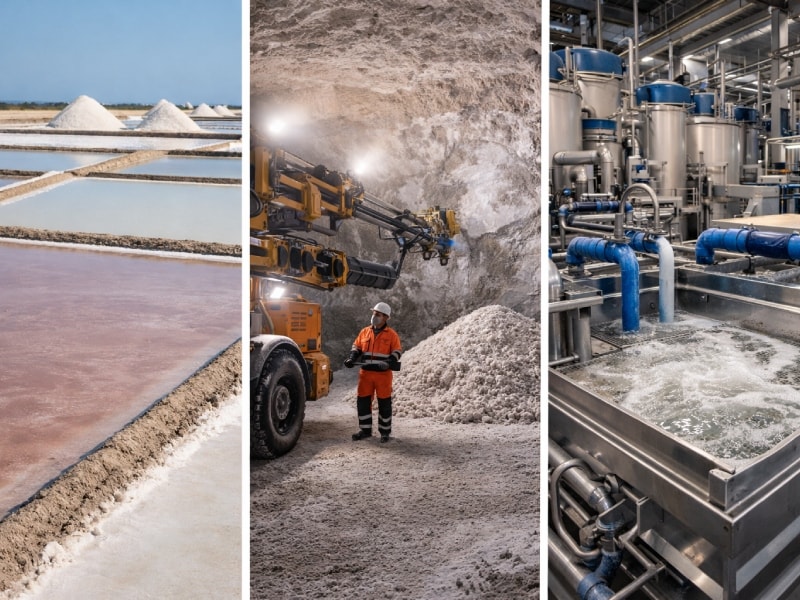
Bulk industrial salt procurement: Scaling Your Business for Heavy Industry Success
10. Conclusion Bulk industrial salt procurement : Scaling Your Vision with Sama United
In conclusion, bulk industrial salt procurement is the foundation upon which heavy industry success is built. It is the key to lowering costs, ensuring quality, and building a resilient production line that can handle the demands of a growing business.
At Sama United, we don’t just see ourselves as a salt supplier; we are the foundation of your production. We are the purity in your chemicals, the strength in your textiles, and the stability in your supply chain. If you are ready to take your business to the next level, you need a partner who understands the weight of your goals. Let Sama United provide the minerals you need to build the future.
Are you ready to optimize your raw material supply and scale your industrial operations? Contact the experts at Sama United today for a customized bulk procurement quote and a technical consultation.
by norhan | May 18, 2026 | Industrial Salt, Salt
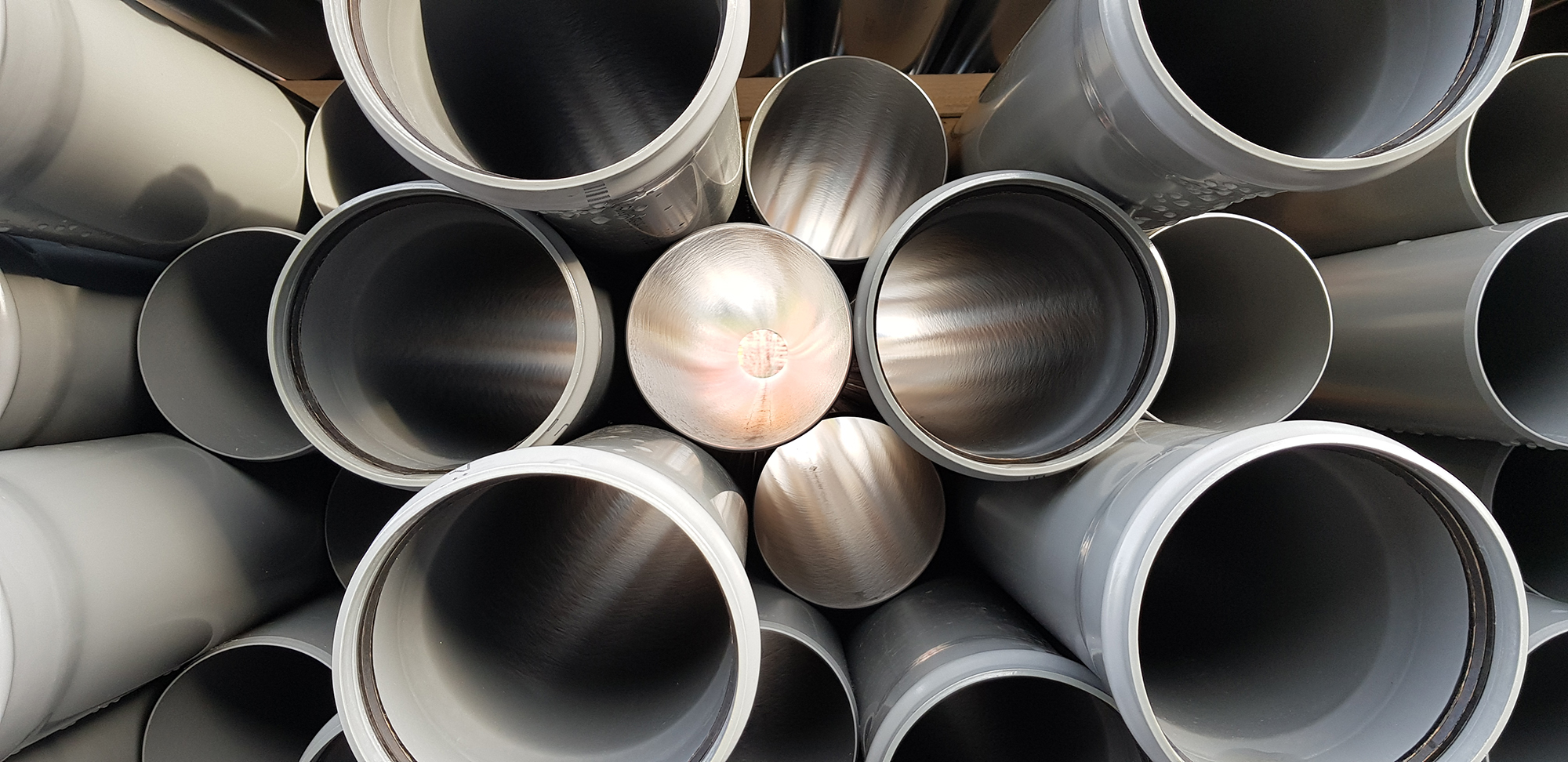
Industrial salt for PVC production is the invisible backbone of the modern construction, automotive, and healthcare industries. At Sama United, we often find that when people think of plastic, they think of oil and gas. However, the reality of chemical engineering tells a different story. One of the most widely used plastics in the world, Polyvinyl Chloride (PVC), is actually composed of 57% chlorine, which is derived directly from common industrial salt.
As experts at Sama United, we have been a strategic partner to the petrochemical sector for years. We understand that without a consistent, high-purity supply of industrial salt for PVC production, the manufacturing of pipes, window frames, medical tubing, and cable insulation would come to a grinding halt. In this deep dive, we will explain the chemical journey from salt to plastic, why purity is the most critical factor for plastic manufacturers, and how Sama United ensures the reliability of this vital supply chain.
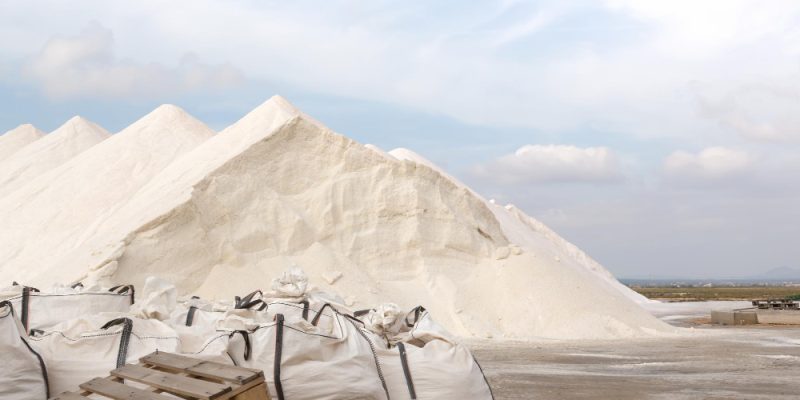
Industrial salt for PVC production: The Essential Raw Material for the Global Plastics Industry
1. The 57% Rule: Why Salt is the Heart of PVC
To understand why industrial salt for PVC production is so important, we must look at the chemical composition of the polymer. PVC is made from two primary raw materials:
This high percentage of salt-derived content makes PVC less dependent on fossil fuels compared to other plastics like polyethylene or polypropylene. At Sama United, we emphasize to our clients that salt is not just an additive; it is the majority component of the plastic itself. By securing a high-quality salt source, manufacturers are essentially securing the core of their product.
2. The Chlor-Alkali Connection: How Salt Becomes Plastic
The transformation of industrial salt for PVC production begins in the “Chlor-Alkali” plant. In this facility, salt is dissolved in water to create a saturated brine. This brine then undergoes electrolysis—a process where an electric current splits the salt molecules (Sodium Chloride) into three valuable products:
-
Chlorine Gas: The essential ingredient for PVC.
-
Caustic Soda (Sodium Hydroxide): Used in soap, paper, and alumina production.
-
Hydrogen Gas: A clean energy source.
The chlorine gas is then reacted with ethylene to produce ethylene dichloride, which is eventually converted into the PVC resin we see in industrial applications. At Sama United, we provide the high-purity salt required to keep these electrolytic cells running at peak efficiency.
3. Why Purity is the “Make-or-Break” Factor for Manufacturers
In the world of industrial salt for PVC production, not all salt is created equal. Modern chlor-alkali plants use “Membrane Cell Technology,” which is highly efficient but extremely sensitive to impurities.
Our technical team at Sama United focuses on removing “poisonous” minerals from our salt, such as:
-
Calcium and Magnesium: These cause scaling on the membranes, leading to higher energy consumption and expensive repairs.
-
Sulfate and Silica: These can interfere with the chemical reaction and reduce the purity of the chlorine gas.
-
Heavy Metals: Even trace amounts of iron or nickel can damage the electrodes in the electrolytic cell.
By supplying salt that is 99% pure or higher, Sama United helps plastic manufacturers reduce their “Total Cost of Ownership.” High-purity salt means fewer chemicals are needed for brine purification, membranes last longer, and the overall carbon footprint of the plastic production is reduced.
4. The Economic Impact: Salt as a Price Stabilizer
Because such a large portion of PVC comes from salt, the price of industrial salt for PVC production plays a major role in the global economy. Salt is generally more price-stable than crude oil. At Sama United, we work with our partners to leverage this stability.
By securing long-term bulk salt contracts, PVC manufacturers can hedge against the volatility of the oil market. This allows for more predictable pricing in the construction and infrastructure sectors, where PVC pipes and materials are used on a massive scale. Sama United acts as the stabilizer in this economic equation, providing consistent pricing and reliable logistics.
Industrial salt for PVC production: The Essential Raw Material for the Global Plastics Industry
5. Beyond PVC: Salt in Other Plastic Applications
While PVC is the primary consumer, industrial salt for PVC production technologies also support other parts of the plastics industry:
-
Polyurethanes: Used in foam insulation and car seats; these also require chlorine in their manufacturing process.
-
Polycarbonates: The clear, strong plastic used in eyeglasses and electronic screens.
-
Epoxy Resins: Essential for coatings and adhesives in the aerospace and construction industries.
At Sama United, we view our salt as the “foundational mineral” for the entire advanced materials sector.
6. Logistical Excellence: Moving Mountains of Salt
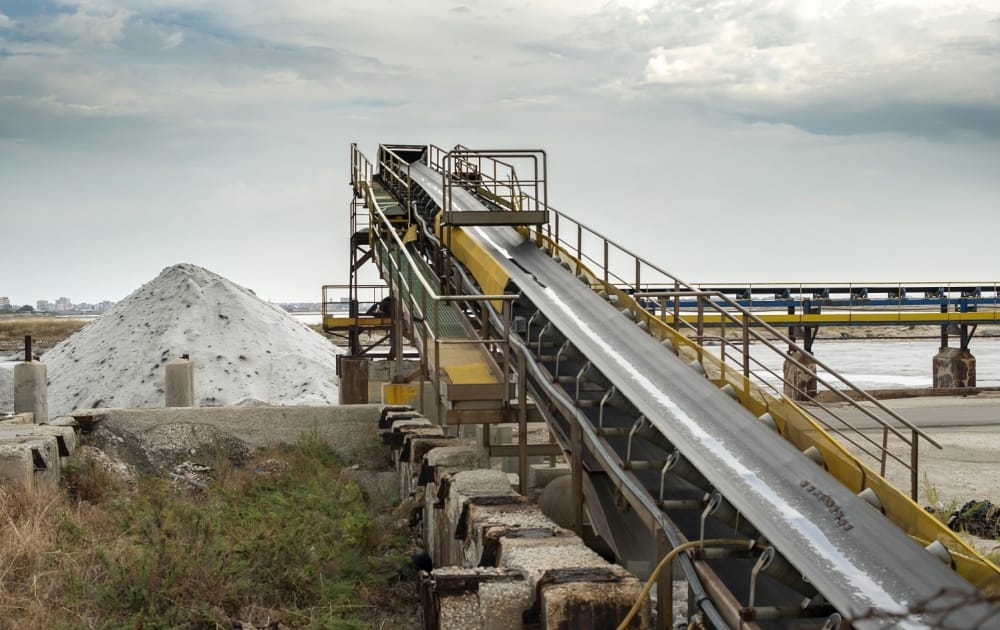
The plastics industry operates on a massive scale. A single petrochemical complex can consume hundreds of thousands of tons of salt per year. This is where Sama United truly shines.
Navigating the logistics of industrial salt for PVC production requires:
-
Bulk Sea Freight: We coordinate large-scale shipments to ensure a continuous flow of raw materials.
-
Moisture Control: Even for industrial use, salt must be kept at a specific moisture level to ensure it flows easily into the brine saturators.
-
Strategic Warehousing: We maintain stock near major industrial hubs to prevent any “stock-out” situations that could shut down a plastic production line.
7. Sustainability and the “Green” Future of Plastics
The plastics industry is under pressure to become more sustainable. Industrial salt for PVC production plays a key role in this transition.
-
Energy Efficiency: As we’ve mentioned, higher purity salt from Sama United reduces the electricity needed for electrolysis.
-
Recyclability: PVC is one of the most recyclable plastics. By providing the high-quality salt needed for its initial creation, we are supporting a circular economy where durable plastic products can be used and reused for decades.
-
Salt from Desalination: We are exploring ways to source salt from desalination plants, turning a waste product into a valuable raw material for the plastic industry.
Industrial salt for PVC production: The Essential Raw Material for the Global Plastics Industry
8. The Sama United Quality Standard: A Partner You Can Trust
Why do global chemical giants choose Sama United? It is because we understand that in the plastics industry, salt is a technical chemical, not just a mineral.
We provide:
-
Detailed Certificates of Analysis (CoA): Giving your plant chemists 100% transparency.
-
Technical Consultation: Helping you choose the right grain size and purity level for your specific cell technology.
-
Scale and Reliability: Whether you need 5,000 tons or 50,000 tons, Sama United has the capacity to deliver.
9. Common Myths: Is Any Salt Good Enough for Plastic?
We often hear the myth that “salt is salt.” In the context of industrial salt for PVC production, this could not be further from the truth. Using unrefined rock salt or low-grade solar salt can lead to “membrane blinding,” which can cost a plant millions of dollars in downtime and replacement parts. Sama United specializes in “Electrolysis Grade” salt, which is a specialized product designed specifically for the needs of the chlor-alkali and plastics industries.
10. Conclusion: Securing the Foundation of Modern Life
In conclusion, industrial salt for PVC production is the quiet force that makes modern life possible. From the clean water pipes in our homes to the safety equipment in our hospitals, PVC is everywhere—and salt is the reason why.
At Sama United, we are proud to be at the center of this vital industry. We aren’t just shipping a mineral; we are providing the essential building blocks for global infrastructure. We invite you to partner with a supplier who understands the chemistry, the economics, and the logistics of the plastics industry. Let Sama United help you build a stronger, more efficient, and more sustainable production future.
Are you looking to optimize your PVC production with high-purity industrial salt? Contact the experts at Sama United today for a technical consultation and a customized bulk quote.
by norhan | May 16, 2026 | Industrial Salt, Salt
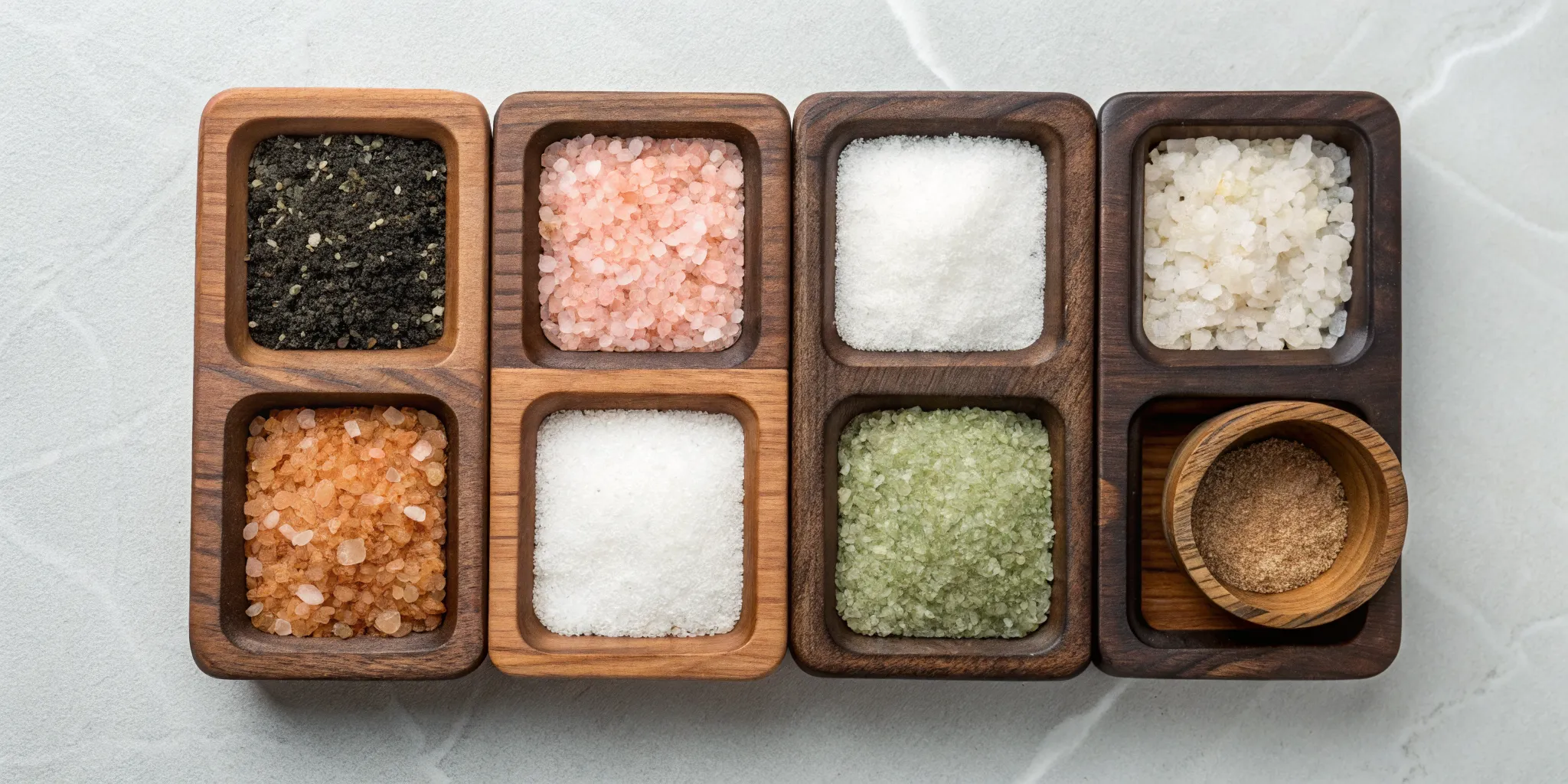
Food grade vs industrial salt is a distinction that carries immense weight in the global supply chain, yet it is often misunderstood by those outside the chemical and culinary industries. At Sama United, we receive dozens of inquiries daily from businesses looking to optimize their procurement. The most common question we encounter is: “If salt is just sodium chloride (NaCl), does it really matter which grade I buy?”
Food Grade vs Industrial Salt As experts at Sama United, our answer is always a definitive “Yes.” While both types of salt originate from the same sources—the sea or underground mines—the journey they take from the source to the final consumer is vastly different. The difference between food grade and industrial salt isn’t just a matter of marketing; it is a matter of chemical purity, regulatory compliance, and functional performance. In this comprehensive guide, we will break down the essential differences to help you make an informed decision for your business.
Food Grade vs Industrial Salt: Understanding the Key Differences for Your Business
1. Purity: The Core Chemical Distinction
When we discuss food grade vs industrial salt, purity is the first and most important factor.
-
Food Grade Salt: To be classified as food grade, salt must typically reach a sodium chloride purity of at least 97% to 99.9%, depending on the specific regional regulations (such as the FDA in the US or EFSA in Europe). More importantly, it must be virtually free from heavy metals like lead, arsenic, and mercury.
-
Industrial Salt: Industrial salt is generally less refined. While it can still be 95% to 99% pure, it often contains higher levels of trace minerals like magnesium, calcium, and potassium. While these minerals are natural, they are considered “impurities” in many industrial processes, such as chemical manufacturing or textile dyeing.
At Sama United, we subject our food-grade salt to multiple stages of vacuum evaporation and filtration to ensure it meets the highest global purity standards, whereas our industrial salt is tailored to the specific needs of factories and plants.
2. Additives: Why One is “Enriched” and the Other is “Raw”
Another major point in the Food Grade vs Industrial Salt debate is the use of additives.
-
Food Grade Additives: Most food-grade salt contains “Anti-caking agents” like potassium ferrocyanide to ensure it remains free-flowing in your salt shaker or industrial mixer. Additionally, many countries require the addition of Iodine to food-grade salt as a public health measure to prevent thyroid issues.
-
Industrial Salt Additives: Industrial salt is often sold in its raw, untreated state. In many chemical processes, additives like iodine or anti-caking agents would actually be harmful. For example, in the production of chlorine or in high-pressure boilers, these additives can cause unwanted chemical reactions or buildup.
Sama United provides clear documentation (Certificates of Analysis) for every shipment, ensuring that you know exactly what additives—or lack thereof—are present in your salt.
3. Regulatory Oversight and Quality Control
The “Food Grade” label is more than just a description; it is a legal status.
-
Stringent Monitoring: Food-grade salt production facilities must adhere to strict hygiene protocols, often including HACCP (Hazard Analysis and Critical Control Point) certifications. These plants are inspected for everything from air quality to the cleanliness of the machinery.
-
Industrial Flexibility: While industrial salt is still subject to quality control, the focus is on “Technical Specifications” rather than “Biological Safety.”
At Sama United, we bridge this gap by maintaining high quality-control standards across all our product lines. However, we strictly segregate our food-grade and industrial-grade supplies to ensure there is zero risk of cross-contamination.
Food Grade vs Industrial Salt The physical appearance of the salt is often a telltale sign of its grade.
-
Food Grade Consistency: This salt is usually processed into very specific grain sizes. Whether it’s “Extra Fine” for popcorn or “Coarse” for pretzels, the size must be uniform to ensure even dissolving and flavor.
-
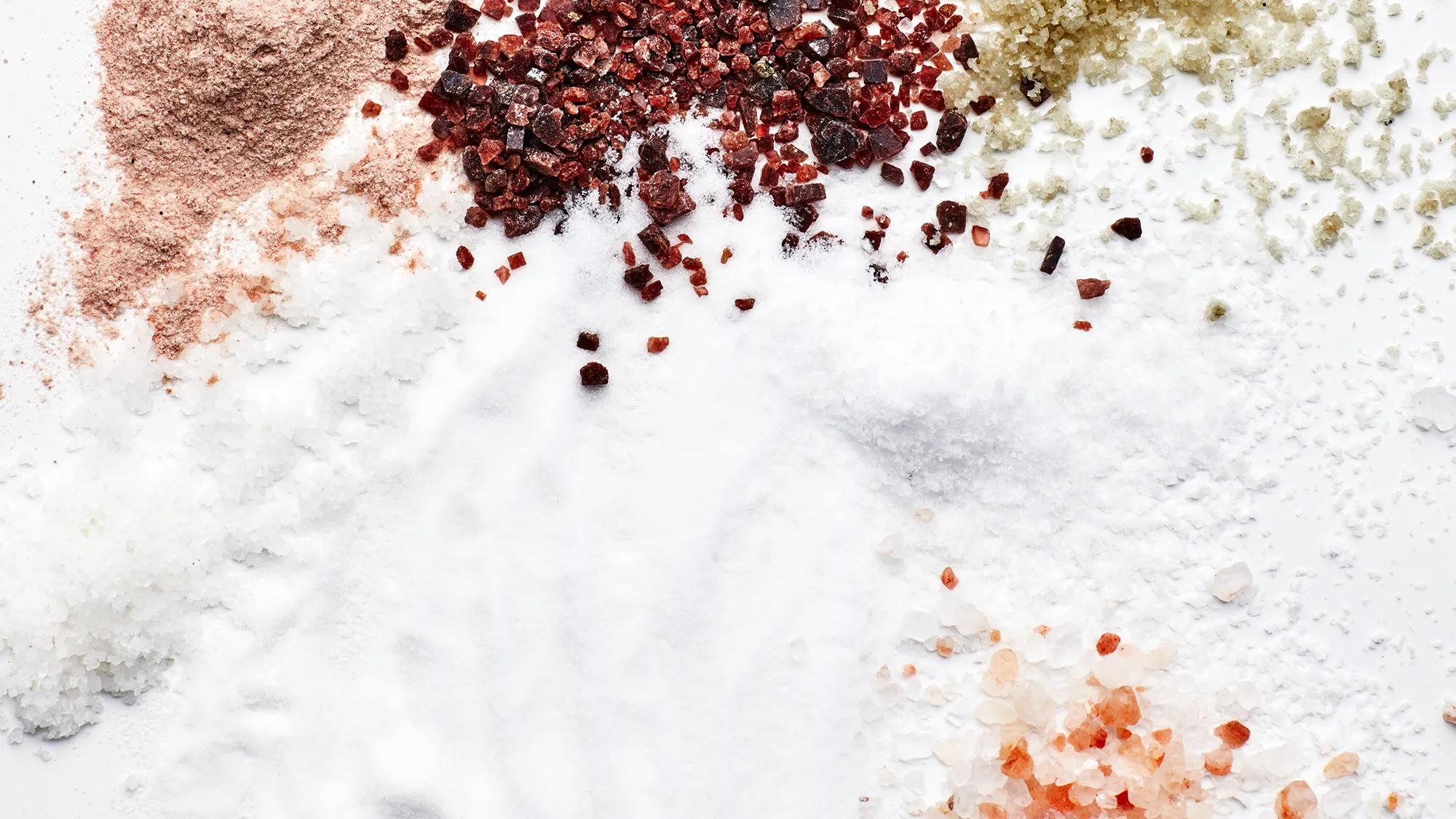
Industrial Variety: Industrial salt comes in a much wider range of forms. It can be sold as “Rock Salt” for de-icing roads, “Salt Tablets” for water softening, or “Crushed Salt” for leather tanning.
Sama United offers a diverse portfolio for both sectors. We understand that a baker needs a different grain than a textile dyer, and we customize our processing accordingly.
5. Functional Applications: Where the Salt Goes
The “why” behind the food grade vs industrial salt split is found in the application:
-
Food Grade Applications: Meat curing, baking, snack manufacturing, and canning. Here, the salt is ingested, so it must be safe and have a clean taste profile.
-
Industrial Applications:
-
Water Softening: Removing hardness from water in hotels and factories.
-
Textile Dyeing: Helping colors bind to fabric (as discussed in our previous insights).
-
Chemical Industry: Serving as a raw material for producing chlorine, caustic soda, and soda ash.
-
De-icing: Lowering the freezing point of water on winter roads.
Food Grade vs Industrial Salt: Understanding the Key Differences for Your Business
6. Packaging and Logistics: Maintaining Integrity ( Food Grade vs Industrial Salt)
Logistics play a silent but vital role in the food grade vs industrial salt experience.
-
Food Grade Packaging: Our food-grade salt at Sama United is typically packaged in high-barrier, food-safe plastic bags that prevent moisture ingress and external contamination. The bags are often palletized and shrink-wrapped to maintain a sterile environment during export.
-
Industrial Packaging: While we still ensure high-quality packaging, industrial salt is often moved in larger bulk formats, such as 1-ton Big Bags or even loose bulk in specialized shipping containers. The primary goal here is durability and cost-efficiency.
7. The Price Difference Food Grade vs Industrial Salt : Investing in Safety
Naturally, food-grade salt is more expensive than industrial salt. This price difference reflects the additional costs of refining, testing, regulatory fees, and specialized packaging.
At Sama United, we advise our clients to never “cut corners” by using industrial salt in food applications to save money. The legal risks and health hazards far outweigh the minor cost savings. Conversely, using food-grade salt in an industrial machine might be a waste of resources if the machine doesn’t require such high purity. We help our clients find the “Sweet Spot”—the exact grade that meets their needs without overpaying.
8. Moisture Content: A Technical Detail
In our years at Sama United, we’ve noticed that moisture levels are a key technical difference.
-
Food Grade: Usually has a very low moisture content (often less than 0.1%) to prevent clumping and microbial growth.
-
Industrial: Can have higher moisture levels (up to 3-4% for certain types of solar salt), which is acceptable for many outdoor industrial uses but would be a disaster for a commercial bakery.
9. The Impact on Flavor vs. Function
Food-grade salt is designed to have a “Neutral” salinity. Any impurities (like magnesium) would make the salt taste bitter. In industrial use, flavor is irrelevant; the focus is on the “Sodium Ion” and how it reacts with other chemicals.
When you source from Sama United, you are getting a product designed for its specific end-use. Our food-grade salt enhances the flavor of your products, while our industrial salt enhances the efficiency of your machines.
10. Sustainability and Sourcing: The Sama United Way
Regardless of the grade, Sama United is committed to sustainable sourcing. Whether we are providing refined salt for a global food brand or bulk salt for an oil refinery, we prioritize environmental responsibility. We ensure that our salt is harvested using methods that respect the ecosystem, ensuring a stable supply for the future.

Food Grade vs Industrial Salt: Understanding the Key Differences for Your Business
Conclusion Food Grade vs Industrial Salt : Making the Right Choice for Your Business
In the debate of food grade vs industrial salt, the “right” choice depends entirely on your specific industry and application. Salt is a versatile mineral, but its various grades are not interchangeable. Using the wrong salt can lead to poor product quality, machine damage, or regulatory penalties.
At Sama United Food Grade vs Industrial Salt , we pride ourselves on being more than just a supplier; we are your strategic partner. Our team is here to guide you through the technical specifications, the logistical challenges, and the regulatory requirements of both grades. Whether you are looking for the purest salt for a gourmet bakery or high-performance salt for industrial manufacturing, Sama United has the expertise and the inventory to meet your needs.
Are you unsure which salt grade is right for your next project? Contact the experts at Sama United today for a personalized consultation and a quote that fits your business goals.
by norhan | May 14, 2026 | Industrial Salt, Salt
Chemical grade salt for electrolysis is the fundamental raw material that powers some of the world’s most critical industrial processes. At Sama United, we have observed that while many companies view salt as a simple commodity, those in the electrolysis sector—specifically the chlor-alkali and water treatment industries—know that salt is a precision chemical. The process of electrolysis, which uses electricity to split brine into chlorine gas, hydrogen, and caustic soda, is incredibly sensitive to the chemical composition of the salt used.
As experts at Sama United, we understand that in a large-scale electrolytic cell, even trace amounts of the wrong mineral can lead to catastrophic membrane damage or dangerous chemical side reactions. Choosing the right chemical grade salt for electrolysis is not just about the price per ton; it is about protecting your multi-million dollar equipment, optimizing energy consumption, and ensuring the purity of your final chemical products. In this guide, we will explore the technical nuances of electrolysis salt and why Sama United is the trusted partner for high-purity industrial sourcing.
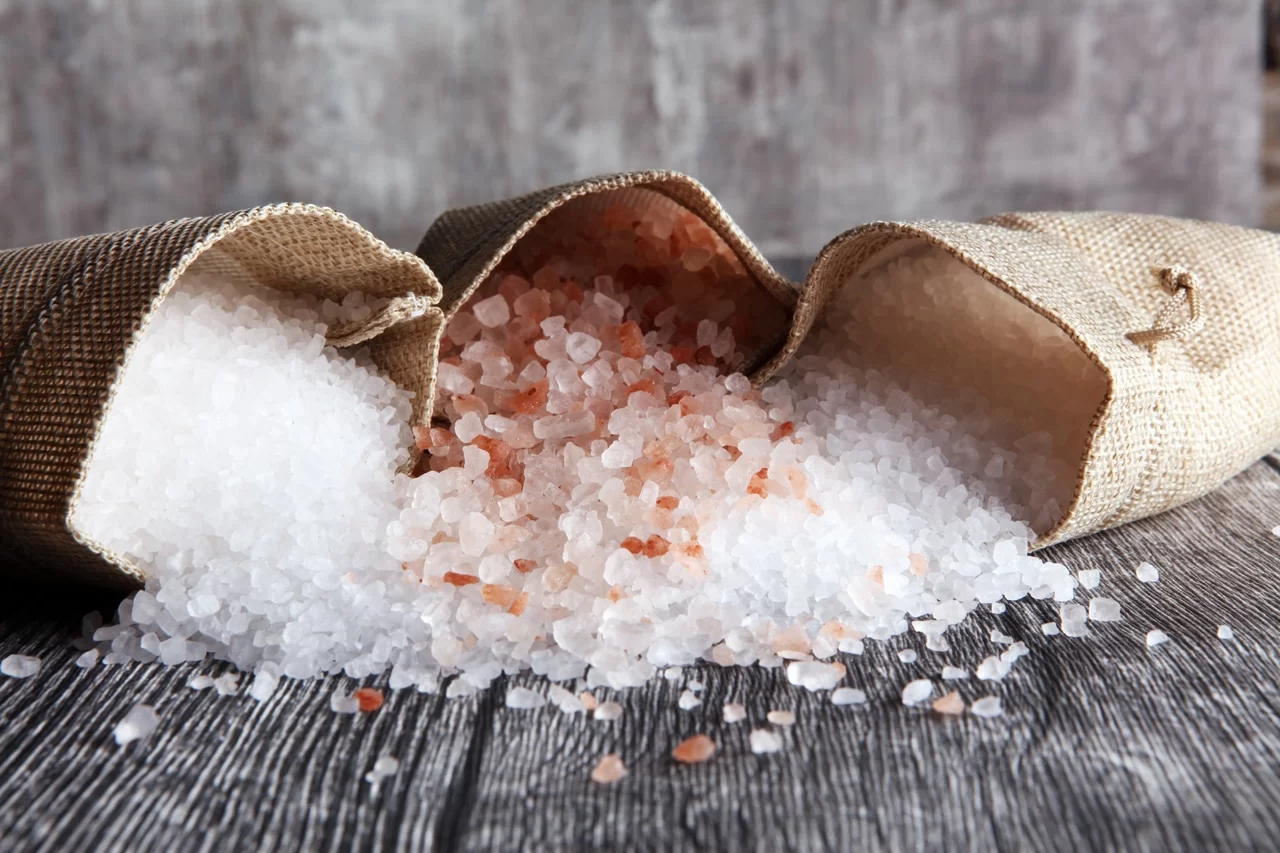
Chemical grade salt for electrolysis: A Strategic Choice for Industrial Efficiency
1. The Science of the Electrolytic Cell: Why Salt Quality Matters
To appreciate the importance of chemical grade salt for electrolysis, one must understand what happens inside the cell. Whether you are using a membrane cell, a diaphragm cell, or a mercury cell (though the latter is being phased out), the goal is to pass a high-voltage current through a saturated salt solution (brine).
If the salt is not of a high chemical grade, the electrolysis process becomes inefficient. Impurities in the brine can:
-
Increase Electrical Resistance: Leading to higher energy bills.
-
Foul the Membranes: Modern ion-exchange membranes are expensive and can be easily clogged by microscopic impurities.
-
Contaminate the Products: Impurities in the salt will end up in your chlorine gas or your caustic soda, potentially making them unsellable for high-end applications.
At Sama United, we specialize in providing salt that minimizes these risks, ensuring a smooth and profitable electrolytic process.
2. The “Enemies” of Electrolysis: Key Impurities to Avoid
When sourcing chemical grade salt for electrolysis, our technical team at Sama United looks at far more than just the sodium chloride (NaCl) percentage. We focus on the “PPM” (parts per million) of specific contaminants that are known to interfere with electrolysis.
Calcium and Magnesium (Hardness)
These are the primary enemies of the membrane cell. If calcium and magnesium levels are too high, they precipitate out as solids, “blinding” the membrane and significantly shortening its lifespan. Sama United provides salt with ultra-low hardness levels to reduce the burden on your primary and secondary brine purification systems.
Sulfate (SO4SO4)
High sulfate levels can damage the anodes and reduce the efficiency of the chlorine evolution. While some sulfate is manageable, consistent levels are required for stable operation.
Trace amounts of silica, iron, or nickel can deposit on the electrodes, causing “poisoning.” This leads to a drop in voltage efficiency and can even create safety hazards by promoting the formation of explosive nitrogen trichloride if ammonia is present.
3. The Chlor-Alkali Industry: Salt as a Raw Material
The chlor-alkali industry is the largest consumer of chemical grade salt for electrolysis. It is the backbone of the chemical world, producing the chlorine used for PVC plastics, disinfectants, and pharmaceuticals, and the caustic soda used for paper, aluminum, and soap.
At Sama United, we serve as a vital link in this supply chain. We understand that for a chlor-alkali plant, the “Total Cost of Ownership” of salt includes the cost of the chemicals needed to purify the brine. By using a higher-grade salt from Sama United, plants can significantly reduce their consumption of soda ash and caustic soda used in the purification stage, leading to massive annual savings.
4. Water Electrolysis and Green Hydrogen Production
As the world moves toward a “Green Hydrogen” economy, water electrolysis is gaining renewed attention. While some systems use pure water, many industrial-scale hydrogen generators rely on a brine solution to improve conductivity.
Chemical grade salt for electrolysis is essential here to ensure that the hydrogen produced is of the highest purity (99.999%). Any volatile impurities in the salt could contaminate the hydrogen, making it unsuitable for fuel cells or high-tech manufacturing. Sama United is proud to support the renewable energy sector by providing the chemical foundations for clean energy.
5. Grain Size and Solubility: The Physical Factor
In a continuous electrolysis process, the speed at which the salt dissolves is critical. If the salt dissolves too slowly, the brine concentration drops, and the cell efficiency plummets.
At Sama United, we offer various granulometries for our chemical grade salt.
-
Fine Refined Salt: For rapid dissolution in automated brine saturators.
-
Coarse Refined Salt: Often preferred for certain types of diaphragm cells where a specific flow rate is required.
Our processing ensures that the salt doesn’t “clump” in the silo, providing a steady, predictable flow of raw material into your system.
Chemical grade salt for electrolysis: A Strategic Choice for Industrial Efficiency
6. The Economic Impact: Energy Savings and Maintenance
In electrolysis, electricity is your biggest cost. When you use chemical grade salt for electrolysis from Sama United, you are effectively lowering your energy consumption.
Pure brine allows the ion-exchange membrane to operate at peak efficiency with the lowest possible voltage drop. Even a 1% improvement in voltage efficiency across a large plant can save hundreds of thousands of dollars in electricity costs over a year. Furthermore, by reducing the frequency of membrane cleanings and replacements, you reduce your “downtime,” keeping your production running 24/7.
7. Logistics and Sourcing: The Sama United Advantage
Moving thousands of tons of chemical grade salt for electrolysis across international borders requires expert logistics. This is where Sama United excels.
-
Bulk Deliveries: We coordinate large-scale shipments in 20-foot containers or bulk carriers.
-
Contamination Control: We use specialized food-grade liners even for industrial salt to ensure that no rust, dirt, or moisture from the shipping container contaminates the salt during transit.
-
Reliable Supply Chain: Electrolysis plants cannot stop. We manage our inventory and shipping schedules to ensure that our clients always have a “buffer stock” ready for use.
8. Documentation and Compliance: Certificates of Analysis (CoA)
In the chemical industry, trust is built on data. Every shipment of chemical grade salt for electrolysis from Sama United is accompanied by a detailed Certificate of Analysis. We provide transparent data on:
-
Sodium Chloride (NaCl) content.
-
Detailed PPM breakdown of Calcium, Magnesium, and Sulfates.
-
Moisture content and insoluble matter.
This allows your plant chemists to adjust their purification processes with 100% confidence.
9. Sustainability in Chemical Production
As discussed in our previous insights, sustainability is a core value at Sama United. We source our electrolysis-grade salt from facilities that prioritize energy-efficient refining. By providing a higher-purity product, we help our clients reduce the chemical waste (sludge) produced during brine purification, contributing to a cleaner, more environmentally friendly chemical industry.
10. Why Partner with Sama United for Your Electrolysis Needs?
Choosing Sama United means choosing a partner who understands the technical demands of your industry. We don’t just sell salt; we sell performance. We know that the success of your electrolysis plant depends on the reliability of your raw material.
Our salt is:
-
Ultra-Pure: Meeting and exceeding international chlor-alkali standards.
-
Consistent: Batch-to-batch uniformity that your engineers can rely on.
-
Cost-Effective: Strategic sourcing and logistics that protect your margins.
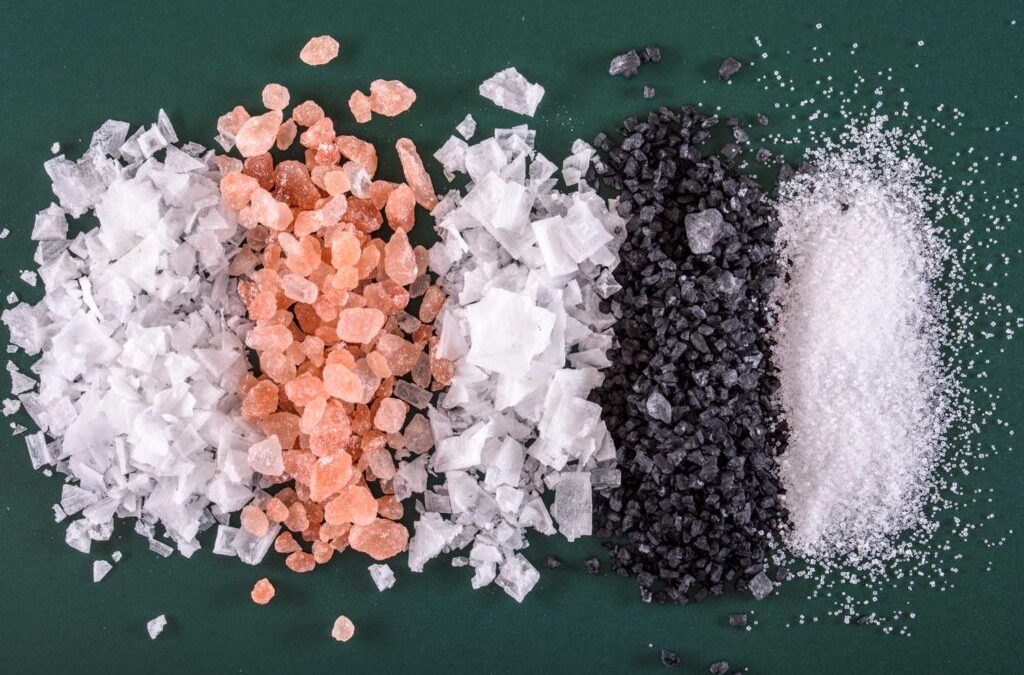
Chemical grade salt for electrolysis: A Strategic Choice for Industrial Efficiency
Conclusion Chemical grade salt for electrolysis: Securing the Future of Your Production
In conclusion, chemical grade salt for electrolysis is the lifeblood of the modern chemical and water treatment industries. The quality of this salt dictates the efficiency, safety, and profitability of your entire operation. At Sama United, we take pride in providing the high-precision salt required for these complex processes.
Whether you are producing chlorine for a city’s water supply or hydrogen for the next generation of transport, let Sama United provide the purity you need to succeed. We invite you to experience the difference that expert sourcing and technical excellence can make.
Are you looking to optimize your electrolysis process? Contact the technical team at Sama United today for a customized salt specification and a quote that reflects the true value of quality.
by norhan | May 12, 2026 | Industrial Salt, Salt
Industrial salt for textile dyeing is the unsung hero of the global fashion and upholstery industries. At Sama United, we have partnered with some of the world’s largest textile hubs, and we have seen firsthand that while the dye provides the color, it is the salt that ensures the color actually stays on the fabric. In the complex world of textile chemistry, salt acts as the bridge between the liquid dye and the solid fiber. Without high-quality industrial salt, the vibrant colors we see in our clothing, home linens, and industrial fabrics would be dull, uneven, and prone to washing out.
As experts at Industrial Salt for Textile Dyeing in Sama United, we understand that large-scale textile operations cannot afford errors. A single batch of unevenly dyed fabric can result in thousands of dollars in losses. This is why choosing the right industrial salt for textile dyeing is a strategic business decision. In this comprehensive guide, we will dive deep into the science of how salt works in the dye bath, why purity is critical for textile manufacturers, and how Sama United ensures a seamless supply chain for this vital industrial mineral.
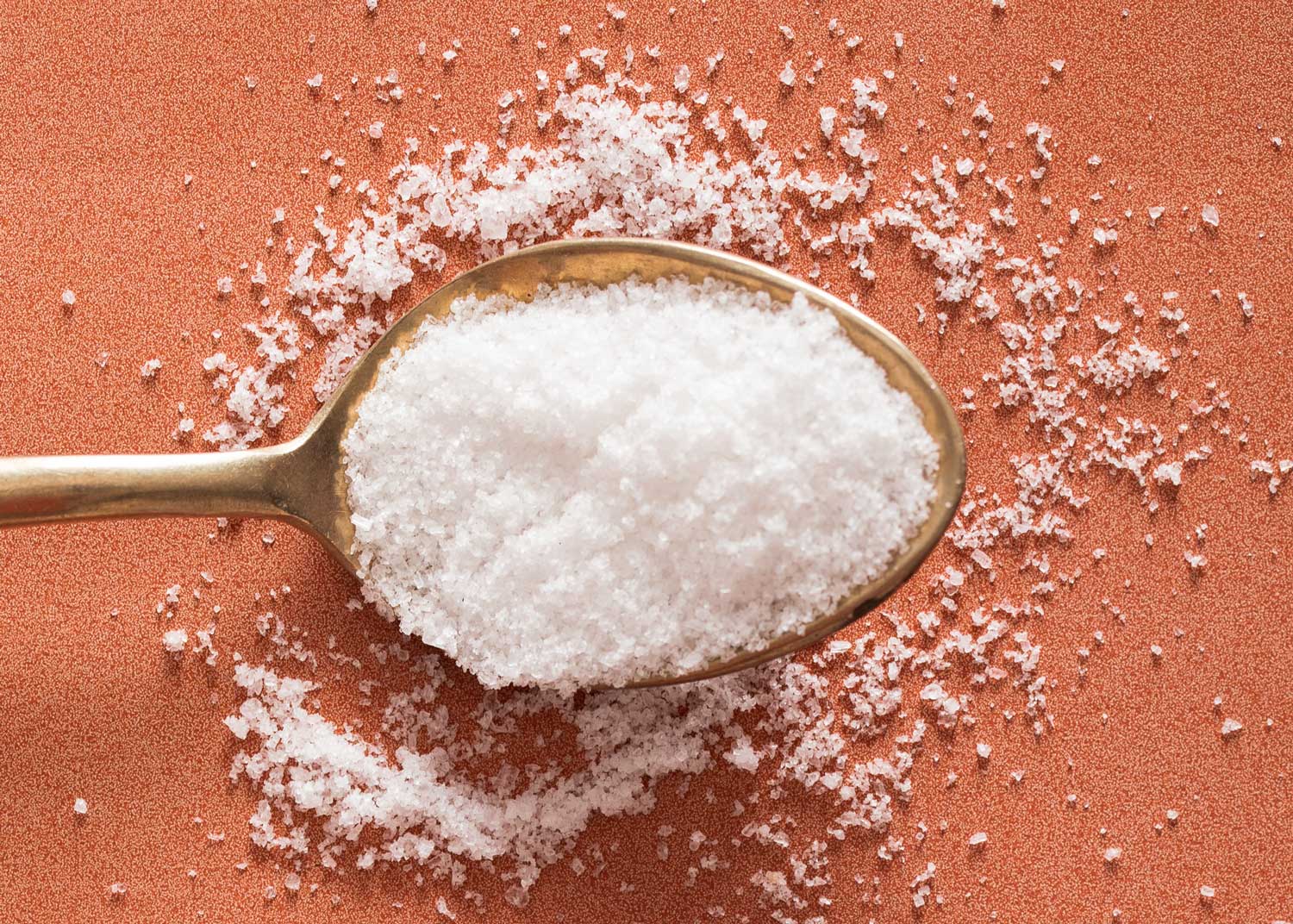
Industrial Salt for Textile Dyeing: The Essential Catalyst in Large-Scale Production
1. The Science of “Exhaustion”: How Salt Drives the Dye
To understand the importance of industrial salt for textile dyeing, we must look at the electrical charges of fibers and dyes. Most textile fibers, particularly natural ones like cotton and cellulose, develop a negative electrical charge when they are submerged in water. Similarly, most “reactive dyes” used in the industry are also negatively charged.
In physics, like charges repel each other. This means the fabric naturally pushes the dye away. This is where salt comes in.
-
The Electrolyte Effect: Salt acts as an electrolyte. When added to the dye bath, it releases sodium ions (Na+Na+).
-
Neutralizing the Charge: These positive ions surround the negative charge of the fiber and the dye, neutralizing the repulsion.
-
Driving the Dye (Exhaustion): With the electrical barrier removed, the dye is “pushed” or “exhausted” out of the water and into the fiber.
At Sama United, we provide salt that facilitates this “exhaustion” process with maximum efficiency, ensuring that every gram of dye you purchase is utilized effectively on the fabric.
2. Achieving Levelness: The Secret to Uniform Color ( Industrial Salt for Textile Dyeing)
One of the biggest challenges in large-scale dyeing is “levelness”—ensuring that the color is perfectly uniform from the beginning of a fabric roll to the end. If the salt dissolves too slowly or contains impurities, the dye may fix to the fabric in patches, leading to a “streaky” appearance.
High-purity industrial salt for textile dyeing from Sama United is designed for rapid and uniform solubility. By ensuring the salt concentration is consistent throughout the dye vat, we help manufacturers achieve that perfect, flat color that is the hallmark of high-quality textile products. Whether you are dyeing delicate silk or heavy-duty denim, the consistency of our salt crystals ensures a predictable and repeatable process.
3. Why Purity is More Important Than You Think
A common misconception is that “any salt will do” for industrial use. However, at Sama United, we emphasize that impurities in salt can be catastrophic for textile chemistry.
-
Calcium and Magnesium (Hardness): If your salt contains high levels of calcium or magnesium, these minerals can react with the dye molecules, causing them to precipitate or form “scum.” This results in spots on the fabric and can even damage expensive dyeing machinery.
-
Heavy Metals: Trace amounts of iron or copper in low-quality salt can actually change the shade of the dye. Your “sky blue” might turn into a “muddy teal” simply because of the salt quality.
By sourcing your industrial salt for textile dyeing from Sama United, you are guaranteed a product that has been refined to remove these troublesome minerals. Our salt is “soft” on your fabrics and your machines, ensuring the integrity of your colors.
4. Salt and Reactive Dyes: The Perfect Partnership
Reactive dyes are the most popular choice for cotton and cellulose fibers because of their bright colors and excellent wash-fastness. However, they are also the most salt-intensive. In large-scale operations, the amount of salt used can sometimes exceed the weight of the fabric being dyed.
This high volume means that the economic efficiency of your salt supply is vital. Sama United specializes in bulk logistics, providing high-purity salt in 25kg bags or 1000kg Big Bags to suit the automated dosing systems of modern textile plants. By using a higher-purity salt, you can often use a lower total volume of salt to achieve the same exhaustion rate, saving you money on both procurement and wastewater treatment.
5. Reducing Wastewater Impact: The Sustainability Angle
The textile industry is under increasing pressure to reduce its environmental footprint. A major part of this is managing the salinity of wastewater. When you use high-purity industrial salt for textile dyeing from Sama United, you are already taking a step toward sustainability.
Because our salt is highly efficient at pushing dye into the fiber, less “unfixed” dye remains in the wastewater. This makes the water treatment process easier and more cost-effective. Furthermore, we are working with innovative plants that are looking into brine recovery systems—processes that clean and reuse the salt water for multiple dyeing cycles. Sama United supports these green initiatives by providing the high-quality chemical foundation required for recycling systems to function without mineral buildup.
Industrial Salt for Textile Dyeing: The Essential Catalyst in Large-Scale Production
6. Logistical Reliability for Global Textile Hubs
The textile industry operates on incredibly tight deadlines. Fashion seasons don’t wait for delayed shipments. At Sama United, we understand that salt is a “bulk” ingredient that requires sophisticated logistics to remain affordable and timely.
Our industrial salt for textile dyeing is moved through a streamlined global supply chain. We handle:
-
Container Optimization: Ensuring maximum weight capacity to reduce shipping costs.
-
Moisture-Proof Packaging: Salt for textiles must be kept dry; clumped salt cannot be accurately measured in automated systems. Our bags feature heavy-duty liners to prevent moisture ingress during sea transit.
-
Just-In-Time Delivery: We help our clients manage their inventory so they never have to stop their production lines due to a lack of raw materials.
7. The Importance of Grain Size in Textile Vats
Different dyeing machines have different requirements. Some high-pressure jets require very fine salt that dissolves instantly, while other traditional winch machines might handle a slightly coarser grain.
Sama United offers a variety of granulometries. Our technical team can consult with your plant managers to determine the ideal grain size for your specific machinery. This attention to detail is what makes Sama United more than just a supplier—we are a technical partner in your production process.
8. The Economic Advantage of Buying Direct from Sama United
As we discussed in previous insights, the “middleman tax” can significantly inflate the cost of industrial minerals. For the textile industry, where margins are often thin, buying industrial salt for textile dyeing directly from a manufacturer like Sama United provides a major competitive advantage.
-
Bulk Pricing: Access to factory-direct rates.
-
Consistent Specification: Unlike a general wholesaler, we provide a consistent Certificate of Analysis (CoA) with every shipment.
-
Customization: We can adjust our processing to meet the specific purity needs of your dye house.
9. Common Myths: Can I Use Sea Salt for Dyeing?
We often get asked if unrefined sea salt is suitable for textiles. While sea salt is great for the gourmet industry, its natural mineral complexity is actually a disadvantage in the dye house. The varying levels of sulfates and carbonates in raw sea salt can interfere with the pH of the dye bath. Sama United provides refined industrial salt that gives you a “neutral” starting point, allowing your chemists to have total control over the pH and the chemical environment of the vat.
10. The Future of Salt in Textiles ( Industrial Salt for Textile Dyeing )
The industry is moving toward “Low Liquor Ratio” (LLR) dyeing machines that use less water. As the amount of water decreases, the precision of the salt concentration becomes even more critical. Sama United is at the forefront of this shift, providing ultra-pure salt that performs perfectly even in these highly concentrated environments.
Industrial Salt for Textile Dyeing: The Essential Catalyst in Large-Scale Production
Conclusion Industrial Salt for Textile Dyeing : Elevate Your Textile Quality with Sama United
In conclusion, industrial salt for textile dyeing is the foundation of a successful textile operation. It is the chemical engine that drives the color into the fiber and ensures the longevity and beauty of the finished product. By choosing Sama United, you are not just buying a mineral; you are investing in the reliability, efficiency, and quality of your own brand.
From the vibrant reds of high-street fashion to the deep blues of industrial fabrics, Sama United is proud to be the salt supplier of choice for the global textile industry. Let us help you optimize your dyeing process, reduce your costs, and achieve the perfect shade every time.
Are you ready to optimize your textile production? Contact the experts at Sama United today for a custom quote and technical consultation on our industrial salt solutions.