
Industrial salt sourcing is one of the most critical decisions a procurement manager or chemical engineer can make. At Sama United, we frequently encounter the same question: “Is rock salt or sea salt better for my factory?” While both products are technically sodium chloride (NaCl), the choice between them is far from superficial. In the world of high-volume manufacturing, textile dyeing, and chemical synthesis, the physical and chemical differences between these two minerals can mean the difference between a high-yield production run and a costly equipment failure.
As experts at Sama United, we have spent years navigating the complexities of global mineral trade. We know that salt is not just a commodity; it is a functional ingredient. Whether you are running an electrolytic cell in a chlor-alkali plant or maintaining thousands of miles of icy highways, understanding the nuances of industrial salt sourcing is essential for your operational success. In this guide, we will break down the fundamental differences between rock salt and sea salt from an industrial perspective and explain why Sama United is the partner of choice for securing your mineral supply.
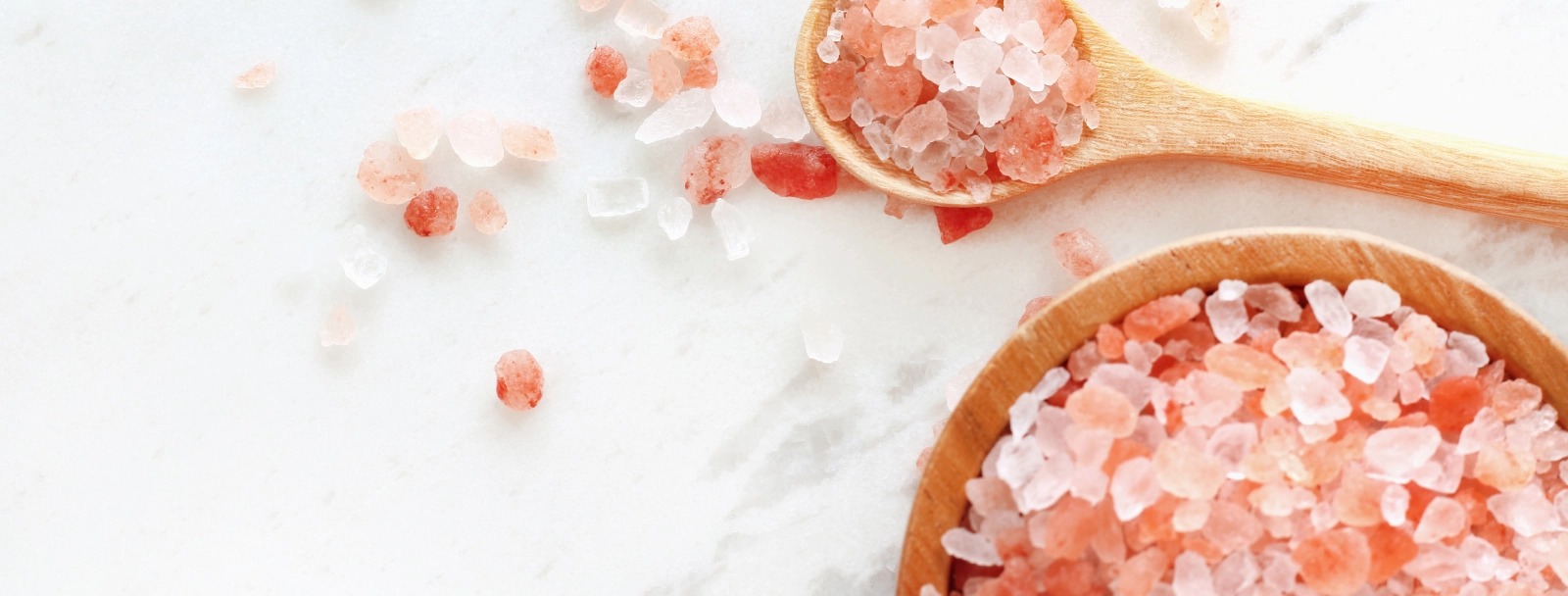
Industrial salt sourcing: Rock Salt vs. Sea Salt—An Expert Guide for Industrial Applications
Understanding the Origins: Mined vs. Evaporated
Before we dive into the technicalities, it is important to understand where these salts come from.
-
Rock Salt (Halite): This is salt that has been trapped underground for millions of years in ancient sea beds. It is extracted through traditional mining methods. Because it is a mineral deposit, it is often dense, hard, and contains various trace minerals from the earth.
-
Sea Salt: This is harvested from the modern ocean. Using solar evaporation, the sun and wind dry out large ponds of seawater, leaving behind salt crystals. This process is generally more renewable but is susceptible to modern environmental conditions.
At Sama United, we source both types, but we guide our clients based on their specific technical requirements. Each has a unique “fingerprint” that makes it suitable for different tasks.
1. Chemical Purity and the Impact of Trace Minerals
When it comes to industrial salt sourcing, chemical purity is the primary concern. In professional chemistry, we look at the percentage of Sodium Chloride (NaCl).
-
Rock Salt: Generally has a purity of 98% to 99%. However, it contains trace minerals like calcium, magnesium, and potassium that were present when the ancient sea dried up. For some industries, these minerals are a nuisance; for others, they are irrelevant.
-
Sea Salt: Can often be refined to higher levels of purity (99.5%+) during the washing and crystallization process. However, raw sea salt may contain trace organic matter from the modern ocean.
At Sama United, we provide a full Certificate of Analysis (CoA) with every shipment. If your process is sensitive to magnesium (like in certain textile dyes), we steer you toward our high-purity refined salts. If purity is less critical than cost-effectiveness, our natural rock salt is the superior choice.
2. Solubility Rates: The Speed of the Reaction
In large-scale industrial vats, how fast your salt dissolves is a major factor in efficiency.
-
Sea Salt: Because it is formed through crystallization, sea salt crystals tend to be more porous and less dense. This means they dissolve very quickly in water, creating a brine almost instantly.
-
Rock Salt: These crystals are dense and hard. They dissolve much more slowly than sea salt. This “slow-release” property is actually an advantage in many industrial applications.
Sama United’s Expert Tip: If you are using a “continuous flow” brine system, rock salt is often better because it maintains a steady concentration without “spiking.” If you are doing fast-batch seasoning or spice mixing, sea salt’s rapid dissolution is your best friend.
3. The Durability Factor in Logistics and Storage
In industrial salt sourcing, we must consider the “shelf life” of the mineral. Salt is heavy, and moving thousands of tons across the globe is a logistical challenge.
-
Rock Salt is physically tougher. It resists crushing during transport and is less likely to turn into “dust” in your silo.
-
Sea Salt is more delicate. If handled roughly, the crystals can break down into fine particles, which can lead to “caking” (hardening) if moisture is present in your warehouse.
At Sama United, we utilize specialized moisture-proof packaging for our sea salt shipments to ensure that even the most delicate crystals arrive in a free-flowing state.
4. De-icing and Infrastructure: Why Rock Salt Rules the Road
For municipal and road authorities, rock salt is the undisputed champion.
-
Cost-Effectiveness: When you are buying 20,000 tons to cover a highway network, the lower cost of mined rock salt is a major factor.
-
Grit and Friction: Because rock salt contains insoluble minerals (tiny bits of rock and clay), it provides immediate mechanical traction for vehicle tires on icy roads—something pure, refined sea salt cannot do.
Sama United manages large-scale winter contracts, providing bulk rock salt that is graded specifically for industrial spreading machines.
5. Textiles and Chemicals: The Need for High Purity
In the textile and chemical industries, impurities are the enemy.
-
Textiles: In our experience at Sama United, we’ve seen how magnesium in rock salt can interfere with the binding of dyes to fabric, leading to uneven colors. Therefore, we often recommend high-purity refined sea salt for our textile partners.
-
Chlor-Alkali Production: This industry requires salt that is split into chlorine and caustic soda. Here, purity is non-negotiable. Any trace metals can damage the expensive membranes used in the electrolytic cells.

Industrial salt sourcing: Rock Salt vs. Sea Salt—An Expert Guide for Industrial Applications
6. Environmental Sustainability and the “Green” Sourcing Trend
Modern industrial salt sourcing is increasingly focused on the environmental footprint.
-
Sea Salt is generally considered more “sustainable” because it uses solar energy for the primary production. It is a renewable resource as long as the ocean exists.
-
Rock Salt requires mining, which is more energy-intensive. However, Sama United prioritizes mines that follow ethical and environmentally responsible extraction practices.
By choosing Sama United, your business can claim a more transparent and responsible supply chain, which is a growing requirement for international ESG (Environmental, Social, and Governance) standards.
7. Economics: The Bottom Line
Let’s talk about the budget. Generally, rock salt is more affordable in bulk because it is harvested in massive quantities with less “processing” required than high-end refined sea salt.
However, Sama United encourages our clients to look at the “Total Cost of Ownership.” If a cheaper salt causes your machines to scale or your product to fail, it isn’t actually cheaper. We help you balance the initial procurement price with the long-term operational efficiency.
8. Why Choose Sama United in Industrial salt sourcingas Your Strategic Partner?
At Sama United Industrial salt sourcing , we are more than just a trading company. We are a UK-registered entity (Sama United Ltd) with a global reach. We understand that your business doesn’t just need salt—it needs a reliable supply chain.
-
Technical Consultation: We don’t just take an order; we ask about your machinery and your goals to recommend the perfect grade.
-
Logistical Mastery: Whether you need a 20-ton container or a full bulk carrier, our logistics team manages the complexity of maritime transport and customs.
-
Transparency: From the mine to your factory gate, we provide documentation that ensures you are getting exactly what you paid for.

Industrial salt sourcing: Rock Salt vs. Sea Salt—An Expert Guide for Industrial Applications
Conclusion Industrial salt sourcing : Making the Right Choice
In conclusion Industrial salt sourcing , there is no “better” salt in absolute terms—there is only the right salt for your specific application. Rock salt is the workhorse of infrastructure and heavy industry, while sea salt provides the purity and solubility required for delicate chemical and food processes.
The secret to successful industrial salt sourcing is having an expert partner who can tell the difference. At Sama United, we pride ourselves on being that partner. We handle the geology, the chemistry, and the logistics, so you can focus on building your business.
Are you ready to optimize your raw material supply? Contact the experts at Sama United Industrial salt sourcing today for a technical consultation and a customized bulk salt quote that fits your industrial needs.