
Industrial rock salt for metallurgy is often regarded as the “invisible hand” within the massive machinery of the global metal industry. While the general public associates salt primarily with culinary uses or winter road safety, the metallurgical sector relies on high-purity sodium chloride to perform some of its most critical chemical and physical transformations. At Sama United, we have spent years supplying the world’s leading smelters and foundries, witnessing firsthand how this humble mineral serves as a catalyst for the production of everything from the aluminum in your smartphone to the high-grade steel used in skyscrapers.
As experts at Sama United, we understand that in the world of heavy metal processing, the quality of your raw materials dictates the purity of your final product. Metallurgy is a game of precision, where even a slight variation in mineral content can lead to batch failures or equipment damage. This is why our focus remains on providing industrial-grade rock salt that meets the exacting standards of modern smelting and refining. In this guide, we will explore the multifaceted roles of industrial rock salt for metallurgy and explain why Sama United has become a trusted partner for metal producers worldwide.
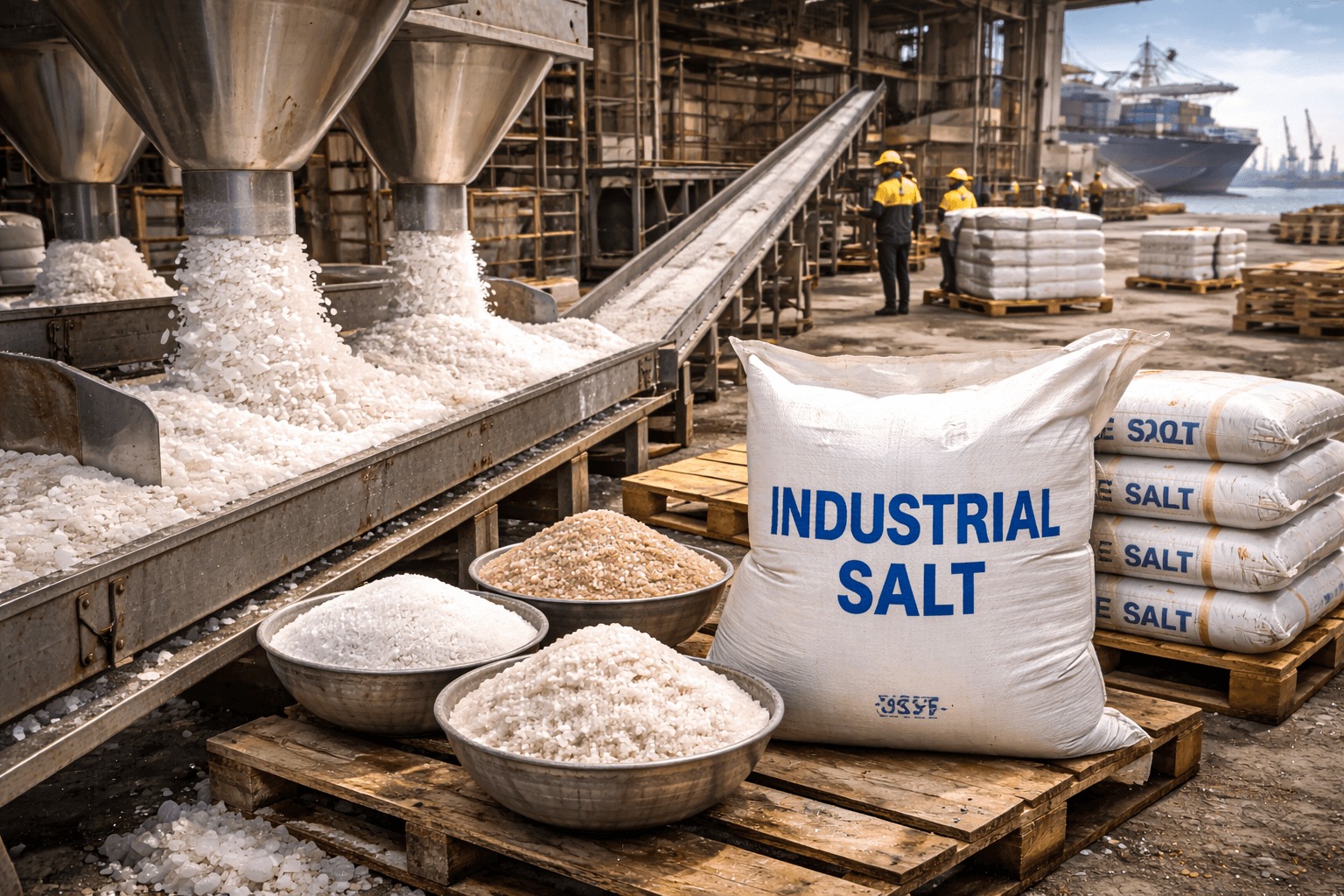
Industrial rock salt for metallurgy: The Silent Powerhouse of Metal Production and Refining
1. The Role of Salt as a Flux in Smelting
The most prominent application of industrial rock salt for metallurgy is its use as a “flux.” In the smelting process, the goal is to separate pure metal from its ore. However, ores often contain “gangue”—unwanted minerals like silica and alumina that have high melting points.
At Sama United, we provide salt that acts as a powerful fluxing agent. When added to a furnace, salt performs several vital functions:
-
Lowering the Melting Point: Salt reduces the temperature required to melt the slag (the waste material), which significantly lowers the energy consumption of the smelter.
-
Preventing Oxidation: Salt forms a protective “cover” over the molten metal, preventing it from reacting with oxygen in the air. This ensures that the metal remains pure and high-quality.
-
Separation of Impurities: By making the slag more fluid, salt helps impurities float to the surface, where they can be easily skimmed off, leaving behind the pure, molten metal.
2. Aluminum Production: The “Salt Flux” Standard
The aluminum industry is perhaps the largest consumer of industrial rock salt for metallurgy. Specifically, in secondary aluminum smelting (recycling), salt is used to create what is known as a “Salt Cake.”
Our team at Sama United works closely with aluminum recyclers who use a mixture of sodium chloride (NaCl) and potassium chloride (KCl). This salt mixture is added to the rotary furnaces to capture oxides and other contaminants from the aluminum scrap.
-
Dross Treatment: Salt helps extract the maximum amount of usable aluminum from the dross (the waste product of smelting).
-
Thermal Stability: Our high-performance rock salt provides the thermal stability needed to withstand the intense heat of aluminum furnaces without decomposing too quickly.
Without high-purity industrial salt, the global aluminum recycling industry would be significantly less efficient and far more expensive.
3. Steel Manufacturing: Descaling and Surface Treatment
In the steel industry, industrial rock salt for metallurgy plays a crucial role in the finishing stages of production. When steel is hot-rolled, an oxide scale forms on the surface. This scale must be removed to ensure the steel can be coated, painted, or welded.
At Sama United, we provide the salt used in the “Descaling” process.
-
The Salt Bath: Steel components are often dipped into a molten salt bath. The salt reacts with the oxide scale, making it brittle and easy to remove through mechanical means or acid pickling.
-
Heat Treatment: Salt baths are also used for the controlled heating and cooling (quenching) of steel. This ensures that the steel reaches the desired hardness and tensile strength without the risk of surface decarburization.
4. Metal Casting and Foundries: Hardening the Mold
Foundries that produce complex metal parts also rely on industrial rock salt for metallurgy. In certain casting processes, salt is used as a binder or a hardening agent for the molds and cores.
-
Soluble Cores: One of the most innovative uses of salt is the creation of “Salt Cores.” These are solid salt shapes placed inside a mold to create hollow areas in a metal casting. After the metal solidifies, the salt core is simply dissolved away with water.
-
Precision and Complexity: This allows foundries to create incredibly complex internal geometries that would be impossible with traditional sand cores. At Sama United, we provide the specific grain sizes required to ensure these salt cores have the necessary structural integrity.
5. Secondary Metal Recovery: The Path to Sustainability
As the world moves toward a circular economy, the recovery of precious and base metals from industrial waste is becoming more important. Industrial rock salt for metallurgy is a key component in this recovery process.
By using salt-based leaching or smelting, recyclers can extract metals like copper, lead, and zinc from “e-waste” and industrial slag. At Sama United, we are proud to support the “Green Metallurgy” movement. Our salt facilitates the efficient recovery of these metals, reducing the need for destructive mining and helping our clients meet their environmental targets.
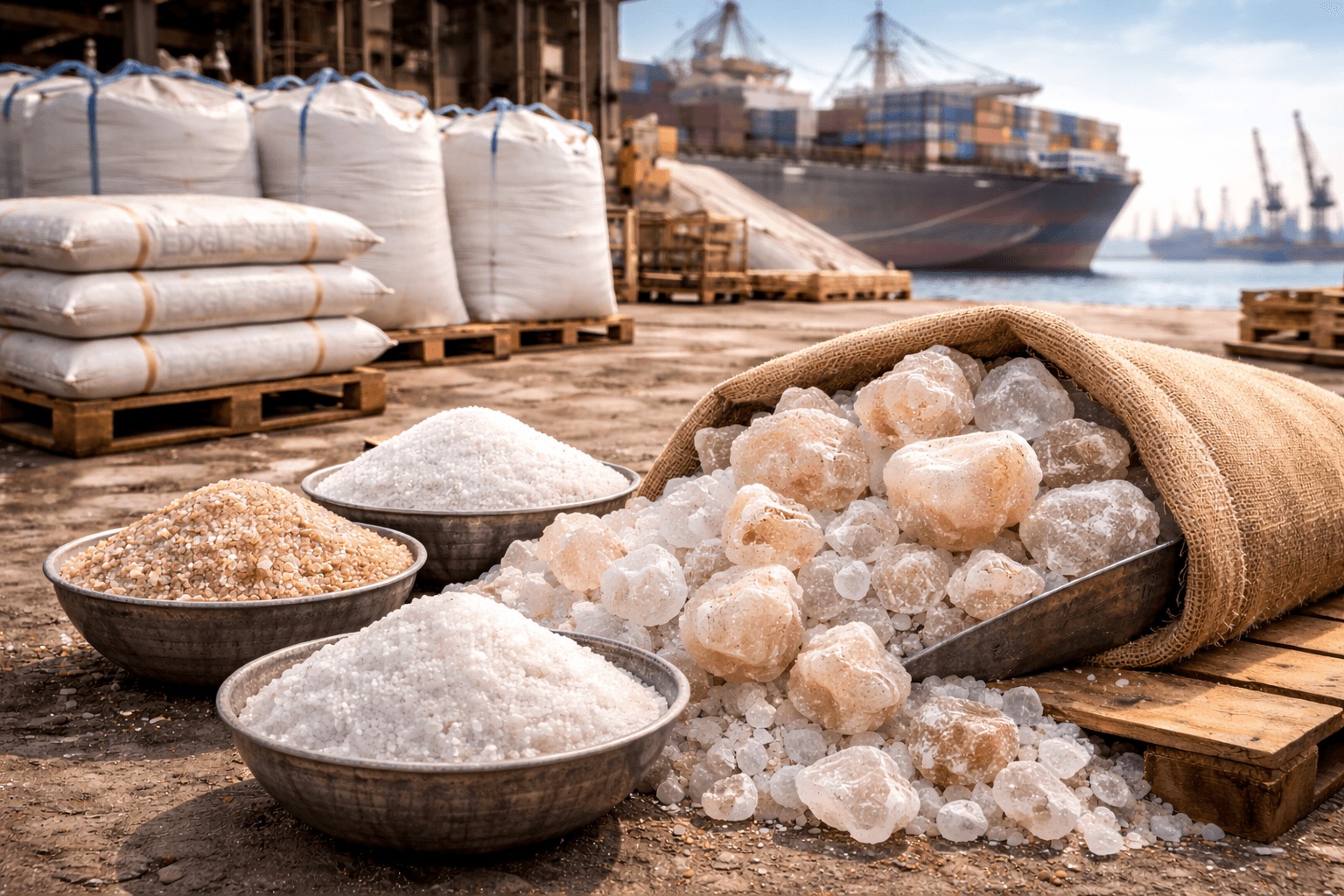
Industrial rock salt for metallurgy: The Silent Powerhouse of Metal Production and Refining
6. Why Purity and NaCl Content are Non-Negotiable
In metallurgy, “salt is not just salt.” The purity of the sodium chloride (NaCl) is the most critical specification. At Sama United, we focus on providing salt with a purity level of 98% to 99% or higher.
Why does this matter?
-
Avoiding Contamination: Impurities like magnesium or calcium in the salt can react with the molten metal, introducing unwanted characteristics into the final alloy.
-
Energy Efficiency: Pure salt has a predictable melting point. Impure salt can behave erratically in the furnace, leading to temperature fluctuations and wasted energy.
-
Equipment Longevity: High levels of moisture or insoluble matter (like sand or grit) can damage the lining of expensive furnaces and clog filtration systems.
7. Logistics Industrial rock salt for metallurgy : Moving Mountains for the Metal Industry
The metallurgical industry operates on a massive scale. A single smelter may require thousands of tons of salt every month. This is where Sama United excels.
We don’t just sell salt; we provide a logistical solution.
-
Bulk Sea Freight: We utilize large-vessel logistics to ensure that our metallurgical clients receive their salt in the most cost-effective manner.
-
Moisture-Controlled Shipping: Salt for furnaces must be kept dry. We use heavy-duty liners and moisture-proof packaging to ensure our salt arrives ready for the furnace.
-
Strategic Warehousing: With our UK-based headquarters and global sourcing network, we ensure that a steady supply of industrial rock salt for metallurgy is always available, even during market fluctuations.
8. The Economic Advantage of Direct Sourcing with Sama United
Procurement managers in the metal industry are under constant pressure to lower their “Cost per Ton.” By partnering directly with Sama United, you eliminate the middleman and access “factory-gate” pricing.
Furthermore, we provide the technical documentation required for modern industrial compliance. Every shipment comes with a Certificate of Analysis (CoA), allowing your plant engineers to have 100% confidence in the chemical profile of the salt they are adding to their melt. This transparency reduces waste and improves the overall yield of your metallurgical facility.
9. Safety and Environmental Standards
Handling molten salt and high-temperature furnaces requires a high level of safety. At Sama United, we ensure our salt is free from hazardous volatile organic compounds (VOCs) and heavy metal contaminants that could create toxic fumes in the foundry. We prioritize “Clean Mineral” sourcing to ensure that your workers are safe and that your facility remains compliant with international environmental regulations.
Industrial rock salt for metallurgy: The Silent Powerhouse of Metal Production and Refining
10. Conclusion Industrial rock salt for metallurgy : Building the Future with Sama United
In conclusion, industrial rock salt for metallurgy is the silent architect of our modern world. It is the mineral that allows us to refine aluminum, harden steel, and recycle the metals of the future. Without it, the structural foundations of our cities and the technology in our pockets would be impossible to produce at scale.
At Sama United Industrial rock salt for metallurgy , we take immense pride in our role as a foundation-level supplier to the metallurgical industry. We understand the high stakes of smelting and refining. We know that your furnace doesn’t just need salt—it needs the right salt, delivered at the right time, with the right purity. Let Sama United be the catalyst for your success in the metal processing world.
Are you looking to optimize your smelter’s efficiency or improve your casting quality? Contact the metallurgical experts at Sama United today for a technical consultation and a customized bulk rock salt quote.