
Mined salt for chemical synthesis is far more than a simple raw material; it is the fundamental chemical engine that drives thousands of industrial reactions every single day. At Sama United, we have observed that while the world often focuses on precious metals or rare gases, it is the humble sodium chloride crystal, pulled from deep within the earth, that serves as the molecular bridge for modern life. From the production of life-saving pharmaceuticals to the creation of the advanced polymers used in aerospace, the chemistry begins with salt.
As experts at Sama United, our technical team understands that in a reactor or an electrolytic cell, salt is not just an additive—it is a reactant. The quality, purity, and mineral profile of that salt dictate the speed, efficiency, and safety of the resulting chemical reaction. In this comprehensive exploration, we will dive into the science of why Mined salt for chemical synthesis remains the preferred choice for industrial chemists and how Sama United ensures that your facility receives the high-precision minerals required for world-class manufacturing.
Mined salt for chemical synthesis: Why It Is the Backbone of Industrial Reactions
1. The Molecular Logic: Why Salt is a Chemical Powerhouse
To understand why Mined salt for chemical synthesis is so crucial, we must look at its molecular structure. Sodium Chloride (NaCl) is an ionic compound. When dissolved in water (brine) or melted into a molten state, its ions become mobile, allowing for a wide array of chemical manipulations.
At Sama United, we categorize the chemical utility of salt into two primary pathways:
-
The Chlorine Pathway: Extracting chlorine gas for use in PVC, bleaches, and water treatment.
-
The Sodium Pathway: Extracting sodium for use in caustic soda (sodium hydroxide), sodium carbonate, and metallic sodium.
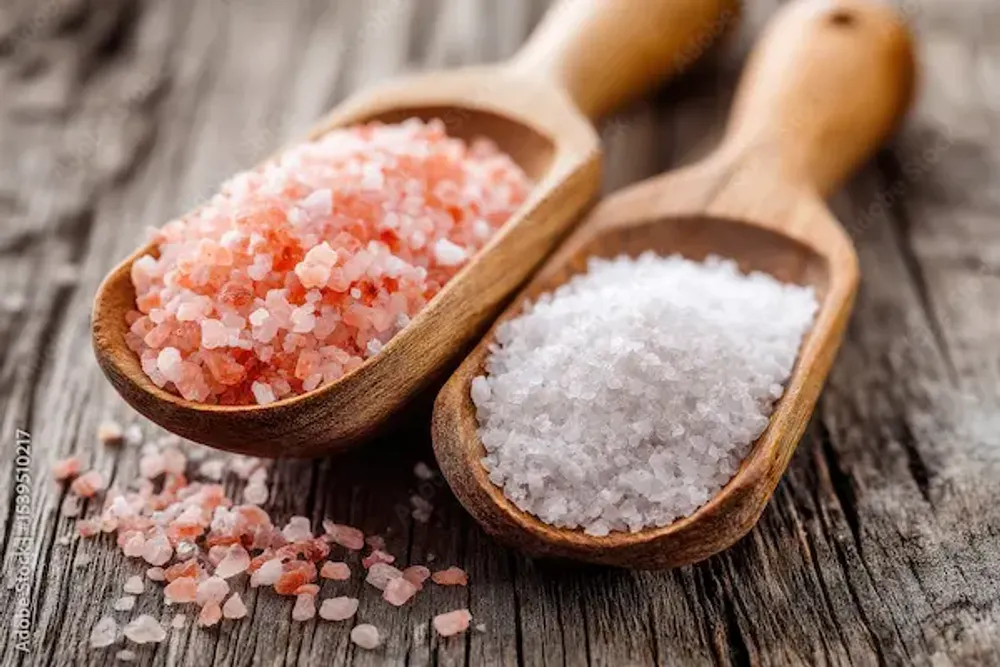
Mined salt, or rock salt, is particularly prized for these pathways because it comes from protected underground seams that have been shielded from modern environmental pollutants for millions of years. This geological “aging” creates a stable, high-density crystal that behaves predictably in a laboratory or factory setting.
2. Purity and the Avoidance of “Side Reactions”
In the world of chemical synthesis, “purity” is not just a marketing term—it is a functional requirement. One of the primary reasons our clients at Sama United choose Mined salt for chemical synthesis is the reduction of unwanted side reactions.
When salt is impure, containing trace amounts of magnesium, calcium, or heavy metals, these “interlopers” participate in the chemical reaction alongside the sodium and chlorine.
-
Contamination: Trace metals can act as unwanted catalysts, producing “off-notes” in fragrances or cloudiness in clear resins.
-
Reduced Yield: Every molecule of impurity is a molecule that isn’t contributing to your final product, lowering your overall production yield.
-
Waste Management: Impure salt creates more chemical “sludge” that must be neutralized and disposed of, increasing your environmental overhead.
By providing mined salt with a purity level of 99% or higher, Sama United helps you keep your chemical equations clean and your production costs low.
3. The Chlor-Alkali Industry: Salt as a Direct Reactant
The largest consumer of Mined salt for chemical synthesis is undoubtedly the chlor-alkali sector. This industry is the foundation of the modern world, producing the chlorine and caustic soda used in over 50% of all chemical manufacturing.
Our partners at Sama United rely on mined salt for their electrolytic cells because it offers superior “Brine Stability.” In a membrane cell—the most advanced technology in the field—the ion-exchange membranes are incredibly delicate. Even a few parts-per-million of calcium or magnesium in the salt can “plug” the membrane, leading to an immediate drop in voltage efficiency and expensive repairs. Mined salt, which is often easier to purify to ultra-low hardness levels than solar salt, is the gold standard for protecting these multi-million-pound assets.
4. The Solvay Process: Building Modern Materials
Another critical reaction that requires Mined salt for chemical synthesis is the Solvay process, used to produce soda ash (sodium carbonate). Soda ash is essential for the manufacturing of glass, detergents, and even the lithium-ion batteries used in electric vehicles.
In the Solvay process, salt brine reacts with ammonia and carbon dioxide. At Sama United, we emphasize that the physical properties of the salt matter as much as the chemical ones. Mined rock salt provides a consistent dissolution rate, ensuring that the brine saturation remains constant. If the brine concentration fluctuates, the crystallization of the sodium bicarbonate becomes erratic, leading to a lower-quality final product.
5. Why Mined Salt is More Stable for Bulk Storage
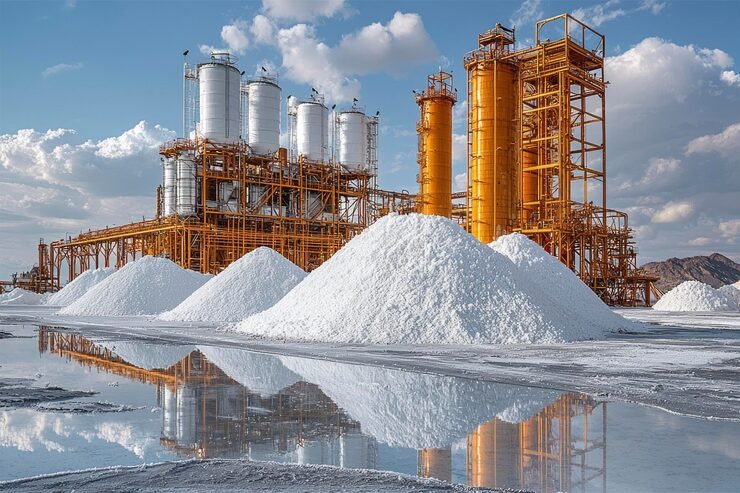
Chemical plants often operate on massive scales, requiring thousands of tons of inventory. Mined salt for chemical synthesis offers an economic advantage here: physical stability.
Because rock salt was formed under intense geological pressure, it is denser than solar salt. This high “Bulk Density” means:
-
Lower Storage Footprint: You can store more chemical potential in a smaller warehouse area.
-
Reduced Caking: Mined salt is less prone to “bridging” in silos, ensuring that the salt flows smoothly into your mixing tanks without the need for manual agitation.
-
Lower Moisture: Mined salt generally has lower internal moisture than solar salt, which prevents the “weeping” of brine during long-term storage—a common cause of corrosion in industrial warehouses.
Mined salt for chemical synthesis: Why It Is the Backbone of Industrial Reactions
6. Managing the Logistics of High-Volume Chemistry
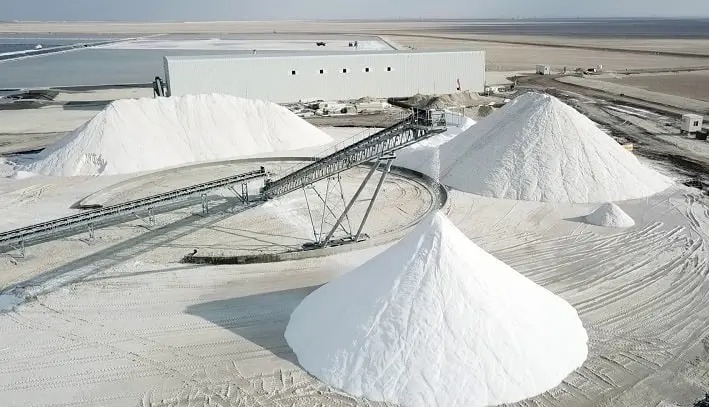
At Sama United, we don’t just see ourselves as salt merchants; we are a vital part of your chemical supply chain. Moving Mined salt for chemical synthesis requires a deep understanding of international trade and maritime logistics.
Our UK-based headquarters, Sama United Ltd, coordinates the movement of bulk salt across the globe. We ensure that:
-
Traceability: Every ton of salt can be traced back to its specific mine and batch.
-
Professional Packaging: Whether you need 1,000kg Big Bags with moisture-proof liners or loose bulk delivery, our packaging ensures the salt remains chemically pure during transit.
-
Just-in-Time Delivery: We work with your production schedule to ensure that your reactors never run dry.
7. Environmental Sustainability in Chemical Sourcing
As the chemical industry moves toward “Green Chemistry,” the source of the salt is under the microscope. Many of our clients are looking to reduce their carbon footprint.
Interestingly, Mined salt for chemical synthesis can be a sustainable choice. Because the salt is already in solid form, it requires less energy to “extract” than pumping brine from deep underground wells (solution mining). Furthermore, Sama United prioritizes mines that utilize modern, low-impact extraction technologies and efficient transport routes, helping you meet your ESG (Environmental, Social, and Governance) targets.
8. Technical Documentation: The Sama United Certificate of Analysis
In industrial chemistry, you cannot manage what you do not measure. This is why Sama United provides a comprehensive Certificate of Analysis (CoA) with every shipment. We provide detailed data on:
-
Sodium Chloride (NaCl) Content: The primary reactant.
-
PPM of Insolubles: To protect your pumps and filters.
-
PPM of Sulfates: To protect your electrolytic membranes.
-
Moisture Levels: To ensure accurate weight and flowability.
This transparency allows your plant chemists to calibrate their equipment with 100% confidence, knowing that the “input” is identical every time.
9. Case Study: Solving the “Catalyst Poisoning” Issue
A few years ago, a manufacturer of specialty resins contacted Sama United because their expensive catalysts were failing prematurely. Our technical audit revealed that the salt they were using contained trace levels of iron and silica.
We switched them to our premium Mined salt for chemical synthesis, specifically selected for its low-metal profile. The results were immediate: the catalyst lifespan increased by 40%, and the clarity of their final resin was significantly improved. This is the power of choosing the right mineral partner.
Mined salt for chemical synthesis: Why It Is the Backbone of Industrial Reactions
10. Conclusion Mined salt for chemical synthesis : Salt as the Foundation of Future Innovation
In conclusion, Mined salt for chemical synthesis is the quiet, reliable hero of the industrial world. It is the molecular foundation of the plastics that protect us, the medicines that heal us, and the energy systems of the future. As chemical reactions become more complex and industrial standards more demanding, the need for high-purity, reliably sourced mined salt will only grow.
At Sama United, we are dedicated to providing the high-precision minerals that your business needs to innovate and thrive. We understand the chemistry, we have mastered the logistics, and we share your vision of excellence. Let Sama United be the catalyst for your next chemical success.
Are you ready to optimize your chemical production with high-purity mined salt? Contact the experts at Sama United today for a technical consultation and a customized bulk quote tailored to your synthesis needs.