
Professional deicing salt grades are the primary defense mechanism against the paralysis of public infrastructure during winter. At Sama United, we have spent years supplying municipal authorities, highway agencies, and large-scale industrial complexes with the mineral foundations they need to keep society moving. When a blizzard strikes, the safety of millions of commuters depends on the technical specifications of the salt stored in gritting depots. Choosing the wrong grade is not merely a logistical error; it can lead to increased road accidents, damaged concrete structures, and millions of pounds in wasted budget.
As experts at Sama United, we understand that public infrastructure requires a nuanced approach to salinity. Salt is not a “one size fits all” commodity. From the high-purity white salts harvested from the Mediterranean to the rugged, mineral-rich brown rock salts from deep underground mines, each variety offers unique benefits and challenges. In this guide, we will compare the different professionaldeicing salt grades available in the global market, explaining how their chemical profiles, physical properties, and environmental impacts dictate their use on our roads, bridges, and walkways.
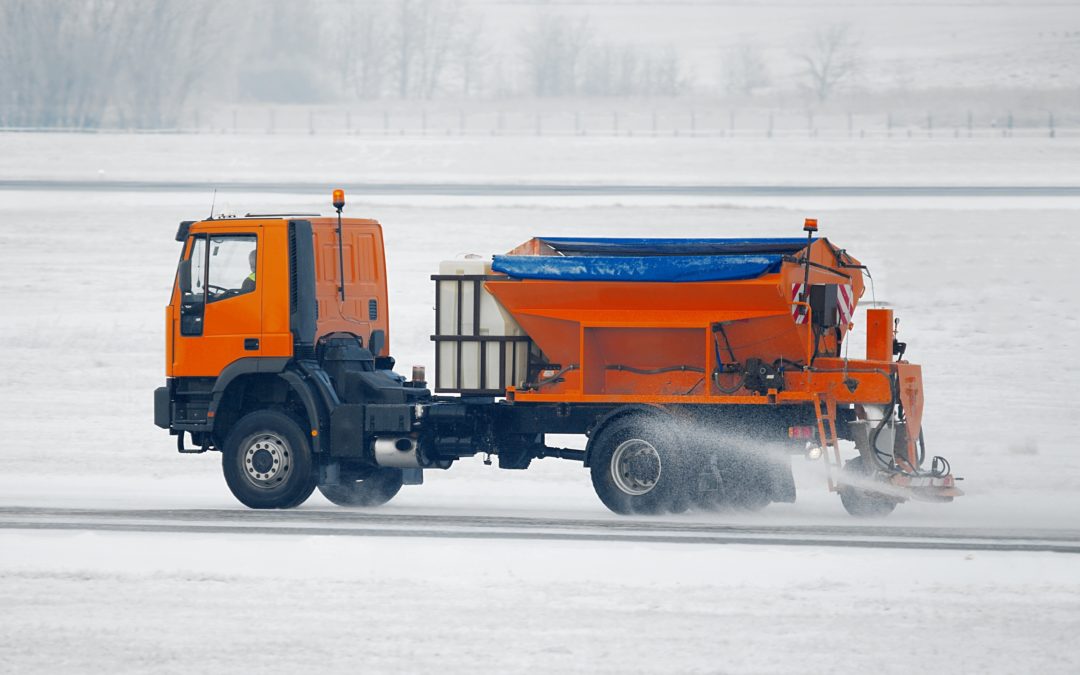
Professional deicing salt grades: A Strategic Comparison for Public Infrastructure Maintenance
1. White Salt vs. Brown Salt: The Most Visible Distinction
The most common comparison in the industry involves color. While both are primarily Sodium Chloride (NaCl), their origins and secondary mineral contents differ significantly.
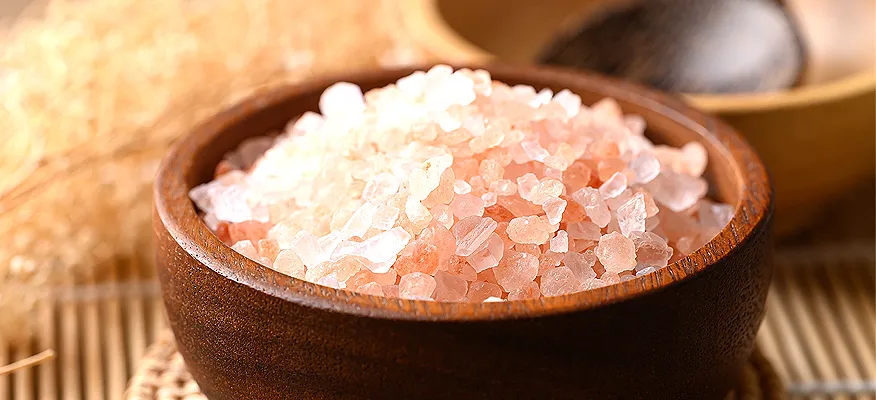
White deicing Salt (Marine or High-Purity Rock Salt)
White salt is typically harvested from solar evaporation ponds or highly refined rock salt mines.
-
Purity: It usually boasts an NaCl content of 98% to 99%.
-
Cleanliness: At Sama United, we often recommend white salt for high-traffic urban areas, shopping centers, and footpaths. Because it is so pure, it dissolves completely, leaving behind no messy “sludge” or residue. This prevents the tracking of mud into public buildings and keeps the aesthetic of city centers clean.
-
Melting Speed: Its high purity allows it to form a brine more rapidly than lower-grade alternatives.
Brown deicing Salt (Natural Rock Salt)
Brown salt is mined from ancient underground deposits. Its color comes from trace amounts of earthy minerals, such as clay and iron oxide.
-
The Grip Factor: One of the main reasons highway authorities reach out to Sama United for brown salt is the “grit” factor. The insoluble minerals provide a small amount of physical traction for vehicle tires immediately upon application.
-
Cost-Effectiveness: Brown salt is generally more affordable for massive-scale infrastructure projects, such as national motorway networks, where hundreds of thousands of tons are required.
2. The Chemical Grade: Why 98% Purity is the “Golden Rule”
When evaluating professional deicing salt grades, the chemical analysis—specifically the Sodium Chloride (NaCl) percentage—is the most critical metric. At Sama United, we emphasize that purity directly correlates with the “Freezing Point Depression” efficiency.
If a salt grade has only 90% purity, the remaining 10% is “filler” (sand, clay, or gypsum) that does not melt ice. This means:
-
Increased Application Rates: You have to spread more salt to get the same melting effect.
-
Environmental Load: You are dumping unnecessary silt into the drainage systems.
-
Logistical Waste: You are paying to ship and store material that has no deicing value.
Sama United ensures that our professional grades meet or exceed international standards, providing the maximum melting power for every kilogram applied.
3. Granulometry: How Grain Size Impacts Performance
In the world of professional infrastructure, the size of the salt crystal is a functional specification. At Sama United, we categorize salt by its “Grading” or “Granulometry.”
-
Fine Grains: These dissolve almost instantly, providing an immediate brine for light frost.
-
Medium Grains: The standard for most gritting machines, offering a balance between immediate action and long-lasting melting.
-
Coarse Grains: These are essential for heavy snow and thick ice. Large crystals act like “drills,” boring through the ice to reach the pavement and breaking the bond between the ice and the road from the bottom up.
Sama United’s Strategy: We provide a “balanced grading” mix. This ensures that the infrastructure is safe immediately after the gritter passes (fine grains) and stays safe for hours afterward (coarse grains).
4. Moisture Content and the “Mechanical Caking” Challenge
A salt grade can be chemically perfect, but if it is physically unusable, it is a failure. Salt is hygroscopic, meaning it absorbs moisture from the air. High moisture content in professional deicing salt grades leads to “caking” or the formation of solid blocks in the storage bay.
If salt cakes:
-
It jams the automated spreading machinery on the gritting trucks.
-
It requires manual labor to break up, slowing down emergency response times.
-
It results in uneven spreading, leaving dangerous “black ice” patches on the road.
At Sama United, we kiln-dry our salt and use specialized storage techniques to keep moisture levels below 2.0%, ensuring a free-flowing product that is ready for immediate deployment.
5. Anti-Caking Agents: The Secret Ingredient
To maintain the flowability of salt during long-term storage in municipal depots, a small amount of anti-caking agent (typically Sodium Ferrocyanide) is added.
While this is standard for all professional deicing salt grades, the quality of the additive and the uniformity of the application are vital. At Sama United, we ensure that our anti-caking treatment is applied evenly across every ton, preventing the “clumping” that often plagues lower-quality salt supplies during humid winter months.
Professional deicing salt grades: A Strategic Comparison for Public Infrastructure Maintenance
6. Environmental Considerations: Salt and Sustainability
Public infrastructure projects are under increasing pressure to be environmentally responsible. Over-salting can lead to the salinization of local waterways and the degradation of roadside soil.
Sama United helps infrastructure managers become more sustainable by:
-
Offering Higher Purity: Meaning less salt is needed to achieve safety targets.
-
Pre-Wetted Salt Solutions: We provide high-solubility salt that is perfect for “pre-wetting” (mixing salt with a liquid brine before spreading). This helps the salt stick to the road, reducing “bounce and scatter” into the gutters by up to 30%.
-
Sustainable Sourcing: Prioritizing solar salt that is harvested using the natural power of the sun and wind.
7. Logistics: Scaling Supply for National Demand
Managing the supply chain for professional deicing salt grades is a massive undertaking. National infrastructure cannot wait for a delayed ship.
Sama United leverages its UK-based headquarters and global sourcing network to provide:
-
Strategic Stockpiling: We maintain reserves so that we can fulfill emergency orders when a sudden cold snap hits.
-
Bulk Shipping Expertise: We utilize 20-foot and 40-foot containers, as well as bulk carriers, to move mountains of salt efficiently and cost-effectively.
-
Transparent Documentation: Every shipment from Sama United comes with a full Certificate of Analysis (CoA), so infrastructure managers know exactly what grade of protection they are putting on their roads.
8. Economic Impact: The “Total Cost of Ownership”
Municipalities often fall into the trap of buying the cheapest salt available. However, a low-grade salt with high impurities and poor granulometry actually costs more in the long run.
-
Cheap Salt = More Maintenance: The silt left behind by poor-grade rock salt clogs storm drains and filters, requiring expensive spring cleanups.
-
Cheap Salt = Infrastructure Damage: Higher levels of corrosive impurities can accelerate the rusting of rebar in bridges and parking garages.
-
The Sama United Value: By providing higher-quality salt grades, we help our clients reduce the total volume used, protect their assets, and lower their overall winter maintenance budget.
9. Case Study Professional deicing salt grades : Solving the “City Center Residue” Issue
A major metropolitan council approached Sama United because they were spending too much on cleaning the floors of their public transit stations after winter. They were using a low-grade brown rock salt.
We transitioned them to our Professional White Sea Salt Grade. The result? The melting speed increased by 15%, and the station cleaning costs dropped by 40% because there was no earthy residue being tracked in by commuters. This is the power of selecting the correct grade.

professional deicing salt grades
10. Conclusion Professional deicing salt grades : Partnering with Sama United for Public Safety
In conclusion, professional deicing salt grades are the foundation of a resilient winter maintenance strategy. Whether you choose the rugged reliability of natural rock salt or the pristine efficiency of white marine salt, your choice will dictate the safety and cleanliness of your infrastructure.
At Sama United Professional deicing salt grades , we are more than just a supplier; we are your strategic partner in public safety. We understand the chemistry, the physics, and the economics of winter salt. Let us help you navigate the complexities of mineral grades to find the perfect solution for your city, your roads, and your budget.
Are you ready to secure your winter supply with the highest standards of quality? Contact the experts at Sama United today for a technical consultation and a customized quote for your bulk deicing salt needs.