
Industrial salt price factors are the most frequent subject of discussion in our boardrooms at Sama United. For many procurement managers, the price of salt can seem like a moving target. One month the market is stable, and the next, a ripple in global shipping or a shift in energy policy can send costs fluctuating. At Sama United, we believe that a well-informed client is our most successful partner. We don’t just want to sell you salt; we want you to understand the “why” behind the numbers.
In the world of international trade, salt is often classified as a “high-volume, low-value” commodity. This unique status means that the final price you pay at your warehouse gates is influenced by a delicate balance of logistics, chemistry, and global economics. As experts at Sama United, we’ve spent years deconstructing these variables to provide our clients with the most competitive and transparent pricing possible. In this deep dive, we will peel back the layers of the industry to explore the primary industrial salt price factors and how they impact your bottom line.
Industrial salt price factors: Navigating the Complexities of the Global Market
1. The Logistics Lever: Why Weight Rules the Price
The single most influential of all industrial salt price factors is logistics. Because salt is heavy and relatively inexpensive per ton, the cost of moving it often exceeds the cost of the material itself.
At Sama United, we often tell our clients: “You aren’t just buying salt; you are buying space on a ship.”
-
Ocean Freight Volatility: Salt is typically moved via bulk carriers or 20-foot containers. If global oil prices rise or if there is a shortage of empty containers (as seen in recent years), the “CIF” (Cost, Insurance, and Freight) price of salt will spike, even if the “FOB” (Free on Board) price at the salt works remains unchanged.
-
Port Efficiency: Some ports have higher “Terminal Handling Charges” (THC) than others. At Sama United, we optimize your pricing by selecting the most efficient shipping routes and ports to minimize these “hidden” costs.
2. Purity and the Cost of Refining
Not all salt is created equal, and the level of refinement is a major component of industrial salt price factors.
-
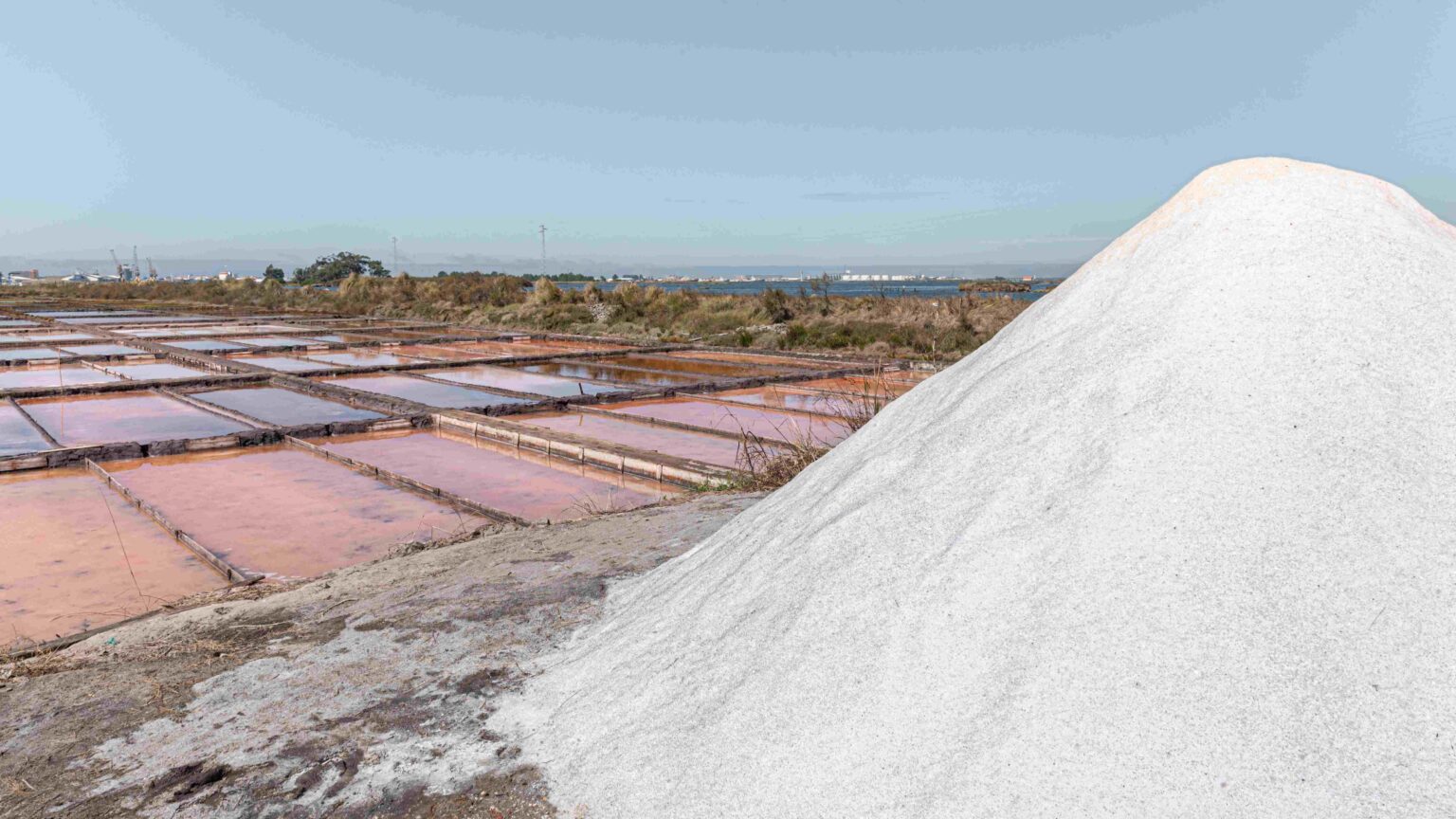
Solar Salt vs. Vacuum Salt: Solar-evaporated sea salt, while sustainable, requires extensive washing and screening to reach high purity levels. Vacuum-refined salt, on the other hand, involves boiling brine in massive industrial evaporators. The latter is much more energy-intensive.
-
The “PPM” Premium: If your industry (like chlor-alkali or pharmaceuticals) requires salt with ultra-low levels of magnesium or calcium, the additional processing steps will naturally increase the price. At Sama United, we work to find the “purity sweet spot”—ensuring you don’t pay for 99.9% purity if your application only requires 98%.
3. The Energy Connection: An Invisible Cost
It is a common myth that salt production is “free” because it comes from the sea or the ground. In reality, energy is one of the most volatile industrial salt price factors.
Refining, drying, and packaging salt require significant electricity and thermal energy.
-
The Drying Phase: For salt to be “free-flowing,” it must be dried in fluidized bed dryers. If natural gas or electricity prices rise, the cost of producing dry salt increases immediately.
-
Automated Packaging: Large-scale packaging lines at Sama United use advanced robotics and heat-sealing technology. While this increases efficiency, it also makes the production cost sensitive to industrial energy rates.
4. Climatic and Seasonal Impacts: The Sun as a Business Partner
For solar salt producers, the weather is the ultimate board member. The harvest volume is directly tied to evaporation rates, which depend on sunlight, wind, and the absence of rain.
-
Unexpected Rainfall: A heavy rainy season in a major salt-producing region can wash away months of crystallization, leading to a “supply shock.”
-
Harvest Cycles: Salt is typically harvested in specific cycles. If you procure your salt outside of these peak harvest times, you may find that the industrial salt price factors tilt upward due to lower available stock. At Sama United, we help our clients time their bulk purchases to align with the harvest, securing the best possible rates.
5. Geopolitical and Macroeconomic Shifts
As a UK-based company operating globally, Sama United is acutely aware of how international relations affect the market.
-
Currency Fluctuations: Salt is globally traded in US Dollars. If your local currency weakens against the USD, the salt becomes more expensive for you, even if the market price is stable.
-
Trade Tariffs and Policies: Changes in trade agreements or the imposition of anti-dumping duties can overnight transform the pricing landscape. We stay ahead of these shifts, utilizing our global network to source from regions that offer the most favorable trade terms for our clients.

Industrial salt price factors: Navigating the Complexities of the Global Market
6. Packaging Innovations and Material Costs
The “shell” that protects your salt is also a price driver. Most bulk salt is moved in Polypropylene (PP) bags.
-
Polymer Prices: PP is a petroleum-based product. When oil prices rise, the cost of the bags themselves increases.
-
Customization: If you require UV-protected bags, specialized liners for humidity control, or branded printing, these additions will reflect in the final quote. At Sama United, we leverage our bulk buying power for packaging materials to keep these costs as low as possible for our partners.
7. Regulatory Compliance and Certification Costs
The modern industrial world demands proof of quality. Certifications like ISO, HACCP, or REACH compliance are essential for many of our clients in Europe and the UK.
Maintaining these standards requires constant auditing, laboratory testing, and administrative oversight. While these ensure the safety and reliability of the salt you receive from Sama United, they are an inherent part of the industrial salt price factors. We view this not as an “extra cost” but as an “insurance policy” for your production line.
8. Supply and Demand Imbalances
The fundamental law of economics applies to salt just as it does to gold. A sudden surge in demand—for example, a harsh winter increasing the need for de-icing salt—can pull supply away from other industrial sectors.
At Sama United, we mitigate this risk through “Strategic Inventory Management.” By maintaining large reserves and diverse sourcing locations, we protect our regular clients from the “price spikes” that often hit those who rely solely on the spot market.
9. The Impact of Technological Advancements
Innovation can be a double-edged sword when it comes to industrial salt price factors. While new refining technologies (like MVR – Mechanical Vapor Recompression) are more energy-efficient in the long run, the initial capital investment is high. At Sama United, we invest in technology to lower the long-term “per-ton” cost, ensuring that our pricing remains sustainable and competitive for the next decade, not just the next month.
10. Why Partnering with Sama United Simplifies the Equation
With so many moving parts, how can a business effectively manage its salt procurement? The answer is transparency. At Sama United, we don’t just give you a “take it or leave it” price. We break down the quote. We explain the freight market, we show you the purity analysis, and we work with you to find logistical shortcuts.
We pride ourselves on being a “stabilizer” in your supply chain. Our deep understanding of industrial salt price factors allows us to provide:
-
Forward Contracts: Lock in your price today to avoid future volatility.
-
Custom Logistics: Finding the port that saves you the most on inland trucking.
-
Grade Optimization: Ensuring you don’t over-specify and over-pay for purity levels you don’t need.
Industrial salt price factors: Navigating the Complexities of the Global Market
Conclusion Industrial salt price factors : Knowledge is Your Greatest Savings Tool
Understanding the industrial salt price factors is the first step toward a more profitable and resilient business. Salt may be a simple mineral, but the global market that surrounds it is anything but simple. By partnering with an expert like Sama United, you gain more than a supplier; you gain a team of analysts, logistics experts, and chemists dedicated to your success.
In the world of heavy industry, the “best price” isn’t always the lowest one—it’s the one that comes with guaranteed quality, reliable delivery, and a transparent partnership. At Sama United, we are committed to providing exactly that. Let us handle the complexities of the global salt market so you can focus on what you do best: building your business.
Ready to gain a competitive edge in your salt procurement? Industrial salt price factors Contact the experts at Sama United today for a transparent, professional quote tailored to your specific industrial needs.