
Sustainable food grade salt production is no longer a “niche” topic for environmentalists; it has become the gold standard for the global food industry. At Sama United, we have observed a fundamental shift in the market. Today’s industrial buyers and gourmet chefs are not just looking for purity and price; they are looking for a story of responsibility. They want to know that the salt enhancing their products didn’t come at the cost of the planet’s health.
As experts at Sama United, we believe that the future of salinity lies in harmony with nature. Salt is one of the few minerals that can be harvested using 100% renewable energy—the sun and the wind. However, the journey toward true sustainability involves much more than just the harvest; it encompasses refining, packaging, and global logistics. In this article, we will explore the innovations driving sustainable food grade salt production and how Sama United is positioning itself as a leader in this green revolution.
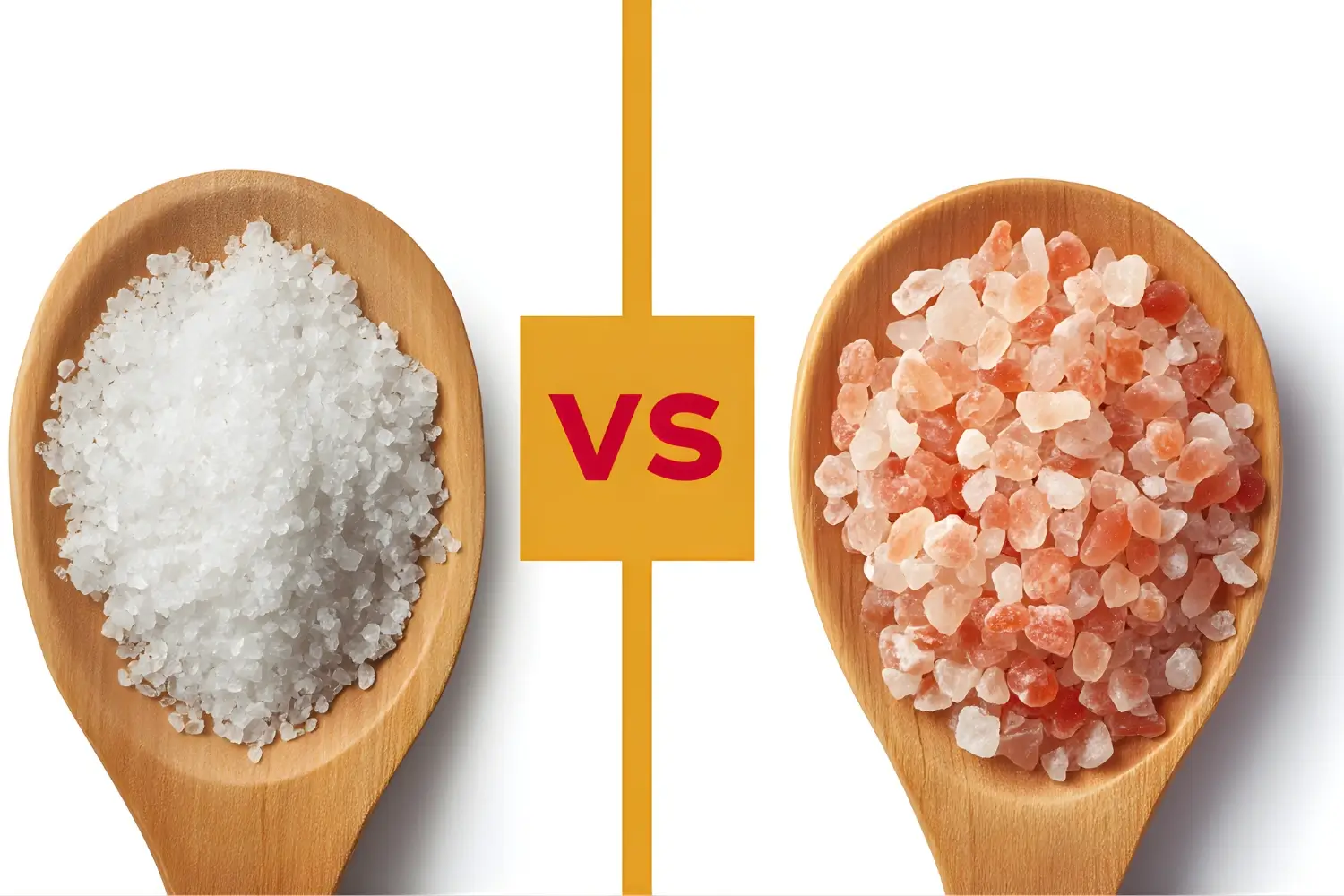
Sustainable Food Grade Salt Production: Shaping the Future of the Global Food Industry
1. Solar Evaporation: The Original Green Technology
When we talk about sustainable food grade salt production, we must start with the sun. Solar evaporation is perhaps the oldest industrial process known to man, yet it remains the most sustainable. By using vast salt pans to let seawater evaporate naturally, we harness the power of the environment without burning a single liter of fossil fuel for the primary harvest.
At Sama United, we prioritize salts sourced from regions where traditional solar methods are enhanced by modern technology. This “low-impact” harvesting protects coastal ecosystems and maintains the natural mineral balance of the sea. Unlike mechanical mining, which can be energy-intensive and disruptive to the earth, solar salt is a “living” product that regenerates with every tide.
2. Energy Efficiency in Vacuum Refining
While solar salt is naturally sustainable, the gourmet and industrial sectors often require “Refined” salt for its high purity. Traditionally, refining salt involved boiling brine, which consumed massive amounts of energy. However, the future of sustainable food grade salt production is found in “Mechanical Vapor Recompression” (MVR) and multi-stage vacuum evaporation.
These modern systems, which we advocate for at Sama United, recycle the heat generated during the evaporation process. By capturing and reusing steam, a modern refinery can reduce its energy consumption by up to 70% compared to traditional methods. This transition to energy-efficient refining is a core pillar of our commitment to a lower carbon footprint for our global clients.
3. The Circular Economy: Upcycling Brine from Desalination
One of the most exciting innovations in sustainable food grade salt production is the concept of “Circular Salinity.” Around the world, desalination plants produce fresh water but leave behind concentrated brine as a waste product. In the past, this brine was pumped back into the ocean, which could harm marine life.
At Sama United, we are closely following the technology that allows this “waste” brine to be captured and processed into high-quality food-grade salt. This turns a potential pollutant into a valuable resource, creating a “closed-loop” system where nothing is wasted. This is the ultimate expression of sustainability—turning an environmental challenge into a culinary solution.
4. Breaking the Plastic Habit: Innovations in Packaging
You cannot have sustainable food grade salt production if the final product is wrapped in non-recyclable plastic. At Sama United, we recognize that packaging is the next frontier of sustainability. The industry is moving away from single-use plastics and toward:
-
Recyclable Polypropylene (PP): Ensuring that our bulk bags can be re-processed into new materials.
-
Biodegradable Liners: Testing plant-based films that protect the salt from moisture but decompose safely after use.
-
Optimized Loading: By designing bags that stack more efficiently, we reduce the number of shipping containers needed, which in turn lowers the CO2 emissions of every ton of salt we export.

Sustainable Food Grade Salt Production: Shaping the Future of the Global Food Industry
5. Water Management and Conservation
Even though salt comes from water, the refining process requires “fresh” water for washing and brine creation. Sustainable producers are now focusing on water recycling systems. At Sama United, we support facilities that treat and reuse their process water multiple times.
In arid regions, this water conservation is vital. By minimizing the “water footprint” of every kilogram of salt, we ensure that the local communities where the salt is produced are not deprived of this precious resource. Sustainability is as much about people as it is about the planet.
6. Traceability and Ethical Sourcing
A major part of sustainable food grade salt production is “Transparency.” Today’s gourmet consumers want to know the “Mine-to-Table” or “Sea-to-Table” journey. They want to be sure that the workers harvesting the salt are treated fairly and that the supply chain is free from exploitation.
Sama United is committed to ethical sourcing. We work with partners who provide fair wages and safe working conditions. We believe that a “sustainable” product must be ethically sound from its very foundation. We provide our clients with full traceability, ensuring that every batch of salt can be traced back to its specific harvest location and date.
7. Reducing the “Food Miles”: Smart Logistics
Sustainability also involves the miles the salt travels. Salt is heavy, and transporting it across the globe consumes fuel. At Sama United, we optimize our logistics to reduce “Food Miles.”
-
Regional Warehousing: By keeping stock in strategic global hubs, we can use shorter trucking routes for final delivery.
-
Bulk Sea Freight: Shipping in high volumes via sea is significantly more carbon-efficient than air or long-distance road transport.
-
Intermodal Transport: Whenever possible, we use rail systems to move our salt from ports to inland warehouses, as rail is one of the greenest ways to move heavy freight.
8. Why Sama United is Your Partner in Sustainable Food Grade Salt Production
Why should a company choose Sama United for their salt supply? Because we don’t see sustainability as a marketing buzzword; we see it as an operational necessity. We understand that our clients in the gourmet and food manufacturing sectors are under pressure from their own customers to be “greener.”
By partnering with Sama United, you are securing a supply chain that is:
-
Environmentally Conscious: We prioritize low-impact harvesting and energy-efficient refining.
-
Economically Stable: Sustainable processes are often more efficient, leading to better price stability in the long run.
-
Future-Proof: As regulations around carbon footprints and plastic waste become stricter, our sustainable methods ensure you remain compliant and competitive.
9. Case Study: The Gourmet Shift
We recently worked with a high-end bakery chain that wanted to switch to a 100% “Planet-Positive” ingredient list. By providing them with our solar-evaporated sea salt in recyclable bulk packaging, we helped them reduce their “scope 3” emissions and gave them a powerful story to tell their customers. This is how sustainable food grade salt production creates value beyond just the taste of the food.
Sustainable Food Grade Salt Production: Shaping the Future of the Global Food Industry
10. The Road Ahead: Net-Zero Salinity
The ultimate goal for Sama United is “Net-Zero Salinity”—a future where the production and delivery of salt have a neutral or even positive impact on the environment. This involves investing in carbon-offsetting projects, supporting seagrass restoration (which captures carbon in the ocean), and continuing to innovate in renewable energy for salt refining.
Conclusion Sustainable Food Grade Salt Production : Join the Sustainable Journey with Sama United
The future of sustainable food grade salt production is bright, but it requires commitment from both the producer and the buyer. Salt is a gift from the earth and the sea, and at Sama United, we are dedicated to protecting those sources for generations to come.
Choosing the right salt is no longer just about salinity; it’s about integrity. We invite you to join us on this journey. Let Sama United be your guide to a cleaner, greener, and more delicious future.
Are you ready to align your brand with the future of sustainability? Contact Sama United today to learn more about our eco-friendly salt solutions and how we can help you meet your green goals.