
Refined salt production is a sophisticated industrial journey that transforms raw minerals from the earth and sea into the pure, white crystals we see on our dinner tables and in our food products. At Sama United, we believe that understanding this process is essential for our clients in the gourmet and food manufacturing sectors. Salt is not just a commodity; it is a vital ingredient that requires precision, hygiene, and technological expertise to ensure it is safe and effective for human consumption.
As experts at Sama United, we often get asked: “What actually happens to salt before it reaches the consumer?” The answer lies in a series of purification steps designed to remove impurities and create a product with a sodium chloride (NaCl) purity of often more than 99%. Let’s walk through the fascinating stages of modern salt refining.
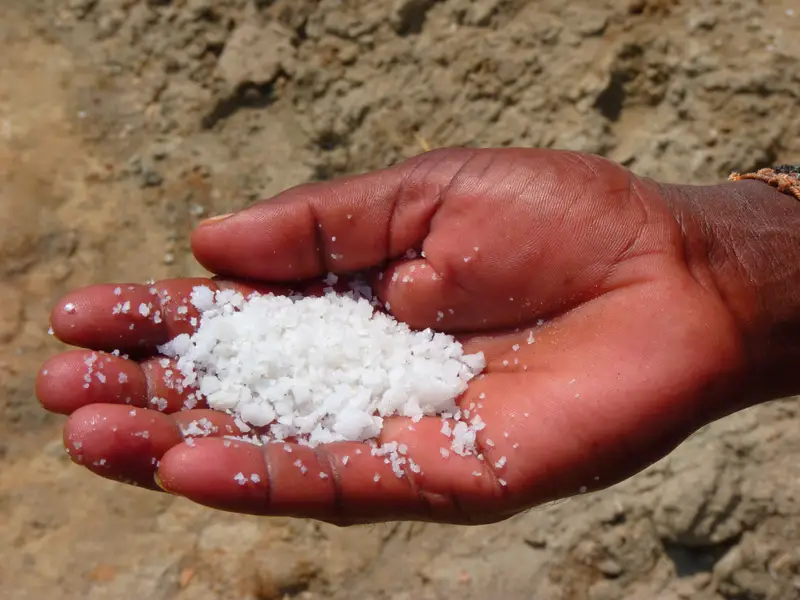
Refined Salt Production: How It Is Processed for Human Consumption
The Raw Beginnings: Sourcing the Material
Before the refined salt production process even begins, we must look at where the salt comes from. There are two primary sources:
-
Sea Salt: Harvested from the evaporation of seawater in large ponds.
-
Rock Salt (Halite): Mined from ancient underground salt deposits.
While sea salt and rock salt are excellent in their raw forms, they contain various minerals, clay, and organic matter that must be removed for specific industrial and culinary applications. At Sama United, we source the highest quality raw materials to ensure that the final refined product meets international food safety standards.
Step 1: The Brine Purification Stage
The first major step in refined salt production is creating a “brine” (a highly concentrated salt-water solution). Raw salt is dissolved in water, and this is where the cleaning begins.
At this stage, chemical treatments are added to the brine to precipitate out impurities like magnesium and calcium salts. These minerals, if left in the salt, can cause a bitter taste or affect the texture of food. At Sama United, we ensure that our refining partners use precise measurements to guarantee that the brine is as pure as possible before it moves to the next stage.
Step 2: Vacuum Evaporation – The Heart of Refining
In the past, salt was refined by boiling water in open pans, which was slow and inefficient. Today, the refined salt production process uses a technology called “Multiple-Effect Vacuum Evaporation.”
This is how it works in simple terms:
-
The purified brine is placed in large, sealed vessels.
-
The air pressure inside these vessels is reduced (creating a vacuum).
-
Because the pressure is lower, the brine boils at a much lower temperature.
-
This saves energy and allows for the growth of very uniform, cubic salt crystals.
At Sama United, we favor this method because it produces a consistent grain size, which is critical for food manufacturers who need the salt to dissolve at a specific rate.
Step 3: Centrifuging and Drying
Once the crystals have formed in the vacuum evaporators, they are pulled out as a slurry (a mix of salt and a little water). This slurry is sent to a centrifuge—a machine that spins at high speeds to sling the water away from the salt, much like the spin cycle on a washing machine.
However, the salt is still slightly damp. In the next stage of refined salt production, the salt enters a “fluidized bed dryer.” Hot, filtered air is blown through the salt, lifting the crystals so they behave like a liquid. This ensures that every single grain is perfectly dry and free-flowing.
Step 4: The Addition of Essential Nutrients (Iodization)
One of the most important aspects of processing salt for human consumption is public health. During the refined salt production process, a small amount of potassium iodate is often added.
Iodine is a crucial nutrient for thyroid health, and salt is the world’s most effective vehicle for ensuring populations get enough of it. At Sama United, we provide both iodized and non-iodized options to our clients, depending on their specific market requirements and local health regulations.

Refined Salt Production: How It Is Processed for Human Consumption
Step 5: Anti-Caking Agents for a Smooth Pour
Have you ever wondered why refined salt doesn’t turn into a hard brick in your salt shaker? This is thanks to anti-caking agents. During the final stages of refined salt production, food-grade additives like potassium ferrocyanide (don’t worry, it’s perfectly safe and highly regulated!) are added in tiny amounts—just a few parts per million.
These agents prevent the crystals from bonding together when they are exposed to a little bit of humidity. At Sama United, we ensure that all additives used in our products are fully compliant with global food safety authorities, including the FDA and EFSA.
Quality Control: The Sama United Standard
For us at Sama United, quality control is the most vital part of the refined salt production cycle. We don’t just trust the machines; we trust the data. Every batch of salt is tested for:
-
Purity Levels: Ensuring NaCl levels are at their peak.
-
Granulometry: Checking that the grain size is consistent.
-
Whiteness: Making sure the salt has that brilliant, clean look.
-
Moisture Content: Ensuring it is below the required threshold for long-term storage.
When a client buys from Sama United, they are buying the peace of mind that comes with rigorous testing and a transparent supply chain.
Why Refined Salt is Essential for Food Manufacturers
While “unrefined” salts are popular in gourmet kitchens, refined salt production is the backbone of the global food industry for several reasons:
-
Predictability: In a factory setting, you need to know exactly how salty a batch will be. Refined salt offers 100% consistency.
-
Solubility: Because the crystals are uniform and pure, they dissolve quickly and evenly in soups, sauces, and doughs.
-
Safety: The high-heat evaporation process ensures that the salt is microbiologically pure, which is essential for shelf-stable food products.
The Environmental Side of Salt Refining
At Sama United, we are conscious of the environmental impact of industrial processes. Modern refined salt production has become significantly more sustainable over the years. By using vacuum technology, refineries use much less energy than they did fifty years ago. Furthermore, the water used to create brine is often recycled within a closed-loop system, minimizing waste.
Refined vs. Unrefined: Making the Right Choice
You might ask, “Is refined salt better than sea salt?” The answer depends on your goal. If you want a rustic, crunchy finish on a steak, an unrefined sea salt from our gourmet range at Sama United is perfect. However, if you are baking bread, canning vegetables, or manufacturing snacks, the purity and reliability of refined salt production are unbeatable.
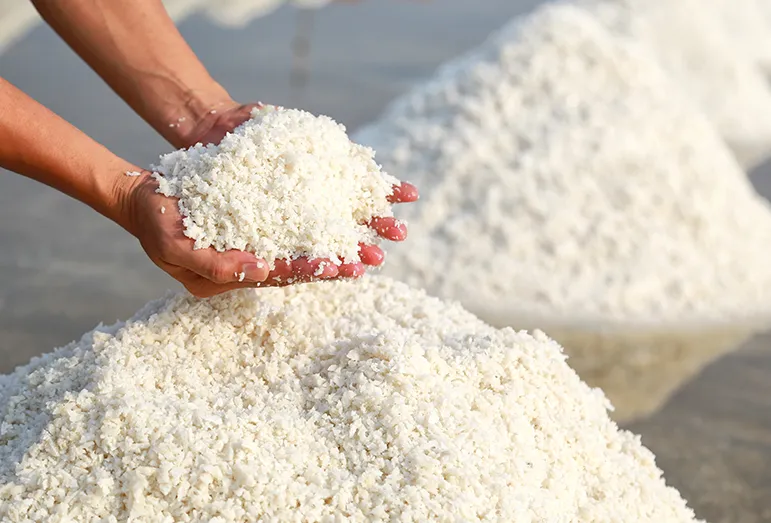
Refined Salt Production: How It Is Processed for Human Consumption
Conclusion: Partnering with Sama United for Excellence
The journey of refined salt production is a testament to human ingenuity. It takes a simple mineral and turns it into a high-precision tool for the culinary and industrial worlds. At Sama United, we take great pride in our role in this supply chain. We understand the science, the logistics, and the passion that goes into every grain.
By choosing Sama United as your supplier, you are choosing a partner that values quality above all else. Whether you need bulk shipments for a large-scale bakery or specialized salt for food processing, we have the expertise to deliver the perfect product to your doorstep.
Are you looking for a reliable source of high-quality refined salt? Contact Sama United today and let our experts help you find the perfect solution for your business needs.