
Food Salt Supplier Guide: A Comprehensive Comparison of Coarse vs. Fine Grades In my two decades of navigating the international mineral trade, I’ve sat down with hundreds of procurement officers, factory managers, and master chefs. One of the most common questions I get asked isn’t just about the price—it’s about the “mesh” or grain size. To the untrained eye, salt is salt. But to a professional Food Salt Supplier Guide , the difference between coarse and fine grains is as significant as the difference between a scalpel and a sledgehammer.
Choosing the wrong grain size can lead to uneven seasoning, clogged machinery, or ruined batches of fermented goods. As a representative of Samaunited, I want to take you through a deep dive into the world of Food Salt Supplier Guide physics. By the end of this guide, you won’t just know the difference; you’ll know exactly which grade your business needs to thrive in today’s competitive market.
Food Salt Supplier Guide: A Comprehensive Comparison of Coarse vs. Fine Grades
Why Does Grain Size Actually Matter?
Before we look at the grades, let’s talk about the “why.” In food science, grain size dictates two critical factors: Solubility and Adherence.
-
Solubility: How fast does it disappear into a liquid? Fine grains have more surface area, so they vanish almost instantly.
-
Adherence: How well does it stick to a dry surface? If you’re salting potato chips or pretzels, you need a specific grain size so the salt doesn’t just fall to the bottom of the bag.
At Samaunited, we don’t just ship “salt”; we provide a calibrated tool for your production line.
Fine Food Salt Supplier Guide Grade Salt: The Precision Instrument
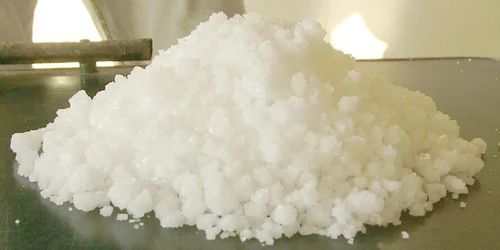
Fine salt is the workhorse of the food industry. Usually refined through a vacuum evaporation process to ensure ultra-high purity (often above 99.5% NaCl), these tiny crystals are essential for consistency.
Key Applications:
-
Baking: In bread or pastry production, you need the salt to dissolve and distribute evenly throughout the dough to control yeast fermentation.
-
Snack Coatings: Fine salt “clings” to the oil on chips and nuts, ensuring every bite has the same flavor profile.
-
Dry Mixes: If you manufacture soup bases or spice blends, fine salt prevents “stratification” (where the heavy stuff sinks to the bottom).
The Expert’s View:
As a Food Salt Supplier, I always warn my clients about “caking.” Because fine grains are so small, they love to absorb moisture and turn into a solid brick. That’s why at Samaunited, we use premium anti-caking agents and moisture-proof packaging to ensure that when our fine salt arrives at your facility in the UK or Europe, it flows like sand through an hourglass.
Coarse Food Salt Supplier Guide Grade Salt: The Slow-Release Specialist
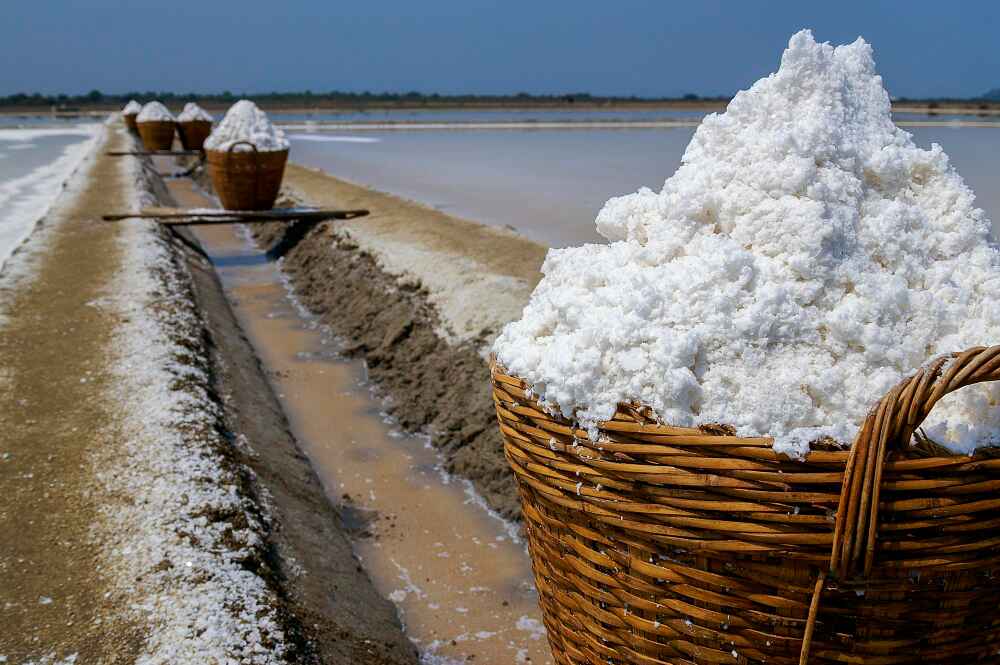
Coarse salt crystals are often harvested naturally from sea salt lagoons or mined as rock salt. They are larger, more durable, and have a much lower surface-area-to-volume ratio.
Key Applications:
-
Meat Curing & Pickling: You don’t want the salt to dissolve instantly here. You want a slow, steady “osmosis” that draws moisture out over time.
-
Brine Production: For industrial-scale pickling or olive processing, coarse salt is often more cost-effective and easier to handle in bulk.
-
Gourmet Finishing: The “crunch” of a coarse salt crystal is a sensory experience that high-end catering and food brands use to add value to their products.
The Expert’s View:
From my perspective at Samaunited, coarse salt is often the “purer” choice in terms of processing because it requires less mechanical refining than fine salt. For businesses looking for a “natural” or “unrefined” label for the UK market, coarse Mediterranean sea salt is a premium option that consumers love.
Food Salt Supplier Guide: A Comprehensive Comparison of Coarse vs. Fine Grades
The Comparison Table: At a Glance
| Feature | Fine Salt | Coarse Salt |
| Solubility | Extremely High (Instant) | Moderate to Low (Slow) |
| Surface Adherence | Excellent for dry snacks | Low (Rolls off) |
| Ideal For | Baking, Seasoning, Beverages | Curing, Pickling, Toppings |
| Handling | Prone to clumping if not treated | Generally free-flowing |
| Bulk Handling | Needs airtight storage | Highly durable for transport |
Sourcing from Egypt: The Samaunited Advantage
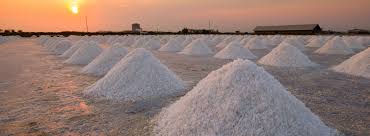
You might be asking, “Where does Egypt fit into this?” Egypt is home to some of the most ancient and high-purity salt deposits on Earth. By sourcing from Samaunited, you are getting Mediterranean sea salt that has been dried by the African sun and processed using European-standard technology.
We occupy a unique space in the market. We can offer the high-volume capacity of a global Food Salt Supplier with the boutique quality control of a specialized miner. Whether you need a fine-mesh salt for a industrial bakery in Manchester or coarse sea salt for a cannery in the South of England, our logistics network is built to handle the journey across the Mediterranean and Atlantic with zero loss in quality.
2026 Market Trends: What Should You Buy?
Food Salt Supplier Guide In 2025, we are seeing a major shift toward “Clean Label” ingredients. UK consumers are looking for salt that is “Sun-Dried,” “Natural,” and “Free from Harsh Chemicals.”
This is where coarse salt is winning. However, for sheer manufacturing efficiency, fine refined salt remains the king. My advice? Don’t just pick one based on price. Look at your machinery. If you use automated spice dispensers, go with a calibrated fine grain. If you are doing artisanal food prep, go coarse.
Food Salt Supplier Guide: A Comprehensive Comparison of Coarse vs. Fine Grades
Final Thoughts: Let’s Calibrate Your Supply Food Salt Supplier Guide
Choosing a Food Salt Supplier Guide is about finding someone who speaks your language. At Samaunited, we don’t just see ourselves as a vendor; we are an extension of your quality control team. We understand that if the salt isn’t right, the whole batch is at risk.
We invite you to experience the difference that Egyptian salt can make. We provide samples for lab testing, full chemical breakdowns, and the kind of expert consultation that only decades in the field can provide.
Ready to find the perfect grain for your business? Reach out to us at Samaunited today. Let’s discuss your production needs and get you a quote for the highest-purity salt Egypt has to offer.