
Sodium Chloride for Industry: Why It Is Essential for Modern Glass Manufacturing In my two decades of traveling between mineral extraction sites and high-tech manufacturing hubs, I have found that the most impressive industries are often built on the simplest foundations. When you look at the towering glass skyscrapers of London or the sleek windshield of a modern electric vehicle, you are looking at a masterpiece of chemistry. But behind that transparency and strength lies a raw material that most people never associate with glass: Sodium Chloride for Industry.
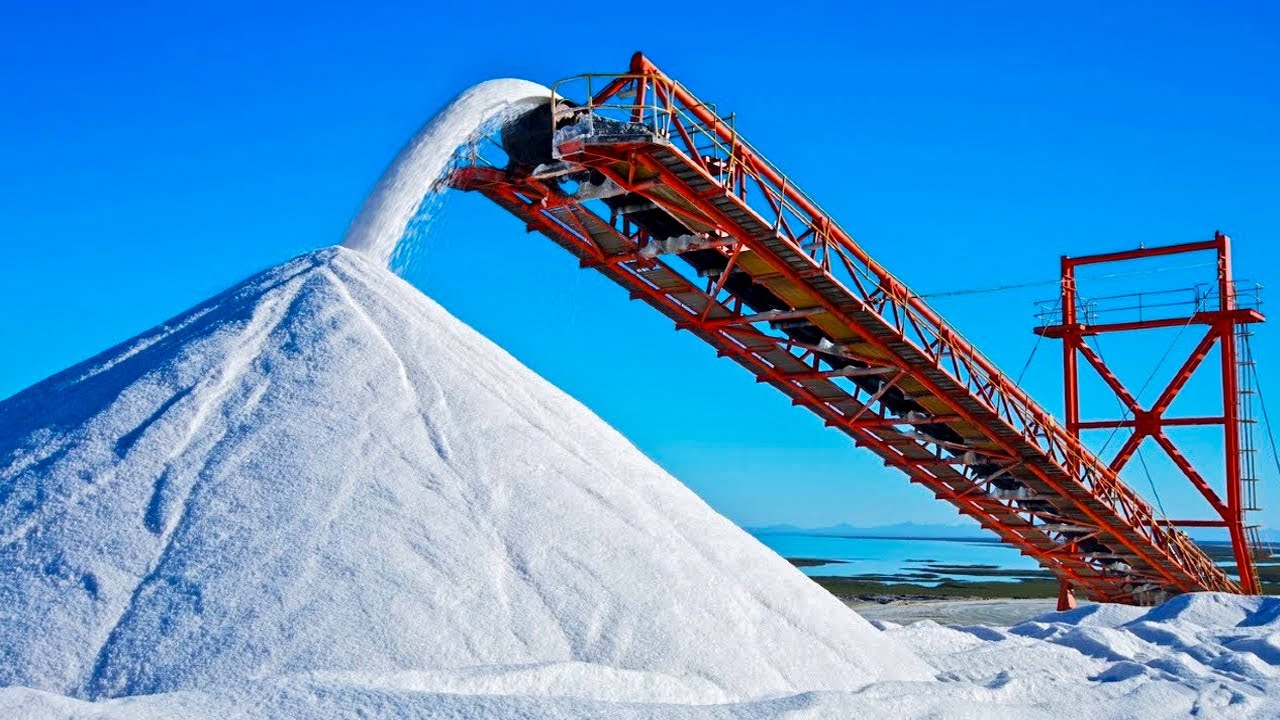
As an expert in mineral supply chains at Samaunited, I’ve spent years explaining to procurement managers that while sand (silica) is the body of the glass, salt is its soul. Without high-purity industrial salt, the global glass industry would grind to a halt—or at the very least, become prohibitively expensive. Today, I want to take you through the fascinating journey of how our salt moves from the sun-drenched Egyptian coast to the heart of modern glass production..
Sodium Chloride for Industry: Why It Is Essential for Modern Glass Manufacturing
Sodium Chloride for Industry: Why It Is Essential for Modern Glass Manufacturing
1. The Chemistry: From Salt to Soda Ash
To understand why Sodium Chloride for Industry is so critical, we have to look at the manufacturing process. Glass is made primarily from silica sand, but silica has an incredibly high melting point (around 1,700°C). Melting sand at that temperature is energy-intensive and extremely costly.
This is where salt comes in. Through the “Solvay Process,” industrial salt is converted into Sodium Carbonate, commonly known as Soda Ash. Soda Ash acts as a “flux”—it lowers the melting point of the silica to around 1,000°C. This 700-degree difference saves massive amounts of energy and allows for the continuous, high-speed production of glass. At Samaunited, we don’t just see ourselves as salt exporters; we see ourselves as the primary feedstock providers for the global glass industry’s energy efficiency.
2. Purity: The Difference Between Clear and Cloudy
In the world of high-end glass—whether it’s for smartphones, laboratory equipment, or luxury perfumes—purity is everything. If the Sodium Chloride for Industry used in the Soda Ash process contains even trace amounts of impurities like iron, magnesium, or calcium, the results can be disastrous.
-
Iron Contamination: Too much iron in the salt can give the glass an unwanted green or yellow tint.
-
Chemical Stability: Impurities can cause “bubbles” or structural weaknesses in the glass ribbon as it cools.
This is why we at Samaunited are so meticulous. We source our salt from the Mediterranean, where the natural solar evaporation process allows us to achieve a Sodium Chloride (NaCl) purity of 99% or higher. We understand that for a glass manufacturer in the UK or Europe, a slight deviation in chemical purity can lead to a rejected batch worth hundreds of thousands of pounds. Our job is to ensure that never happens.
Sodium Chloride for Industry: Why It Is Essential for Modern Glass Manufacturing
3. Sustainability: The Solar Advantage
The modern glass industry is under immense pressure to reduce its carbon footprint. Manufacturers in the UK are constantly looking for ways to make their supply chains “greener.” This is a major reason why Egyptian salt is becoming a preferred choice for Sodium Chloride for Industry.
Unlike mined salt, which requires heavy machinery and deep-shaft electricity, our salt is produced primarily through solar evaporation. We use the power of the Egyptian sun and the Mediterranean wind to crystallize our salt. This low-energy production method means that the “embodied carbon” in our salt is significantly lower than that of rock salt. When you partner with Samaunited, you are choosing a raw material that aligns with modern ESG (Environmental, Social, and Governance) goals.
4. Logistics: Why “Bulk” and “Reliable” Go Hand-in-Hand
Glass furnaces never sleep. They run 24 hours a day, 365 days a year. If a glass plant runs out of Soda Ash—and by extension, the salt needed to make it—the furnace can cool down, causing the molten glass to solidify and potentially destroying the entire production line.
This makes the reliability of your Sodium Chloride for Industry supplier a matter of operational survival. At Samaunited, we have mastered the logistics of moving bulk minerals from Egypt to the UK and Europe. We understand that a delay at the port is not just an inconvenience; it’s a threat to your business.
-
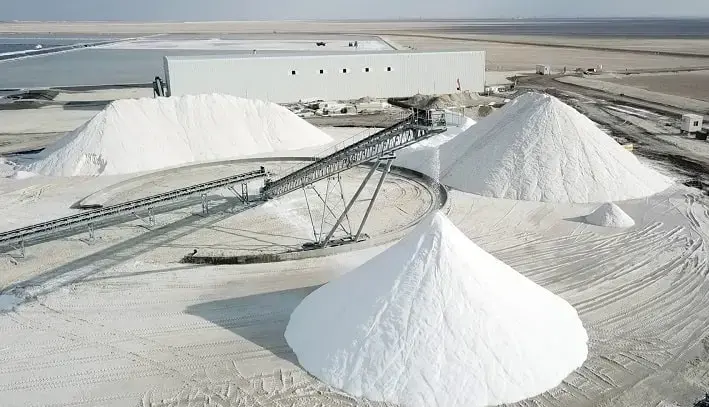
Strategic Stockpiling: We maintain high-capacity storage to ensure we can meet sudden surges in demand.
-
Vessel Management: We work with reliable shipping lines to ensure our bulk salt reaches ports like Felixstowe, Hull, or Liverpool on time, every time.
5. Tailoring the Specification
Every glass plant has its own unique recipe. Some require a specific grain size to ensure the salt dissolves at a precise rate in their brine tanks. Others are more concerned with moisture content to prevent “caking” during the long sea voyage.
As an expert-led company, Samaunited offers a consultative approach. We don’t just send a generic product. We work with your technical team to provide Sodium Chloride for Industry that matches your specific chemical and physical requirements. Whether it’s fine-grain refined salt or coarse solar salt, we calibrate our screening and washing processes to fit your factory’s “standard operating procedures.”
Sodium Chloride for Industry: Why It Is Essential for Modern Glass Manufacturing
Final Thoughts: Building a Transparent Future
The glass industry is an indicator of global economic health. From the vials that held the world’s vaccines to the windows of the newest green buildings, glass is everywhere. And behind every pane of glass is a mountain of salt.
At Samaunited, we are proud to be a link in that chain. We bring the purity of the Egyptian Mediterranean to the global stage, ensuring that modern glass manufacturing remains efficient, sustainable, and crystal clear. If you are looking for a partner who understands the technical nuances of Sodium Chloride for Industry and has the logistical power to back it up, look no further.
Is your glass production optimized for 2026? Let’s talk about how Samaunited can secure your raw material foundation. Contact us today for a technical breakdown and a competitive quote on our bulk industrial salt exports.